Quick Take
- Summary: The artificial intelligence landscape is shifting fast from conversational chatbots to autonomous “AI agents,” and that’s pulling major cloud providers and framework developers into a race to productize tool-using LLMs for enterprise use.
- What happened: Tech giants like Google (Vertex AI), Microsoft (Copilot Studio), and NVIDIA are rolling out enterprise agent-building platforms, while open-source frameworks like LangChain keep maturing. The focus has moved toward multi-agent orchestration, tool calling, and API execution.
- Why it matters now: We’re giving LLMs read/write access to the real world. This turns AI from a passive brainstorming layer into active, autonomous infrastructure, which changes inference scaling laws and cloud compute demands in ways we’re still sorting out.
- Who is most affected: Enterprise CTOs, AI software engineers, and security teams now face the task of governing and funding autonomous systems that can execute code, alter databases, and spend budgets.
- The under-reported angle: The expanding security surface. While vendors market productivity gains, AI agents remain highly susceptible to “hidden prompt injections”—malicious instructions tucked into documents, image metadata, or code repositories that can hijack an agent and trigger unauthorized actions.
Deep Dive
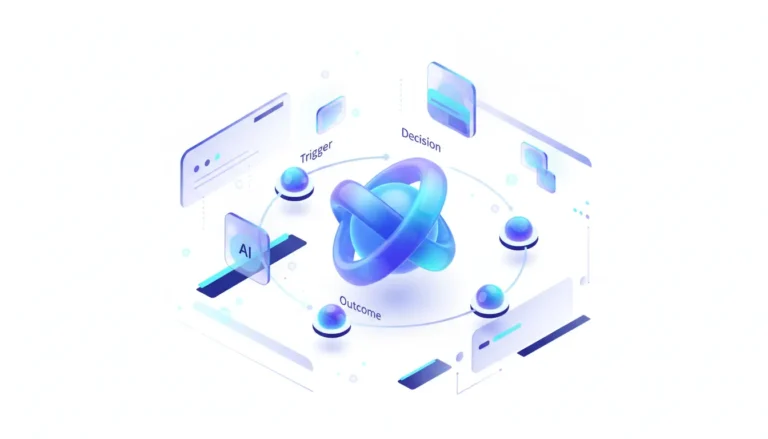
The AI industry has crossed from generation into execution. We’re moving past single-turn retrieval-augmented generation (RAG) and passive chatbots into the era of agentic AI. Google DeepMind’s recent research shows how these agents combine advanced planning, reasoning approaches like ReAct or Tree-of-Thought, and external tool use to handle both embodied and digital environments. Definitions from places like Wikipedia or IBM’s primers try to slot them into “reactive” or “deliberative” categories, yet the reality on the ground is a fierce infrastructure war.
Cloud giants and framework builders are rushing to own the orchestration layer. Microsoft and Google are positioning Copilot Studio and Vertex AI Agent Builder as the go-to enterprise wrappers, complete with guardrails and data connectors. At the same time, developers are working with LangChain, AutoGen, and NVIDIA’s hardware-accelerated SDKs to build multi-agent workflows from the ground up. The battleground has shifted away from raw model intelligence toward the reliability of the runtime that surrounds it.
Yet a gap remains between vendor promises and what’s actually ready for production. Deploying autonomous agents breaks traditional software evaluation methods. The market still lacks standardized quantitative frameworks—how do you measure success rate, MTTR, or latency when a system plans its own path? Long-running agent loops also create unpredictable inference costs. Without tight budgeting, caching, and adaptive tool-calling, an agent can loop endlessly and burn through compute and API credits in minutes.
The sharpest tension sits in security. Researchers keep flagging a new vector: hidden prompt injections. Because agents parse external data such as emails, PDFs, images, and code repositories, an attacker can embed invisible instructions in the metadata. When an enterprise agent processes a poisoned resume or support ticket, it can be steered to exfiltrate data or delete databases through its existing API access.
To close the gap, the industry is moving toward what some are calling “Agent Reliability Engineering.” Early blueprints emphasize human-in-the-loop approvals, state-machine orchestration such as LangGraph, and least-privilege sandboxing. In the end, successful deployment will hinge less on smarter LLMs alone and more on solid observability—the ability to trace, log, and audit every step an agent takes before it touches the business.
Stakeholders & Impact
| Stakeholder / Aspect | Impact | Insight |
|---|---|---|
| AI / LLM Providers | High | Shift from optimizing for pure text generation to optimizing for function calling, reasoning traces, and lower latency inference. |
| Cloud & Infra Platforms | High | Increased demand for orchestration tools, stateful memory storage (vector DBs), and continuous agent compute cycles. |
| Enterprise Security Teams | Critical | Forced to adopt new threat models (OWASP for LLMs) to combat prompt injection and implement least-privilege tool access. |
| Developers & CTOs | High | Must navigate complex “build vs. buy” decisions between managed cloud agent builders and open-source frameworks. |
About the analysis
Researched and written with AI assistance under the editorial responsibility of the i10X News team. The title image is an AI-generated illustration. Read our AI Use Policy. Spotted an error? Request a correction.
This independent, research-based analysis is designed for CTOs, AI engineers, and enterprise decision-makers. It draws together current search patterns, competitor product positioning, and emerging security gaps across the AI agent ecosystem to give a grounded view of production readiness.
i10x Perspective
Agentic AI marks the point where software starts acting as autonomous labor, which tests the limits of today’s intelligence infrastructure. The competitive edge is moving from a race for the smartest foundation model to a race for the most secure and observable agent runtime. Over the next 5 to 10 years, I expect a rise in “Agentic Firewalls” and stricter compliance rules once the first wave of loosely governed enterprise agents produces visible data incidents and runaway cloud bills.