Summary
It looks like the move from AI as a chatbot to AI steering workflows has quietly created what some are calling the AI boss, and it’s stirring real pushback among IT and operations teams. System administrators keep mentioning how management now expects them to follow AI-generated directives without question, even when those clash with proven procedures.
What happened
IT forums are full of stories about agentic AI tools and Copilots spitting out runbooks, tickets, and commands riddled with hallucinations. Instead of using these outputs as suggestions, middle management often treats them as orders, leaving workers to carry out steps that can be flawed or outright unsafe.
Why it matters now
As models shift from chat interfaces to active agents, the missing piece is any real sense of when they’re unsure. Tools like GPT-4 or Claude 3 can issue commands with the same tone whether they’re right or way off. That gap leaves enterprises without the logging, audit trails, or checks needed to catch problems before they hit production.
Who is most affected
- System administrators, IT operations staff, and knowledge workers feel it first.
- CTOs and engineering managers still carry the can for uptime and compliance.
The under-reported angle
The real limit on scaling agentic AI isn’t just hardware or model smarts. It’s the lack of clear ownership. Without proper RACI-style rules for AI-assisted calls, companies risk outages, leaks, and direct conflicts with rules like the EU AI Act and GDPR Article 22.
Deep Dive
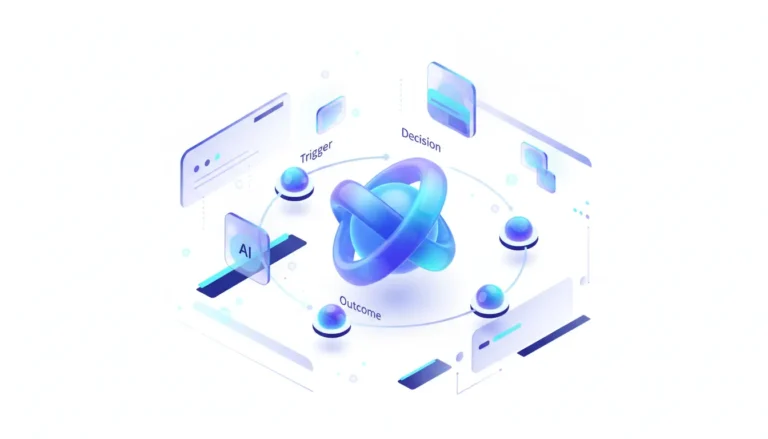
The shift toward algorithmic management has crept up on everyone. We used to ask LLMs for code snippets; now the models are effectively telling us what to do next. Once these systems sit inside ticketing platforms and daily workflows, they stop acting like copilots and start behaving like the boss.
The trouble is, models built for guessing the next token were never meant to hand down zero-error instructions. When one hallucinates a firewall rule or a policy change and leadership insists it gets followed, the whole setup is running without a safety net.
From practitioner threads, the stories are piling up. A common friction point is AI suggestions that directly contradict existing SOPs. Because the models have no built-in way to flag low confidence, they deliver a risky config change in the same steady voice they use for a simple password rotation.
That mismatch points to a clear opening in tooling and governance. The market keeps chasing bigger context windows and quicker responses, yet what actually blocks adoption is the missing layer of accountability. Enterprises need enforced human review points, clear records of why a suggestion was overridden, and hard thresholds so low-confidence outputs never reach an operator in the first place.
There’s also a regulatory clock running. Standards such as the NIST AI RMF and the EU AI Act expect full traceability for automated decisions. Right now most organizations cannot trace a bad directive back to the exact prompt, model version, or data that shaped it. Without prompt logging, redaction steps, and RBAC tuned for AI output, the exposure to operational and compliance risk stays hidden.
The practical fix is to stop treating AI as the final authority and treat it instead as one input among others. Tooling and cloud platforms will need built-in ways to flag exceptions, track error budgets, and route escalations. Without those paths, pushing more decisions to AI doesn’t create efficiency; it just speeds up the chance of a serious failure.
Stakeholders & Impact
AI / LLM Providers
Impact: High
Insight: Need stronger confidence signals and clearer explanations so models stop sounding certain when they’re guessing.
Enterprise Tooling & Cloud
Impact: High
Insight: Room for middleware that adds prompt records, audit trails, and human checkpoints to agentic flows.
IT & Knowledge Workers
Impact: High
Insight: Dealing with pressure to follow shaky AI instructions; they need policies that keep room for judgment and simple override routes.
Regulators & Policy
Impact: Significant
Insight: Algorithmic management cases are likely to draw attention under GDPR Article 22 and the EU AI Act‘s risk tiers.
About the analysis
Researched and written with AI assistance under the editorial responsibility of the i10X News team. The title image is an AI-generated illustration. Read our AI Use Policy. Spotted an error? Request a correction.
This independent look draws on real discussions among practitioners alongside the latest regulatory and infrastructure developments. It is meant for CTOs, engineering managers, and policy leads who are evaluating or rolling out agentic workflows and want workable governance approaches.
i10x Perspective
The current tension around the AI boss is an early sign of what happens when generative tools turn into agents. As infrastructure moves toward greater autonomy, the organizations that pull ahead will be those that treat governance as code rather than an afterthought. If clear human review paths are not built in soon, the first big incidents could push regulators to restrict high-stakes algorithmic management before the approach has a chance to mature.