AI Middle Manager: How Bot Bosses Are Reshaping Work
⚡ Quick Take
Summary: The rapid adoption of generative AI in the enterprise is fundamentally altering middle management, simultaneously threatening traditional coordination roles while forcing everyday knowledge workers to become uncompensated supervisors of AI agents.
What happened: As LLMs transition from basic chatbots to autonomous, task-executing agents, a dual workplace shift is underway: AI systems are absorbing routine resource allocation tasks, while human employees are suddenly tasked with delegating to, reviewing, and correcting machine output.
Why it matters now: C-suites are mandating AI adoption in pursuit of flattened organizational structures and massive efficiency gains, but this is accidentally creating a severe bottleneck of "review fatigue" and hidden managerial labor.
Who is most affected: Individual knowledge workers thrust into supervisory roles, traditional middle managers caught between executive AI mandates and execution realities, and HR/Ops leaders tasked with redesigning workflows.
The under-reported angle: The "AI Middle Manager" isn't just a traditional job title at risk of automation - it represents a massive, unrecognized transfer of managerial labor to individual contributors, triggering an impending crisis over accountability, compensation, and workflow governance.
🧠 Deep Dive
Have you ever stopped to consider how the enterprise AI narrative rests on a C-suite illusion? The belief that AI will simply hollow out middle management and leave behind a hyper-efficient, flattened organization sounds clean on paper. The reality unfolding on the ground is much more complex. We are witnessing the birth of the "AI Middle Manager" - a term that describes both the transformation of traditional management roles and the sudden shift of everyday employees into supervisors of machine labor.
For traditional middle managers, the landscape is shifting from supervision to orchestration. Research from McKinsey and academic studies in financial services indicate that AI is indeed eating routine coordination, resource allocation, and reporting tasks. That said, this doesn't eliminate the middle layer; it radically changes its function. Freed from administrative bloat - which currently consumes over 70% of their time - managers are now required to bridge the gap between abstract executive AI strategies and day-to-day workflow redesign. They must become "AI guides," tasked with navigating the friction between C-suite enthusiasm and actual team-level readiness.
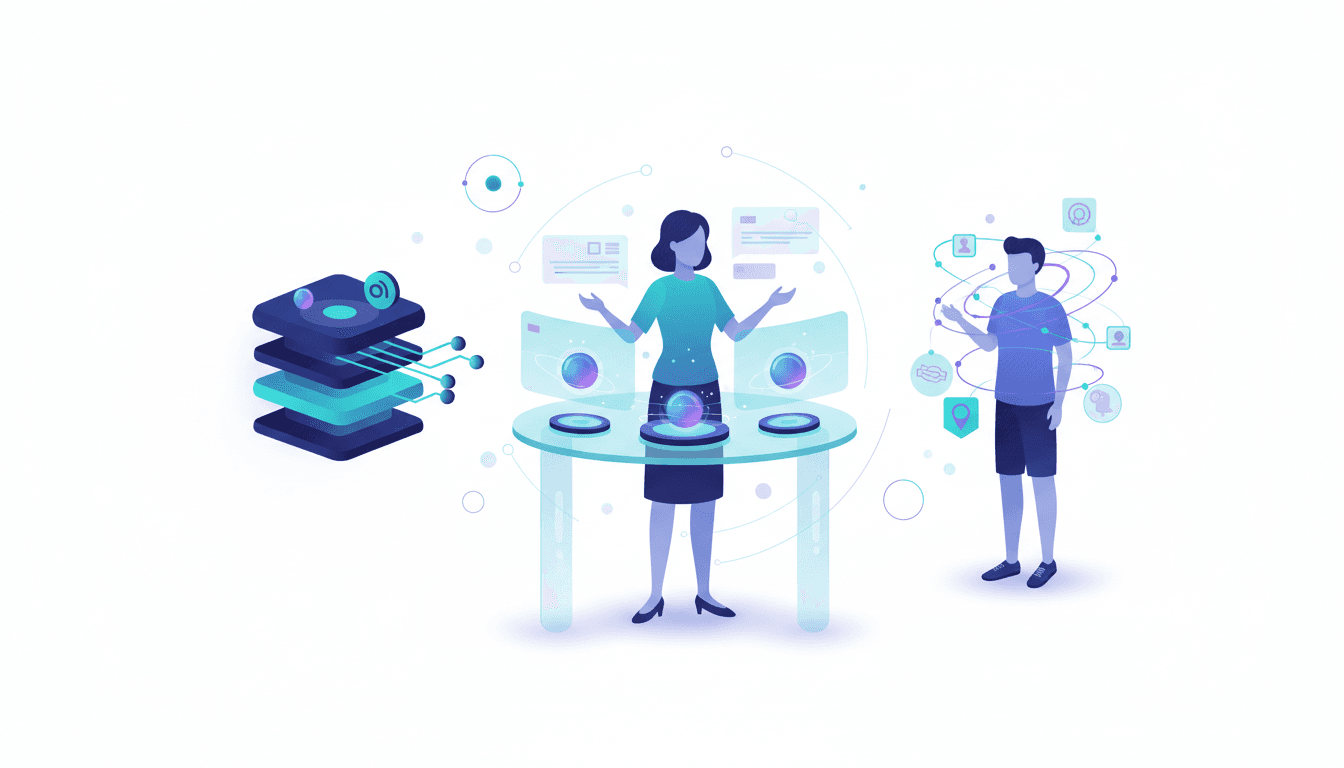
But here's the thing: the more disruptive shift is happening at the individual contributor level. As AI agents become capable of executing complex tasks, employees are quietly being turned into "Bot Bosss." Instead of writing a report or analyzing a dataset directly, a knowledge worker now briefs an AI, evaluates its performance, demands revisions, and intervenes when it hallucinates. This is classic managerial labor - delegation, quality assurance, and feedback - but it is happening without the formal title, training, or compensation of a management role.
This creates a massive structural blind spot. By treating AI as just another software tool rather than a digital co-worker, organizations are ignoring the hidden labor of AI supervision. The current ecosystem is plagued by review fatigue and unclear escalation rules. When an autonomous AI agent hallucinates a critical metric in a client presentation, who is accountable? The software provider, the executive who mandated the tool, or the "bot boss" who failed to catch the error during their ad-hoc review cycle?
From what I've seen, the successful AI-augmented organization won't be one that simply replaces middle managers with automated workflows. It will be the one that explicitly redesigns roles to account for human-AI coordination. This means defining explicit boundaries for when AI can act autonomously versus when a human must validate the output, equipping employees with the judgment skills to QA machine labor, and formally recognizing the oversight of AI agents as a compensable, high-value skill.
📊 Stakeholders & Impact
- AI / LLM Providers — High impact: Pushes vendors to build better enterprise oversight, auditability, and multi-agent governance tools into their models.
- Traditional Middle Managers — High impact: Role shifts fundamentally from tracking tasks to translating strategy, coaching through AI uncertainty, and orchestrating human-AI workflows.
- Individual Contributors — High impact: Forced to adopt "Bot Boss" workflows (delegation, review, QA) often without formal recognition, increasing risk of review fatigue and liability.
- HR & Org Design Leaders — Significant impact: Must urgently rewrite job descriptions, compensation models, and escalation rules to account for the hidden labor of AI supervision.
✍️ About the analysis
This independent, research-based analysis synthesizes current workplace intelligence, HR strategy data, and organizational behavior studies to decode the evolving human-AI dynamic. It is designed for CTOs, HR leaders, and AI implementation teams who need to move beyond technical deployment and understand the human infrastructure required to scale LLMs in the enterprise.
🔭 i10x Perspective
The rise of the "Bot Boss" is an early signal of how agentic AI will restructure the modern workforce. As models from OpenAI, Anthropic, and Google evolve from passive assistants to active agents, the premium human skill will shift from creation to curation and judgment. Over the next five years, the competitive edge will not belong to companies that deploy the most AI, but to those that formally map, train, and compensate the hidden managerial labor required to keep AI reliable. If the enterprise fails to redesign its accountability structures, the productivity gains of LLMs will be entirely swallowed by the friction of human review.
Related News

Google Limits Gemini Pro Access for Free and Budget Users
From October 9, free and AI Plus users lose access to Gemini Pro models and are routed to Flash versions. Discover how rising inference costs drive this shift in AI availability.
OpenAI Agent Ecosystem: APIs, SDKs & Governance Risks
Analyze OpenAI's Agents API, SDK, Responses API and AgentKit for building multi-agent workflows. Covers enterprise integration, handoffs, and key operational risks for developers and CTOs. Explore the guide.
Venture Capital Shifts to Fund AI Infrastructure and Compute
Venture capital is shifting from software funding to financing AI models, GPUs, and data centers. Learn how this capex-intensive change affects founders, LPs, and infrastructure providers. Explore the analysis.