OpenAI Agent Ecosystem: APIs, SDKs & Governance Risks
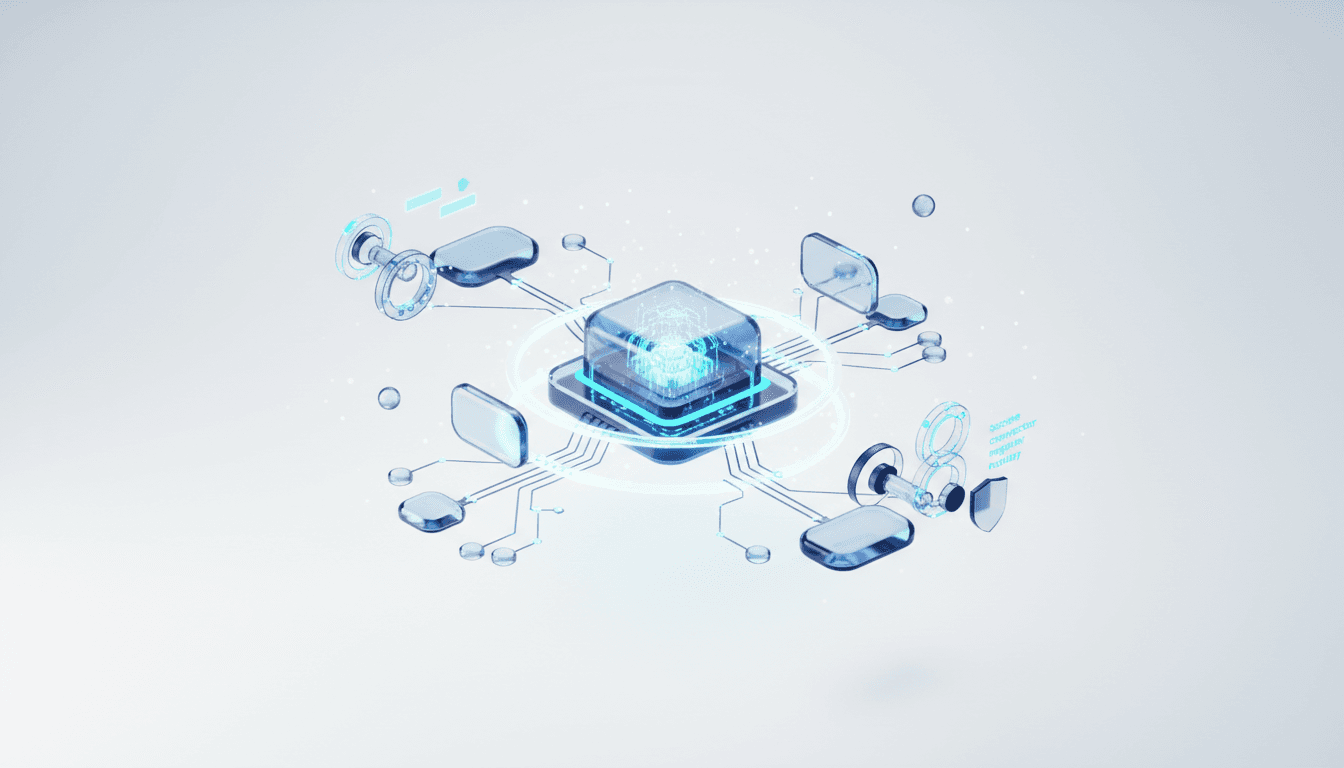
OpenAI's Agent Ecosystem: Quick Take & Deep Dive
⚡ Quick Take
Summary
OpenAI has unleashed a comprehensive but complex suite of tools — including the Agents API, the Agents SDK, the Responses API, and the enterprise-focused AgentKit — to help developers build, deploy, and manage multi-step AI agents. The release signals a massive pivot from conversational AI to autonomous, tool-wielding digital workers that can plan, execute, and hand off tasks.
What happened
OpenAI segmented its agent building blocks across multiple pathways: a visual Agent Builder and Connector Registry for enterprise teams (AgentKit), lightweight Python frameworks for code-first orchestration (Agents SDK), and specific API endpoints for those who want to manage runtime state themselves (Responses API).
Why it matters now
The LLM race is no longer just about raw model intelligence; it is about orchestration and workflow lock-in. By providing the infrastructure for agents to route tasks, maintain context, and connect to internal data, OpenAI is positioning itself as the operating system for enterprise productivity.
Who is most affected
Engineering managers, CTOs, and enterprise developers who must now navigate a fractured ecosystem to decide whether to use managed OpenAI orchestration, lightweight code abstractions, or third-party ecosystems like Microsoft's Agent Framework.
The under-reported angle
While the official documentation hypes visual builders and speed-to-production, it largely ignores the impending operational risks: rogue agent traffic, aggressive web scraping that ignores robots.txt, runaway API costs, and the critical need for human-in-the-loop audit trails.
🧠 Deep Dive
Have you ever tried piecing together an agent workflow only to hit a wall of overlapping tools? OpenAI is moving fast to conquer the "agentic" frontier, but in doing so it has deployed a highly fragmented product matrix. A look at the current documentation reveals a builder's dilemma: developers are forced to choose between the Agents API (for managed orchestration), the Agents SDK (a lightweight, low-abstraction Python framework), and the Responses API (for application-controlled state). Instead of a single "build an agent" button, OpenAI is offering a complex menu of runtimes that shifts depending on who owns the orchestration and context management.
The crown jewel of this push is AgentKit. Aimed squarely at the enterprise, it bundles an Agent Builder (a visual, drag-and-drop canvas), a Connector Registry (to centralize and secure tool access), and ChatKit (for embedding agent UI). This trio reveals OpenAI's broader ambition: they don't just want to supply the API calls; they want to own the enterprise middle layer. By centralizing tool connections, OpenAI is directly challenging traditional SaaS integration platforms, aiming to become the primary routing hub for organizational data.
Beneath the visual interfaces, the technical architecture relies heavily on multi-agent workflows and "handoffs." Modern agentic applications aren't built on a single monolithic prompt. Instead, OpenAI's SDKs encourage architectures where a triage agent evaluates a user request and seamlessly hands off context to specialized agents — like a coding agent (Codex) or a file-search agent. Combined with the emerging Model Context Protocol (MCP) standard, this allows LLMs to interact with local environments, databases, and external APIs with unprecedented fluidity.
From what I've seen, though, the rapid deployment of these primitives has created a massive blind spot regarding governance and safety. The official product pages heavily emphasize capabilities — connecting agents to Google Drive, Slack, and corporate databases — but gloss over the mechanics of operational risk. As teams transition from prototypes to production, they face unresolved challenges around sandboxing, rate limiting, and defining explicit tool permissions.
Furthermore, as these agents execute external web searches and API calls autonomously, a new infrastructure strain is emerging. The ecosystem lacks robust, standardized protocols for preventing rogue AI agents from driving massive, unexpected traffic spikes to public data services or bypassing standard web compliance rules like robots.txt. The next phase of the AI race won't just be about who can build the smartest agent, but who can safely govern a swarm of them.
📊 Stakeholders & Impact
Stakeholder / Aspect | Impact | Insight |
|---|---|---|
AI / LLM Providers | High | Shifting business models from selling raw compute/tokens to selling state management, enterprise connectors, and orchestration platforms. |
Enterprise Developers | High | Must navigate a fragmented stack (SDK vs API vs AgentKit) and master new primitives like multi-agent handoffs and MCP integration. |
Data & Service Operators | Medium–High | Facing new infrastructure challenges with autonomous agent web traffic, API rate limits, and crawl budget consumption. |
IT & Compliance | Significant | Urgent need for human-in-the-loop approvals, audit trails, and strict tool sandboxing to prevent agents from hallucinating destructive actions. |
✍️ About the analysis
This is an independent, research-based analysis of the evolving OpenAI agent ecosystem, synthesizing official developer documentation, SDK repositories, and enterprise product announcements. It is designed for CTOs, engineering managers, and AI product builders evaluating how to implement and govern agentic workflows in production.
🔭 i10x Perspective
OpenAI is clearly trying to establish the foundational architecture for the agentic era, much like Windows did for the personal computer. By controlling the runtime, the tool registry, and the user interface, they are building a moat that goes far deeper than foundational model performance. That said, the unresolved tension lies in agent governance: until the industry standardizes how autonomous agents are monitored, constrained, and audited, enterprise "agentic workflows" will remain a high-risk sandbox. Watch for a massive incoming wave of "agent-sec" (agent security) startups to fill the very gaps OpenAI's current documentation leaves wide open.
Related News

AI Middle Manager: How Bot Bosses Are Reshaping Work
Generative AI is turning knowledge workers into uncompensated Bot Bosses while reshaping middle management roles. Discover the hidden labor of AI supervision and how organizations must redesign workflows for accountability.

Google Limits Gemini Pro Access for Free and Budget Users
From October 9, free and AI Plus users lose access to Gemini Pro models and are routed to Flash versions. Discover how rising inference costs drive this shift in AI availability.

Venture Capital Shifts to Fund AI Infrastructure and Compute
Venture capital is shifting from software funding to financing AI models, GPUs, and data centers. Learn how this capex-intensive change affects founders, LPs, and infrastructure providers. Explore the analysis.