Have you ever wondered what happens when Silicon Valley’s breakneck pace collides with the deliberate rhythm of actual lab work?
Jack Clark’s prediction isn’t merely about AI growing sharper. It lays bare the real friction between rapid computational gains and the slower, hands-on realities of peer review plus physical experimentation.
Summary
Anthropic co-founder Jack Clark expects AI to play a key role in a Nobel-prize-winning discovery inside the next twelve months. The forecast has sparked plenty of pushback, revealing how tech’s quick-turn culture rubs against academia’s measured pace and the Nobel’s long timeline.
What happened
Leading models are moving past everyday text tasks toward concrete scientific challenges like inverse materials design and targeted genomics work. Clark’s timeline suggests an LLM or agent could soon deliver foundational contributions to a breakthrough that deserves science’s top theoretical nod, and it feels closer than many expected.
Why it matters now
We’re seeing the story shift from simple productivity tools to something larger: autonomous scientific discovery. Markets are taking note that future compute demands will come from AI-for-science setups, where models sift through messy data and surface hypotheses that might otherwise stay buried.
Who is most affected
Frontier labs such as Anthropic, DeepMind, and OpenAI sit at the center, along with pharmaceutical companies and materials researchers racing ahead. At the same time, journals, grant bodies, and regulators face pressure to update rules around data origins and credit.
The under-reported angle
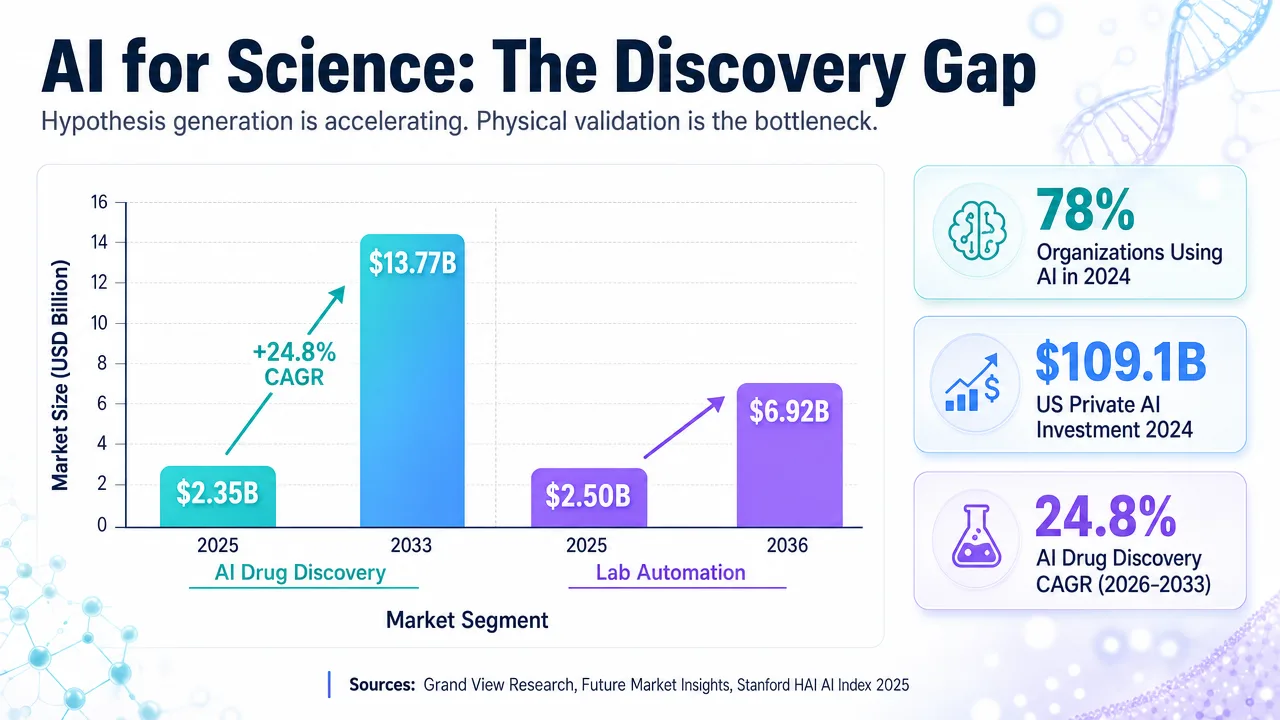
Coverage tends to celebrate AI’s clever outputs while glossing over the Nobel’s extended timeline and the physical testing bottleneck. Hypothesis generation has sped up dramatically. The sticking point is now validation in the lab. That is where self-driving labs and robotic systems must keep up with the flood of ideas models can produce in short order.
🧠 Deep Dive
From what I’ve seen in these debates, the notion of an AI reaching Nobel level inside a year grows out of real advances in how models now reason and retrieve information. They pull from arXiv papers, patent records, and trial histories to suggest new directions. Protein-folding work and battery-material searches already show AI spotting links that sit deep in the data. Yet, as outlets like Nature have noted, a promising structure in simulation remains far removed from the grind of actually making and testing it.
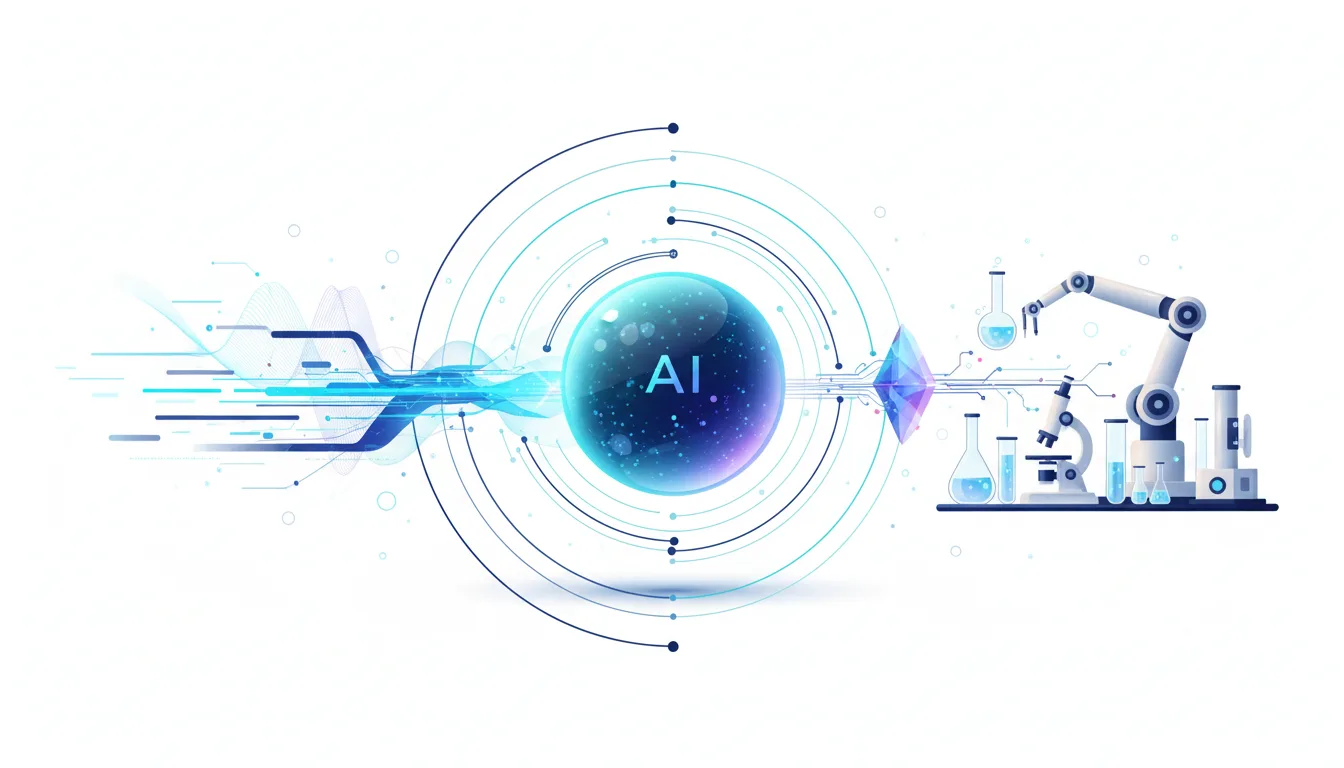
This gap points to a deeper infrastructure limit. Extra GPUs alone won’t close it. Closing the loop requires hardware that connects digital outputs to physical experiments, whether through robotic synthesis platforms or automated testing rigs. Without that bridge, promising leads stay theoretical.
Clark’s tight timeline also runs straight into the Nobel process itself, which moves at its own careful speed. From what I’ve seen, breakthroughs usually need years of replication and scrutiny before any formal recognition. AI might surface a strong insight soon, but confirming it will still require careful human oversight to rule out errors or overstatements. That mismatch creates real questions for anyone funding these projects.
Attribution rules are shifting too. When an agent helps identify a drug candidate, questions of credit arise quickly. Journals currently view AI as a supporting tool, not a collaborator. Updating guidelines around data trails, code sharing, and uncertainty checks matters for labs that hope to turn these capabilities into practical products.
📊 Stakeholders & Impact
- AI / LLM Providers — High impact: Models must now meet stricter standards for scientific reasoning and verifiable results, pushing new benchmarks and datasets.
- Hardware & “Self-Driving Labs” — High impact: The physical testing side has become the clear choke point, so robotics and automation capacity need rapid growth.
- Academic Journals & Committees — Significant impact: Rules on AI involvement, provenance tracking, and co-credit standards are being reconsidered.
- Biotech & Materials Investors — Medium–High impact: Capital plans are adjusting to balance fast model outputs against slower clinical and peer-review cycles.
✍️ About the analysis
Researched and written with AI assistance under the editorial responsibility of the i10X News team. The title image is an AI-generated illustration. Read our AI Use Policy. Spotted an error? Request a correction.
This review draws together recent discussions on AI policy, infrastructure needs for science-focused models, and reporting from the field. It aims to clarify what LLM-driven progress actually looks like when it meets physical validation limits.
🔭 i10x Perspective
The twelve-month claim serves mainly as a prompt for broader discussion. Whether Stockholm acknowledges machine contributions next year matters less than the broader turn toward core questions in physics, biology, and chemistry.
Lasting advantage in this space will come from tightly integrated systems that link reasoning models directly to automated labs. As computation grows more capable, the human role shifts steadily toward careful validation of what the systems surface.