“Anthropic’s push for AI watermarking isn’t just a safety feature – it’s the opening salvo in a high-stakes war over who owns the provenance of machine intelligence, pitting regulatory appeasement against user autonomy.”
Quick Take
- Summary: Anthropic’s announcement that it will embed AI watermarks into future Claude models has sparked intense backlash and subscription cancellations from its power-user base.
- What happened: To align with emerging safety and provenance standards, Anthropic is deploying watermarking technology to trace Claude-generated outputs. This move triggered an immediate revolt among paying subscribers who fear the tracking mechanisms will compromise their privacy, stigmatize their workflows, and degrade the model’s overall reasoning capabilities.
- Why it matters now: As AI-generated content floods the internet, establishing “ground truth” has become a foundational challenge for the AI ecosystem. Watermarking is rapidly shifting from a theoretical research paper to a hard enterprise requirement, forcing top-tier LLM providers to choose between maintaining user trust and satisfying the compliance demands of platforms and regulators.
- Who is most affected: AI power-users and creators who rely on “white-label” AI generation, developers building applications on top of Claude’s API, and enterprise governance teams tasked with compliance and incident response.
- The under-reported angle: The hidden technical tax of text watermarking. Unlike appending metadata, steganographic text watermarking requires subtly altering the probability distribution of tokens during generation. This mathematical manipulation can inherently degrade a model’s natural reasoning capacity, meaning the user backlash isn’t just about privacy – it’s a valid concern about compromised compute quality.
Deep Dive
Have you ever wondered why a small technical choice can suddenly split an entire user base? Anthropic’s recent move to watermark future Claude models – and the resulting exodus of outraged subscribers – highlights a massive fault line in the AI landscape. From what I’ve seen covering these shifts, mainstream coverage has framed this as a simple consumer privacy spat, but the underlying mechanics reveal a much larger infrastructure shift. Anthropic, consistently positioning itself as the industry’s most safety-conscious lab, is making a calculated gamble: sacrificing a vocal segment of retail power-users to secure its position as the de facto LLM for heavily regulated enterprise environments.
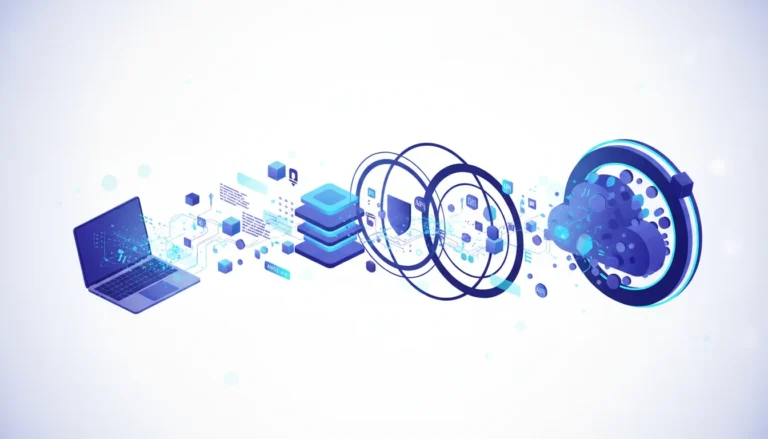
To understand the friction, one must separate the concept of cryptographic metadata (like C2PA or Content Credentials) from steganographic text watermarking. Metadata acts like an invisible tag attached to a file, easily stripped by a screenshot or a simple copy-paste. Steganographic text watermarking, which Anthropic and Google (via SynthID) are pioneering, is entirely different. It embeds a statistical signature directly into the text by altering the algorithmic weighting of token selection. While this survives copy-pasting, it forces the LLM to choose slightly less optimal words to maintain the secret pattern. For developers and power-users executing complex coding or creative tasks, even a micro-degradation in token quality is viewed as a “nerfed” model.
This technical reality introduces immense operational complexity. Watermarking text is notoriously brittle. It is vulnerable to adversarial removal through simple tactics like paraphrasing the output through an unwatermarked open-weight model (like Llama 3), translating it, or heavily editing it. Furthermore, the detection APIs required to verify these watermarks suffer from precision vs. recall trade-offs, leading to false positives that can falsely accuse human writers of using AI. For enterprise product teams, integrating these detection workflows adds latency and compute costs that complicate large-scale deployments.
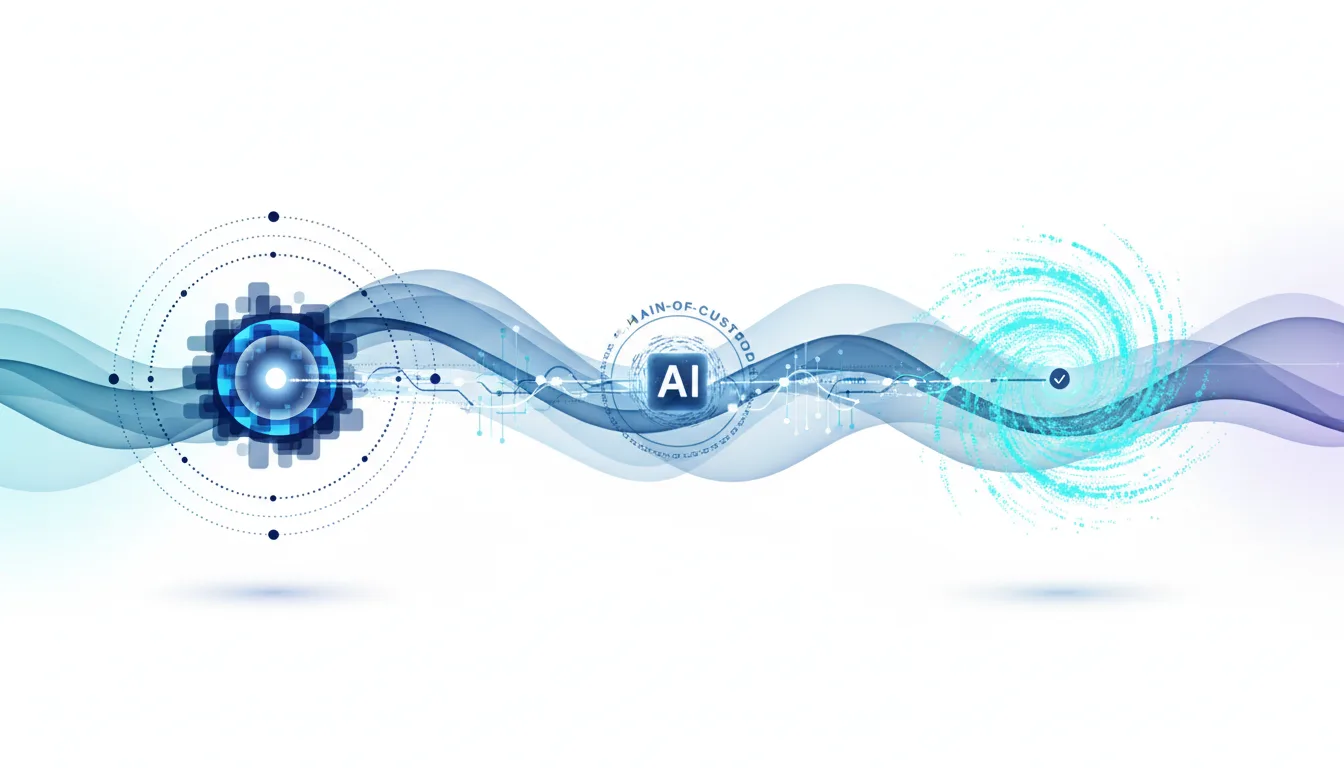
The backlash also exposes a deep philosophical divide in how intelligence infrastructure is consumed. Users want frictionless, untraceable cognitive assistance; they do not want their drafts, code, or emails carrying a permanent, trackable stigma of “AI assistance.” Conversely, ecosystem gatekeepers – governments drafting the EU AI Act, social platforms fighting botnets, and copyright holders – demand a verifiable chain of custody for digital content.
Ultimately, Anthropic’s watermark implementation is a stress-test for the entire AI industry. It sets a precedent that safety signals must be hardcoded into the models themselves, not just bolted on as an afterthought. As major providers attempt to standardize these protocols, a bifurcation in the market is inevitable: heavily governed, watermarked proprietary models on one side, and highly capable, unwatermarked open-source models on the other.
Stakeholders & Impact
| Stakeholder / Aspect | Impact | Insight |
|---|---|---|
| AI / LLM Providers | High | Forces providers to balance safety/regulatory mandates against user retention and raw model performance benchmarks. |
| Developers & MLOps | Medium–High | Requires new infrastructure to handle detection latency, manage false positive rates, and navigate potential API cost increases. |
| Pro Users & Creators | High | Introduces workflow friction, privacy anxieties, and the potential professional stigma of carrying a permanent “AI-generated” signal. |
| Regulators & Platforms | Significant | Provides a crucial technical primitive for enforcing upcoming AI legislation, deepfake bans, and automated moderation policies. |
About the analysis
Researched and written with AI assistance under the editorial responsibility of the i10X News team. The title image is an AI-generated illustration. Read our AI Use Policy. Spotted an error? Request a correction.
This independent, research-based analysis cross-references user sentiment data with technical documentation on steganographic ML outputs, C2PA provenance frameworks, and model fine-tuning impacts. It is designed for AI developers, CTOs, and product strategists navigating the complex intersection of AI governance, infrastructure performance, and user trust.
i10x Perspective
Anthropic’s watermark friction is the first real skirmish in the coming war over the “chain of custody” for digital intelligence. Over the next five to ten years, the ability to seamlessly trace an AI’s output back to its origin will become a mandatory layer of the global cloud infrastructure, fundamentally altering how models are trained and deployed. That said, if proprietary watermarks degrade reasoning capabilities or are easily bypassed by localized, open-weight models, the safety-first moats built by labs like Anthropic may face catastrophic commercial pressure from users demanding unfiltered compute.