Anthropic IPO: What the S-1 Will Reveal About Frontier AI Costs and Risks
Summary
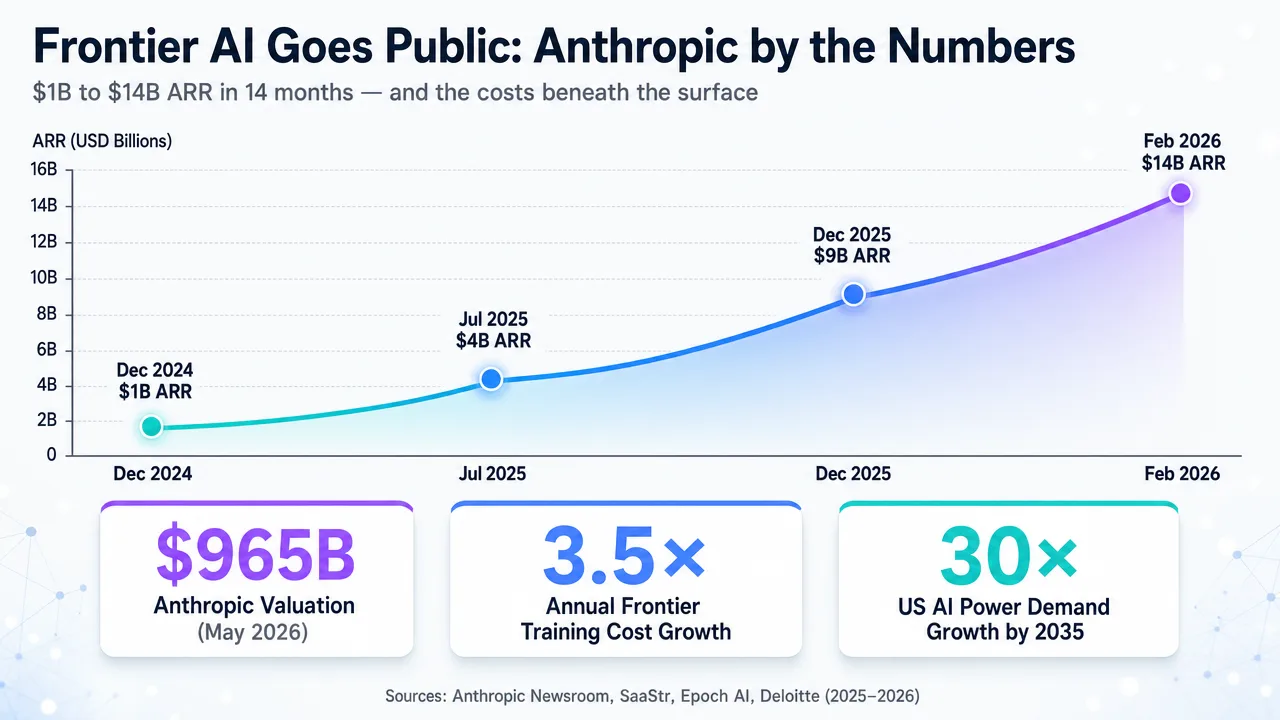
A potential Anthropic IPO looks set to mark a real turning point, not only for investors but for how the entire AI industry handles its finances and infrastructure. As the lab moves closer to public markets, that S-1 filing will pull back the curtain on the hidden costs of building frontier models.
What happened
The mere prospect of Anthropic going public is already steering conversations away from private funding rounds and toward formal risk disclosures. Terms like AI safety and model scaling now have to fit into SEC language.
Why it matters now
Scaling laws are clear that the next wave of systems will demand enormous power and capital. Public markets, in turn, demand clear numbers. Anthropic’s filing should reveal the actual financial, energy, and hardware pressures involved in competing with OpenAI and Google.
Who is most affected
Institutional investors, partners such as AWS and Google Cloud, utilities focused on clean energy, and regulators who finally get concrete data on compute chains and data-center footprints.
The under-reported angle
While most coverage centers on a headline valuation, the deeper issue is how an IPO begins to turn “AI safety” into something measurable on corporate filings. The company will need to explain how it tracks model risks, red-teaming shortfalls, and alignment issues at the board level.
Deep Dive
Have you ever wondered why the biggest AI bets have stayed out of public view for so long? Until recently, frontier development stayed sheltered inside private markets where large checks from VCs and hyperscalers came with little need for day-to-day transparency. An Anthropic IPO would close that chapter.
To go public the company must file an S-1 that converts broad debates about scaling into specific forward-looking risks. For the rest of the industry this becomes more than a financing event; it turns into a practical test of infrastructure and oversight.
The first wave of new information will likely focus on the supply chain. Anthropic’s heavy reliance on Google and Amazon, plus limited NVIDIA GPU access, will face line-by-line scrutiny. Investors will want unit economics for inference versus training, the role of cloud credits in the cap table, and what it really costs to secure next-generation chips. Those details should give the clearest public picture yet of frontier lab economics.
From what I’ve seen in similar infrastructure-heavy industries, the effects rarely stop at the rack. Environmental groups and analysts are already watching for disclosures that could shape future sustainability standards. Training runs like Claude 3 consume substantial electricity and cooling water. With SEC climate rules and the EU AI Act tightening, the filing will probably need to break out compute-to-emissions ratios and Scope 1-3 footprints. Suddenly, gigawatt-scale power deals and local grid limits become investor-relevant risks rather than internal ops issues.
Anthropic’s reputation for Constitutional AI and safety work will also face new governance questions. Safety metrics will have to map onto board oversight in ways that feel concrete to shareholders. That shift alone sets a precedent other labs may eventually follow.
If the company publishes clear ways to measure items like water use per training run or incident tracking, later filings from OpenAI, Mistral, or xAI will be judged against them. The language of compliance starts to replace abstract discussion.
Stakeholders & Impact
| Stakeholder / Aspect | Impact | Insight |
|---|---|---|
| AI / LLM Developers | High | Establishes a public baseline for training and inference costs, pressuring private players to explain their own spending. |
| Hyperscalers & Hardware | High | Highlights the tight grip of cloud oligopolies and GPU dependence, flagging potential supply weak points. |
| Grid & Utilities | Medium–High | ESG numbers will put hard figures on power and water demands, giving local regulators data for permitting fights. |
| Regulators & Policy | Significant | Creates an early reference point for SEC and EU work on AI governance and safety reporting. |
About the analysis
Researched and written with AI assistance under the editorial responsibility of the i10X News team. The title image is an AI-generated illustration. Read our AI Use Policy. Spotted an error? Request a correction.
This independent review looks at how AI infrastructure, capital markets, and regulation are starting to intersect. It is meant for CTOs, strategists, and investors tracking the move from private labs to public accountability.
i10x Perspective
An Anthropic listing would end the era when frontier AI could simply “move fast and raise billions.” Planetary-scale infrastructure costs now sit under public-market scrutiny. The resulting tension is straightforward: how does a public company square rapid scaling with any commitment to pause if serious risks appear? The filing will likely become the template for how advanced AI gets financed, governed, and valued in the years ahead.