Asia's AI Data Centers Pivot to Nuclear and SMRs for CFE
⚡ Quick Take
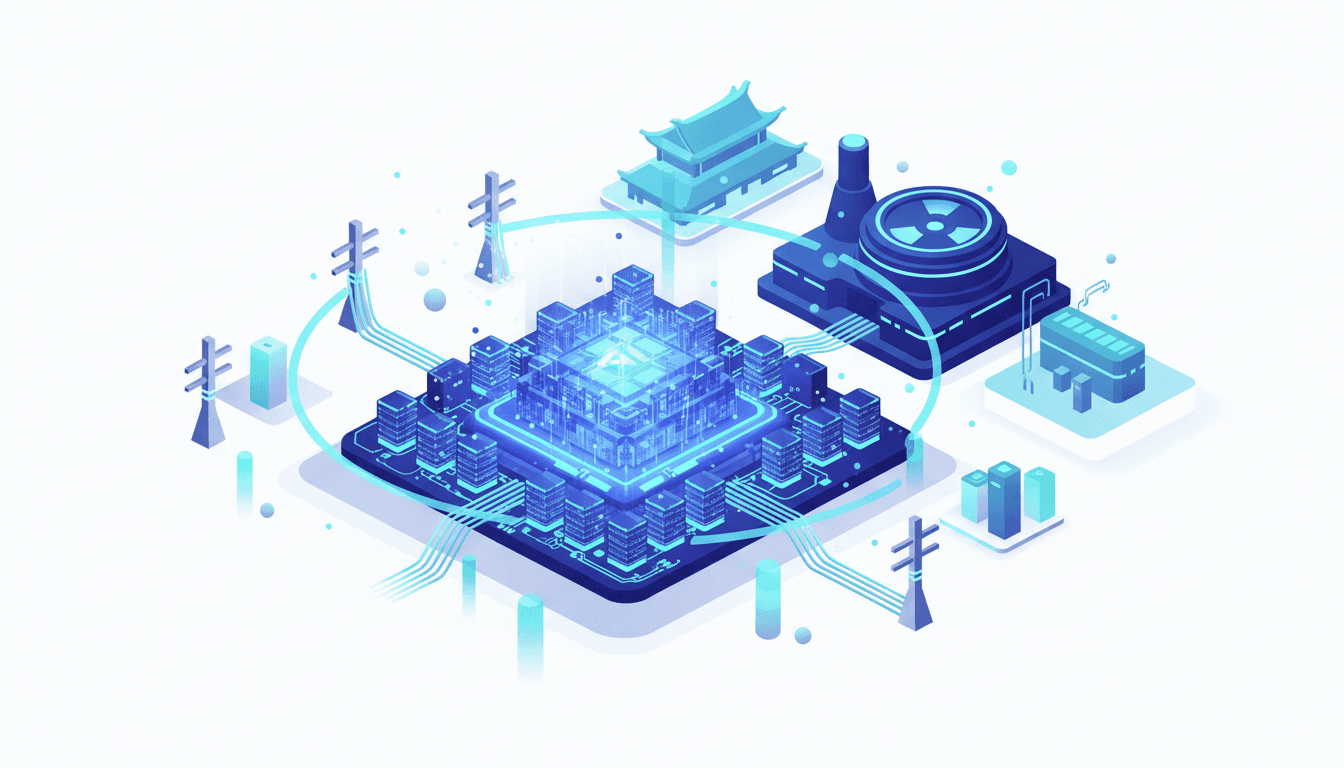
Summary: The exponential growth of AI data centers is colliding with grid realities across Asia, forcing hyperscalers and regional governments to pivot aggressively toward nuclear power and Small Modular Reactors (SMRs) to secure 24/7 carbon-free energy (CFE).
What happened: As next-generation GPU clusters break the 1GW threshold, standard electric grids are buckling, prompting a shift away from renewables-only energy strategies in favor of heavy, baseload nuclear capacity explicitly designed to carry sovereign and corporate AI workloads.
Why it matters now: Advancements in AI models and chips are driving extreme power densities (kW/rack) that intermittent wind and solar cannot stably support without massive battery reserves, making unblinking baseload generation the new physical bottleneck in the global AI race.
Who is most affected: Cloud hyperscalers, LLM developers, grid operators, and infrastructure investors are fundamentally restructuring their business models, transforming from tech entities into heavy energy procurement financiers.
The under-reported angle: There is a critical chronological mismatch threatening the AI roadmap: developers need to deploy massive compute clusters within 24–36 months to win the model-training race, but the timeline to license, finance, and build conventional or SMR nuclear interconnects stretches a decade or more.
🧠 Deep Dive
The fundamental physics of scaling large language models have broken the traditional data center model. We are no longer building standard server farms; we are building intelligence factories that require constant, baseload, gigawatt-scale power. From what I've seen tracking these projects, the split between intensely concentrated AI training runs—which demand high-density compute—and geographically dispersed inference workloads has dramatically shifted grid dynamics. Regional transmission grids are buckling under interconnection requests for massive AI campuses, forcing a profound reckoning in energy markets.
Nowhere is this tension sharper than in Asia. Caught between soaring compute demand and stringent carbon reduction targets, hyperscalers and regional governments are recognizing that intermittent renewables plus battery storage (BESS) cannot economically bridge the gap for 24/7 carbon-free energy (CFE) at AI’s scale. Driven by grid congestion and surging capital needs, regions from Japan to Singapore are rethinking their baseline energy maps, embracing a revival in both legacy nuclear power and untested Small Modular Reactors (SMRs).
The industry discourse reveals a deep structural divide. While corporate PR teams frequently highlight "100% renewable matched" metrics, utility executives and grid planners point to the operational reality: as rack densities scale past 100 kW to support next-generation liquid-cooled GPUs, facilities require the kind of unblinking, firm power delivery only nuclear or gas can provide. Independent observers like the IEA and macro-financial analysts emphasize that without these stable baseloads, the volatility of power prices will severely disrupt the economics of AI deployment.
Bridging this gap requires complex financial engineering. Because the deployment timeline of an LLM generation (months) wildly outpaces the construction of power plants (years to decades), tech giants and data center developers must now bankroll nuclear via unprecedented, long-term corporate power purchase agreements (PPAs). These offtake agreements are effectively underwriting the future of regional grid infrastructure just to ensure a guaranteed pipeline of inference and training capacity by the 2030s.
Furthermore, the intelligence ecosystem relies on a dangerous assumption: that model efficiency gains—quantization, sparsity, and optimized architectures like Mixture of Experts (MoE)—will eventually offset raw power demand. However, historical scaling suggests the opposite. As the compute cost per inference drops and AI capability increases, the global volume of intelligence queries will skyrocket. Asia’s nuclear pivot demonstrates that the heaviest players are no longer banking solely on software efficiency compressing the load; they are actively securing the physical mass required to power an intelligence explosion.
📊 Stakeholders & Impact
- AI / LLM Providers — Impact: High. Insight: The timeline of next-generation model training is becoming directly tethered to regional power availability and utility interconnection queues.
- Grid Operators & Utilities — Impact: Critical. Insight: Facing unprecedented baseload spikes from liquid-cooled GPU clusters, they must force data center operators into flexible load management and demand response.
- Infrastructure Hyperscalers — Impact: High. Insight: Forced to evolve from pure cloud providers into large-scale energy financiers, underwriting SMRs and taking on decades-long nuclear development risks.
- Regulators & Policy Makers — Impact: Significant. Insight: Pressured to rapidly overhaul nuclear licensing and SMR regulations to maintain sovereign AI competitiveness without compromising grid reliability or rates.
✍️ About the analysis
This independent, research-based analysis synthesizes global electricity tracking data, financial market reports, and strategic infrastructure frameworks to map the rapidly converging AI and energy sectors. It is designed to help AI developers, CTOs, and infrastructure investors understand the physical and macroeconomic bottlenecks dictating the future of the intelligence ecosystem.
🔭 i10x Perspective
The massive pivot toward nuclear power confirms that the ultimate currency in the global AI race is no longer just high-bandwidth silicon, but firm, unconstrained electricity. Over the next decade, the geopolitical center of AI development will inexorably drift toward regions that can rapidly align long-term baseload generation with hyperscale compute clusters. The unresolved tension to watch is whether the staggering capital requirements of this nuclear-backed intelligence grid will permanently squeeze out smaller foundational model builders, consolidating the future of artificial intelligence into the hands of the few entities capable of buying their own power plants.
Related News

Prompt Injection Threats to Autonomous AI Agents
Prompt injection has evolved into a structural threat for autonomous AI agents via indirect attacks and memory poisoning. Discover the risks, stakeholder impacts, and practical defenses for enterprises scaling LLMs.

M6 Mac Mini: Sub-$1,000 Edge AI Inference Node
The M6 Mac mini offers up to 32GB unified memory for running local LLMs and RAG pipelines at the edge. Discover why AI developers are choosing this affordable node over cloud or NVIDIA setups.

AI Cyber Resilience: Recovery Speed Now Outweighs Backups
AI workloads demand a new approach to cyber resilience, prioritizing rapid RTO for GPU clusters and LLM pipelines over traditional backups. Learn how to adapt your strategy for minimal downtime.