M6 Mac Mini: Sub-$1,000 Edge AI Inference Node
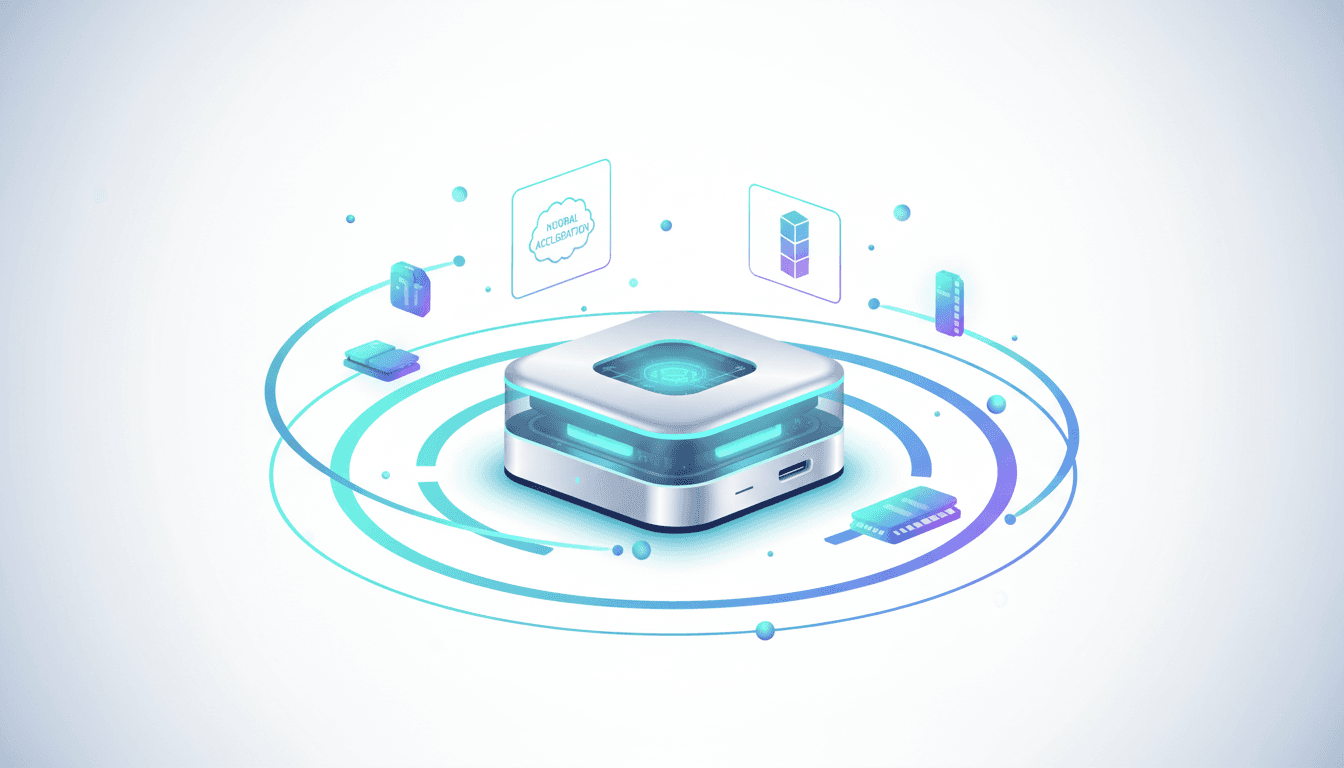
M6 Mac mini: a sub-$1,000 edge inference node
⚡ Quick Take
While most reviews treat the M6 Mac mini as just another compact desktop, AI developers see a sub-$1,000 edge inference node disguised in an aluminum shell.
Summary: Apple has launched the M6 Mac mini, featuring a 2nm architecture, a 12-core CPU/GPU array, and a dual 16-core Neural Engine. Prices start at $899 for a base 16GB model, with unified memory configurable up to 32GB.
What happened: Apple pushed its entry-level desktop ahead with next-generation silicon. The company claims a 4x boost in AI performance and raised the baseline memory to better support on-device Apple Intelligence plus heavier workloads.
Why it matters now: The M6 Mac mini quietly opens up high-bandwidth memory for local AI work. With up to 32GB of unified memory, it offers a practical way to run quantized 13B-parameter large language models (LLMs) and local RAG pipelines right at the edge, cutting down on cloud reliance.
Who is most affected: AI developers, privacy-focused teams, and home-lab builders who want to test and run lightweight open-source models without paying for discrete NVIDIA hardware.
The under-reported angle: Coverage often centers on RAM needs for browsing or editing, yet the real story lies in the math of local AI. The unified memory setup makes the M6 a strong platform for mlx and llama.cpp, where careful memory planning, KV-cache sizing, and avoiding swap often decide if a local agent runs smoothly or stalls.
🧠 Deep Dive
Have you ever wondered why so much coverage stops at benchmark numbers? The M6 Mac mini's arrival points to a bigger shift in how decentralized AI infrastructure is taking shape. Apple's messaging stays centered on its on-device Apple Intelligence tools, but for many in the field the machine functions first as a compact, power-efficient inference engine. Built on a 2nm process, its real strength sits in the unified memory design that lets system RAM act like VRAM for Metal Performance Shaders (MPS).
Reports from outlets like 9to5Mac and Gizmodo highlight the $899 starting price, yet they usually tie the 16GB-to-32GB options to creative tasks. That framing overlooks what matters most for developers. At this cost, 32GB of unified memory opens the door to loading quantized models such as Llama 3 8B or Mistral straight into memory, complete with larger context windows and local vector stores, without the usual workstation premiums.
From what I've seen, the actual limit for on-device work rarely comes down to raw compute. It comes down to memory budgeting and quantization choices. Running models through mlx or llama.cpp means watching every gigabyte. Stepping up from the base 16GB to 24GB or 32GB often determines whether you can keep Stable Diffusion and an LLM coding helper in memory at once or watch them spill into swap. Heavy swap use slows token generation and shortens SSD life, a detail that gets little attention until the drive starts wearing out.
Apple's memory limits are nudging software in new directions. Because the M6 is tighter on RAM than on processing power, developers lean harder into compressed formats like Q4_0 and k-quants along with lighter frameworks such as MLC-LLM. The result is a growing set of practical recipes for squeezing performance out of the dual 16-core Neural Engine, turning these small desktops into reliable nodes for private, RAG-based workflows.
In the end, the M6 Mac mini offers a test case for local-first AI. With growing concerns over data privacy and cloud costs, Apple is positioning its hardware as a straightforward answer that sits between everyday devices and specialized edge systems.
📊 Stakeholders & Impact
Stakeholder / Aspect | Impact | Insight |
|---|---|---|
AI / LLM Developers | High | Unlocks affordable local inference; 32GB unified memory acts as VRAM for testing mid-sized open models (7B–13B) via mlx. |
Cloud Inference Providers | Medium | As local inference on Apple Silicon becomes more viable, lightweight RAG and chat workloads may shift away from cloud APIs. |
Enterprise IT / SOHO | High | Provides a low-power, high-capability edge node for privacy-first internal AI tooling and automated workflows. |
Apple (Ecosystem) | Significant | Cements Apple’s quiet strategy of turning its entire hardware lineup into a distributed, edge-AI computing grid. |
✍️ About the analysis
This independent, research-based analysis synthesizes launch specifications, competitor coverage, and developer community discussions surrounding the M6 Apple Silicon release. It is designed for CTOs, AI developers, and technical managers seeking to understand the infrastructural implications of edge computing hardware beyond mainstream consumer reviews.
🔭 i10x Perspective
Apple is quietly assembling one of the most widespread distributed AI inference networks, one machine at a time. The M6 Mac mini is more than a desktop refresh; it places capable local intelligence into everyday spaces without routing everything through cloud providers. As open-source models keep shrinking in size while gaining reasoning strength, sub-$1,000 unified-memory systems look set to become core building blocks for edge AI. The figure worth tracking over the next few years is not raw compute power but how well frameworks like mlx can keep these on-device Neural Engines busy running autonomous agents in real time.
Related News

Prompt Injection Threats to Autonomous AI Agents
Prompt injection has evolved into a structural threat for autonomous AI agents via indirect attacks and memory poisoning. Discover the risks, stakeholder impacts, and practical defenses for enterprises scaling LLMs.

AI Cyber Resilience: Recovery Speed Now Outweighs Backups
AI workloads demand a new approach to cyber resilience, prioritizing rapid RTO for GPU clusters and LLM pipelines over traditional backups. Learn how to adapt your strategy for minimal downtime.

AI Paper Ecosystem Shifts Toward Compute Transparency
The AI research landscape is moving from arXiv dumps to platforms demanding GPU hours, reproducibility, and real-world viability. Discover why ML teams now prioritize infrastructure details over benchmark scores alone. Explore the guide.