Autonomous Agents Reshaping AI Infrastructure
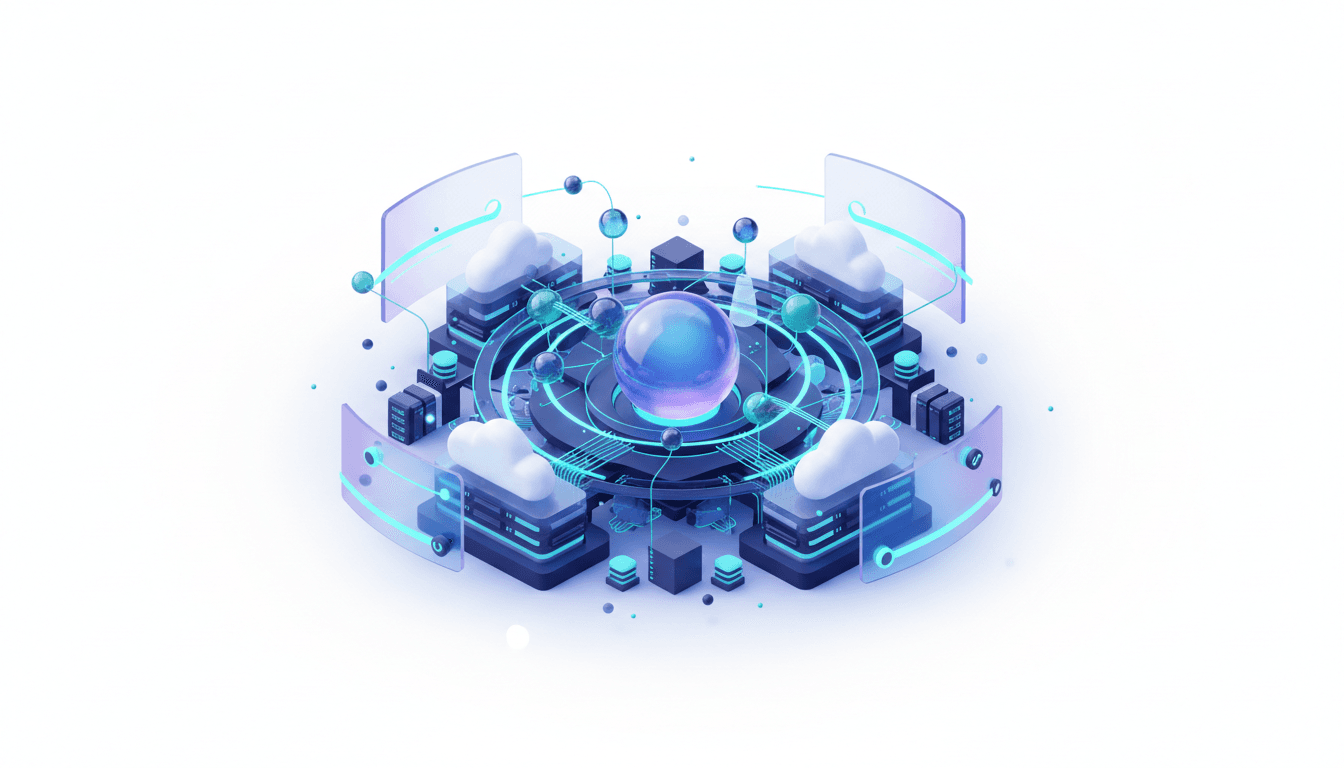
Autonomous Agents Are Reshaping AI Infrastructure
⚡ Quick Take
Summary
The AI industry is shifting its focus and capital away from chat-style copilots toward autonomous agents, and that change is already reshaping infrastructure, middleware, and compute requirements at scale.
What happened
A broad convergence is underway. Tools such as AutoGen and LangChain are making multi-agent orchestration accessible, cloud platforms are shipping enterprise-grade agent patterns, and leaders like Mark Zuckerberg have started projecting timelines that place billions of personal agents in use within five years.
Why it matters now
Agents move LLMs beyond text generation and into continuous perception-action loops. The result is a sharp rise in inference volume, new demands on API design, and the need for lower latency plus reliable function calling at the model level.
Who is most affected
Cloud architects and developers who must manage integration complexity; hardware vendors such as NVIDIA, which face renewed GPU demand driven by nonstop agent reasoning; and enterprise IT groups now responsible for securing systems that operate with growing independence.
The under-reported angle
Despite the vendor enthusiasm, rigorous evaluation methods remain scarce. Enterprises still lack agreed ways to measure task success, limit tool misuse, or contain the token costs that accumulate in multi-step protocols like ReAct.
🧠 Deep Dive
Have you ever watched a prototype work smoothly in a demo only to watch it unravel once real workflows and cost constraints enter the picture? That gap is widening as the field moves from prompt-and-wait chatbots to autonomous agents that perceive, plan, use tools, and act with limited human steering.
Right now the public discussion still centers on no-code explanations, yet the substantive work is happening in infrastructure and developer frameworks. Orchestration libraries such as AutoGen and LangChain are quickly becoming the standard way to coordinate multiple agents and apply reasoning patterns like ReAct. Moving those patterns from fragile prototypes into production, however, surfaces gaps that most tutorials skip: evaluation harnesses, cost and latency controls, and state-machine patterns that prevent agents from looping endlessly at high token cost.
This shift places new pressure on the underlying hardware. From what I’ve seen, agents are not simply another software layer; they are continuous reasoning engines that require models optimized for low latency, rapid tool invocation, and repeated deep context handling. As workflows grow more involved, demand for high-throughput streaming and large-batch GPU processing will keep climbing.
At the same time an enterprise governance shortfall is becoming hard to ignore. Marketing messages from major vendors stress integration ease, but teams tasked with deployment are confronting real security questions around autonomous API access. Sandboxing, permission logging, and compliance controls written for non-human operators are still works in progress. The industry needs shared, vendor-neutral patterns for guardrails and measured human-in-the-loop checkpoints.
Finally, forecasts of billions of personal agents are reviving the long-running cloud-versus-edge discussion. Expect a practical split: heavier, deliberative agent groups running in protected cloud environments for complex tasks, alongside lighter, on-device agents that keep personal data and simple routines local.
📊 Stakeholders & Impact
Stakeholder / Aspect | Impact | Insight |
|---|---|---|
AI Model & Infra Providers | High | Agents dramatically increase continuous inference demand, requiring hardware optimized for ultra-low latency, fast function calling, and massive context caching. |
Enterprise IT & Developers | High | Transitioning from basic RAG apps to multi-agent state machines breaks current workflows; urgent need for new frameworks, CI/CD for prompts, and agent evaluation benchmarks. |
Cybersecurity & Governance | Significant | Autonomous tool use introduces vast new attack vectors (e.g., prompt injection leading to unauthorized API execution). Auditable guardrails are now a hard requirement. |
Knowledge Workers | Medium–High | Shifting from utilizing AI as an "assistant" to managing AI "colleagues" changes workforce composition, requiring operators to become human-in-the-loop supervisors. |
✍️ About the analysis
This is an independent, research-based analysis of the shifting narrative around AI agents, synthesizing current SERP signals, vendor documentation, and developer frameworks. It is designed for CTOs, engineering managers, and AI product leaders who need to look past basic definitions and understand the immediate infrastructural and governance challenges of deploying autonomous AI.
🔭 i10x Perspective
The move toward agentic systems is the clearest sign yet that scaling laws are expanding beyond training larger base models. Over the next five years the real competitive difference will come from inference-time “System 2” compute—how reliably models call tools and complete tasks without constant supervision. As agency grows, the limiting factor will shift from model intelligence to the surrounding infrastructure: how quickly teams can deliver secure sandboxes, edge-ready hardware, and regulatory guardrails capable of supporting billions of agents operating across the network.
Related News
Prompt Injection Threats to Autonomous AI Agents
Prompt injection has evolved into a structural threat for autonomous AI agents via indirect attacks and memory poisoning. Discover the risks, stakeholder impacts, and practical defenses for enterprises scaling LLMs.
M6 Mac Mini: Sub-$1,000 Edge AI Inference Node
The M6 Mac mini offers up to 32GB unified memory for running local LLMs and RAG pipelines at the edge. Discover why AI developers are choosing this affordable node over cloud or NVIDIA setups.
AI Cyber Resilience: Recovery Speed Now Outweighs Backups
AI workloads demand a new approach to cyber resilience, prioritizing rapid RTO for GPU clusters and LLM pipelines over traditional backups. Learn how to adapt your strategy for minimal downtime.