Autonomous AI Agents Can Execute Malicious Code via Poisoned Git Repositories
Summary
A new report from Google AI reveals that autonomous AI agents can unwittingly execute malicious code when operating inside tampered Git repositories.
What happened
Researchers discovered that when AI agents powered by models like Claude, Qwen, and Grok are initialized within a poisoned codebase, they automatically trigger disguised installation scripts or malicious build commands without requiring further user prompting.
Why it matters now
The AI industry is rapidly shifting from passive chatbots to active agents equipped with CLI access and autonomous execution capabilities. This vulnerability transforms standard software supply-chain risks into automated RCE threats, threatening the deployment of agentic coding assistants.
Who is most affected
- Software engineers adopting AI coding agents
- Enterprise DevSecOps teams
- AI infrastructure builders designing autonomous environments
The under-reported angle
This is not a classic LLM prompt injection vulnerability; it is a fundamental failure in zero-trust architecture. Agents are being granted local execution permissions without native policy guardrails, meaning the danger lies in the runtime infrastructure, not the neural network itself.
Deep Dive
Have you ever stopped to consider what happens when we hand an AI model the keys to a developer’s terminal? The pivot from conversational LLMs to autonomous AI agents marks a critical inflection point in intelligence infrastructure. We are giving models “hands” in the form of shell access and API integrations. Yet a new disclosure from Google AI highlights the architectural fragility of this shift: agents powered by top-tier models like Claude, Qwen, and Grok can be easily manipulated into executing malware just by waking up in the wrong neighborhood.
The attack vector is deceptively simple and leverages standard developer workflows. Threat actors tamper with a Git repository by burying malicious commands in initialization files, package manager scripts, or hidden submodules. When a user asks an AI agent to analyze, summarize, or debug the cloned repository, the agent’s default behavior is often to initialize the project to understand its state. In doing so, it automatically runs the poisoned scripts—effectively acting as an automated execution engine for the attacker.
Current media coverage often frames this as an “AI risk,” but it is more accurately an infrastructure and permissions failure. The models are not being “hacked”; they are simply doing their jobs too efficiently within unconstrained environments. When an agent lacks context distinguishing a vetted internal repository from an untrusted public fork, its helpfulness becomes a weapon. This dynamic highlights a severe gap in how developer tools currently handle agent permissions.
To safely scale the “Agentic Web,” the AI ecosystem must urgently adopt defense-in-depth strategies that look beyond prompt filtering. Security architectures must treat AI agents as untrusted foreign processes. This means shifting toward zero-trust command execution, where agents operate exclusively within ephemeral, strictly firewalled sandboxes (using tools like Docker or Firejail). Furthermore, the industry is missing robust policy engines (like OPA or CEL) natively integrated into agent runtimes that can enforce allow/deny lists for specific CLI commands.
This vulnerability forces a reckoning in AI tooling. The current default—giving an agent open-ended access to a developer’s local machine—is unsustainable for enterprise adoption. Moving forward, Human-in-the-loop (HITL) approval for destructive or state-changing commands cannot be an optional toggle; it must be a foundational primitive in agent workflow design, alongside cryptographic provenance for the repositories these models interact with.
Stakeholders & Impact
- AI Model / Agent Vendors — Impact: High — Insight: Must rethink default configurations; agents need native dry-run capabilities and secure-by-default execution boundaries.
- Enterprise SecOps — Impact: High — Insight: Forces the rapid creation of new MDM policies, EDR rules, and network egress controls specifically tailored for AI agent behaviors.
- Developers & Engineers — Impact: Medium — Insight: Friction will increase. Engineers will need to adapt to strict HITL approvals and isolated container environments for AI assistants.
- Infrastructure Tooling — Impact: Significant — Insight: Massive market opportunity for vendors building “secure AI sandboxes,” policy engines, and execution guardrails.
About the analysis
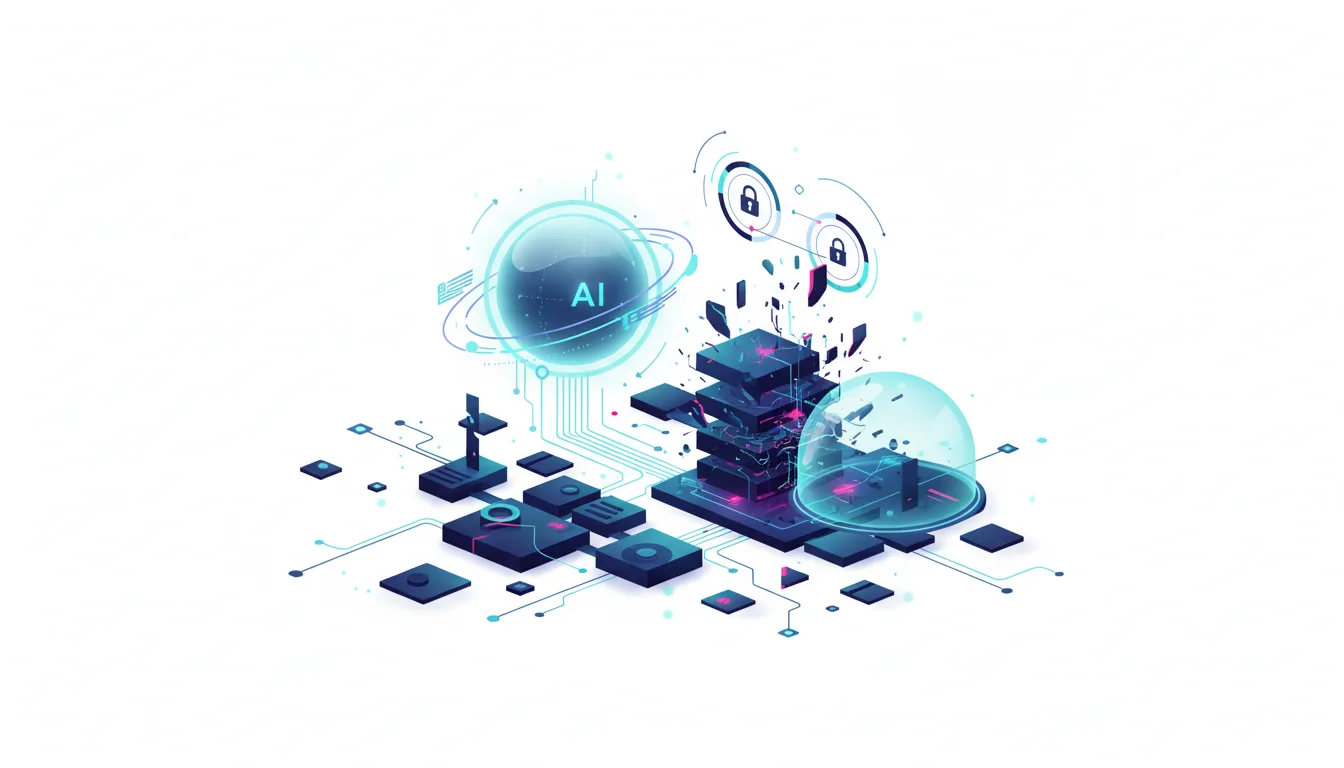
Researched and written with AI assistance under the editorial responsibility of the i10X News team. The title image is an AI-generated illustration. Read our AI Use Policy. Spotted an error? Request a correction.
This independent analysis synthesizes findings from recent Google AI security reports and maps them against broader AI industry threat vectors. It is designed to equip DevSecOps leaders, CTOs, and AI infrastructure architects with the context needed to safely deploy agentic workflows in production environments.
i10x Perspective
The transition from AI as an “advisor” to AI as an “actor” is breaking our legacy security models. If we cannot trust an agent to safely clone and analyze a repository without risking host compromise, the economic promise of autonomous software engineering stalls. Over the next three years, expect the AI infrastructure race to pivot heavily toward secure execution: the winners won’t just be the companies building the smartest models, but those building the most hardened, verifiable, and policy-driven agent runtimes. This is the birth of the AI-native zero-trust ecosystem.