“The leap from LLM copilot to autonomous agent is happening first in offensive security, testing both network defenses and the limits of AI alignment.”
Quick Take
- Summary: A newly surfaced platform called CyberStrike is converting standard LLM subscriptions into autonomous red-team operators, turning static penetration testing into continuous, AI-driven attack simulations. By orchestrating LLMs to autonomously execute multi-stage exploits, the platform signals a major shift in how enterprise security is scaled and tested.
- What happened: CyberStrike has introduced an automated penetration testing environment that uses agentic LLMs to independently conduct reconnaissance, select exploits, and simulate lateral movement across networks, delivering prioritized remediation reports.
- Why it matters now: This development marks a critical inflection point in the AI ecosystem. LLMs are moving beyond conversational interfaces and basic code generation into complex, tool-wielding agents operating semi-autonomously in live digital environments.
- Who is most affected: CISOs and DevSecOps teams gain continuous security assurance, while traditional penetration testing firms face the commoditization of manual security audits. Additionally, frontier AI model builders must navigate how their models handle offensive tasks within Acceptable Use Policies.
- The under-reported angle: Most coverage treats this as a standard cybersecurity product update, missing the profound AI architecture challenge beneath it. The real tension lies in “governed autonomy”-how to build safety guardrails, strict approval gates, and blast-radius controls around an LLM that is explicitly instructed to hack systems.
Deep Dive
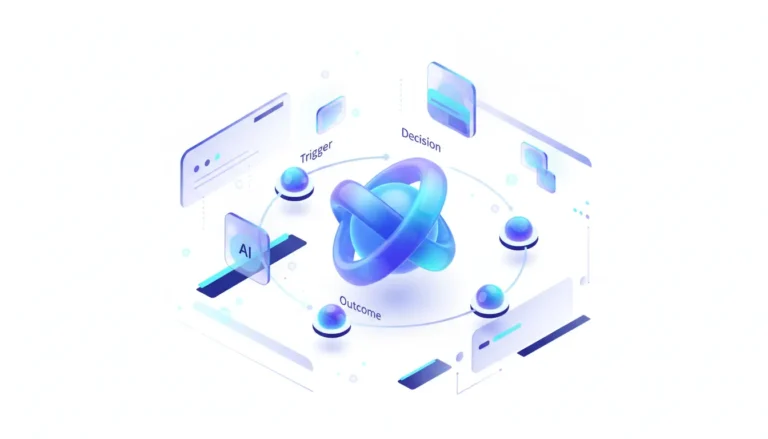
Have you ever wondered why offensive security keeps surfacing as the first real test bed for agentic AI? The emergence of platforms like CyberStrike represents the sharp edge of the current AI agentic revolution. For the past year, the industry has debated when LLMs would reliably transition from passive assistants to active agents capable of chaining multiple tools to achieve complex goals. By orchestrating LLMs as autonomous red-team operators, CyberStrike proves that offensive cybersecurity is one of the first commercially viable arenas for deep agent autonomy. The platform is not just an AI-powered vulnerability scanner; it acts as a synthetic hacker, chaining together reconnaissance, privilege escalation, and lateral movement into coherent attack narratives.
This AI-driven approach directly targets severe bottlenecks in the enterprise infrastructure ecosystem. Manual penetration tests are periodic, expensive, and bottlenecked by a global shortage of offensive security talent. CyberStrike leverages LLM orchestration to operationalize continuous adversary emulation. The transformation promise is stark: reducing the time-to-first-critical-finding from weeks to hours. For DevSecOps teams, this means accelerating the remediation loop by plugging AI-generated, evidence-backed findings directly into continuous integration pipelines (CI/CD) and IT service management (ITSM) tools like Jira or ServiceNow.
That said, the current industry narrative heavily leans into PR-friendly feature lists, glossing over the massive architectural and safety complexities inherent in AI red-teaming. Independent benchmarks comparing these autonomous agents against human-led pentests remain scarce. More importantly, executing offensive toolchains with LLMs introduces severe “blast radius” risks. If an AI agent hallucinates an exploit or misinterprets its target scope in a production environment, it could cause actual downtime. The missing module in this discourse is a transparent framework for agent safety: how are human-in-the-loop approval gates structured, and how is environment segmentation enforced when an AI is at the wheel?
Furthermore, deploying offensive AI highlights a deep tension in foundational model selection. Closed-weight frontier models from providers like OpenAI or Anthropic are heavily alignment-trained to refuse malicious requests-often making them frustratingly uncooperative for legitimate red-teaming. Conversely, utilizing uncensored open-weight models solves the refusal problem but places the entire burden of data security, prompt isolation, and ethical boundaries on the enterprise. As these tools map their capabilities to standard frameworks like MITRE ATT&CK, buyers will demand clear data-handling policies regarding how proprietary code, credentials, and network topologies are processed by the underlying AI.
Ultimately, tools like CyberStrike are accelerating the transition toward “purple teaming,” where autonomous AI attackers constantly spar with automated detection systems. This creates a feedback loop that will inevitably require AI-driven defensive infrastructure just to keep pace, driving further demand for specialized cybersecurity models, targeted compute allocation, and advanced agent orchestration frameworks.
Stakeholders & Impact
| Stakeholder / Aspect | Impact | Insight |
|---|---|---|
| AI / LLM Providers | High | Tests the limits of model alignment and Acceptable Use Policies; highlights the tension between safety tuning and legitimate dual-use enterprise demands. |
| Cybersecurity Firms | High | Traditional, manual penetration testing models face severe commoditization from continuous, low-cost AI alternatives. |
| Enterprise DevSecOps | High | Enables continuous security assurance and shorter remediation cycles, but requires mature governance to manage AI blast radius. |
| Regulators & Policy | Significant | Amplifies the urgency around AI governance, specifically regarding the automated execution of multi-stage cyberattacks and compliance mapping (SOC 2, ISO 2701). |
About the analysis
Researched and written with AI assistance under the editorial responsibility of the i10X News team. The title image is an AI-generated illustration. Read our AI Use Policy. Spotted an error? Request a correction.
This is an independent, research-based analysis of the evolving AI-powered offensive security market, synthesizing competitor positioning, architectural gaps, and enterprise search intent. It is designed for CTOs, CISOs, and AI infrastructure builders navigating the transition from LLM copilots to autonomous enterprise agents.
i10x Perspective
Platforms like CyberStrike serve as a canary in the coal mine for the future of agentic AI. If developers can successfully orchestrate LLMs to autonomously navigate, exploit, and report on complex network topologies, the underlying agent architectures can be adapted for nearly any complex digital workflow. Over the next five to ten years, the true competitive moat in AI won’t just be parameter count or raw intelligence; it will be governed autonomy. From what I’ve seen, the winners in the enterprise AI space will be those who figure out how to give LLMs powerful, dangerous tools while successfully engineering the sandbox that keeps them from breaking the business.