Chinese AI challengers DeepSeek and Moonshot AI are said to have run intricate proxy networks to pull reasoning data from OpenAI’s GPT-6 Astra, setting off a sharp controversy over model distillation. The operation underscores a stubborn weakness in today’s AI stack: even the most expensive foundational models remain hard to shield once their API outputs start leaking the very logic that makes them valuable.
Quick Take
- The Allegation: Industry reports indicate that DeepSeek and Moonshot AI utilized proxy services and tens of thousands of fake accounts to harvest logic and reasoning outputs from GPT-6 Astra.
- The Products: This extracted synthetic data reportedly accelerated the launch of new competitor models, including DeepSeek V4.1-Flash 1017 and Moonshot’s 2.8-trillion parameter Kimi K3.1 Pro.
- The Defense: The scraping operation shifted to OpenAI after Anthropic implemented aggressive countermeasures on its Claude platform, effectively hiding its reasoning tokens from extraction attempts.
- The Macro Shift: Output imitation confirms that the fiercest battleground in the AI scaling race is no longer just raw pre-training compute, but API security and the defense of synthetic data.
What happened
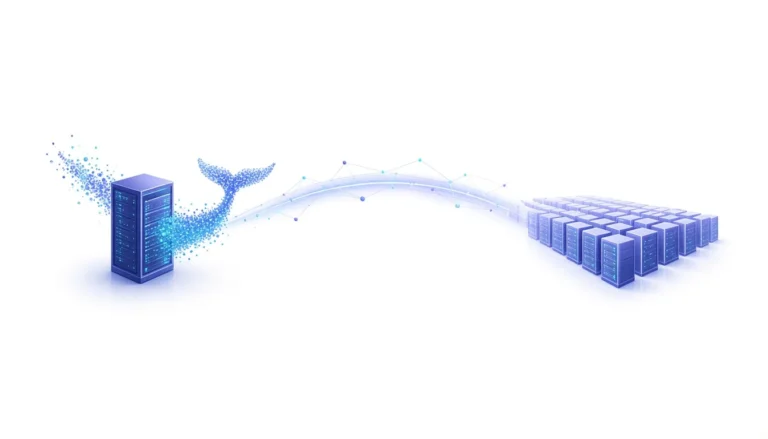
According to reports first carried by The Information, DeepSeek and Moonshot AI leaned on broad proxy networks to hammer OpenAI’s newly released GPT-6 Astra with complex prompts and capture its step-by-step reasoning. The goal was straightforward: gather enough synthetic traces to replicate the model’s logic at scale. That distilled material is credited with helping both firms ship updated models by late October.
The effort zeroed in on Astra in the weeks after its September launch. Moonshot’s Kimi K3.1 Pro, with its million-token window, and DeepSeek’s V4.1-Flash 1017 both reached the market on an accelerated timeline. None of the three companies had issued formal statements on the reports at the time they surfaced.
The shift to OpenAI came only after Anthropic tightened defenses around Claude, limiting access to reasoning tokens and quickly banning suspicious proxy accounts. Extractors simply moved their pipelines to the next available target.
Why it matters now
The episode lays bare the shaky economics of frontier AI. Training a leading model still costs billions in compute and data, yet a determined rival can now close much of the gap by harvesting outputs rather than building from scratch. Distillation, in effect, lets challengers borrow the leader’s R&D spend.
That reality forces labs to treat API security as a core product problem. Obfuscating reasoning tokens, already standard at Anthropic, is likely to spread. Developers will notice the change first: tighter rate limits, stricter monitoring, and fewer transparent traces of how models reach their answers. Over time the U.S.-China capability gap narrows further, with models like Kimi K3.1 Pro and DeepSeek V4.1-Flash 1017 arriving at lower cost and higher speed than older forecasts assumed.
Who is most affected
| Stakeholder | Impact | Why |
|---|---|---|
| Frontier Labs (OpenAI, Anthropic) | High | Forced to invest heavily in API abuse detection and reasoning-token obfuscation, fundamentally altering product design. |
| Challenger Labs (DeepSeek, Moonshot) | High | Facing intense scrutiny over training methodologies, risking API bans, and potential regulatory backlash. |
| AI Developers & Enterprises | Medium | Collateral damage through stricter API terms, reduced output transparency, and complex compliance layers. |
About the analysis
Researched and written with AI assistance under the editorial responsibility of the i10X News team. The title image is an AI-generated illustration. Read our AI Use Policy. Spotted an error? Request a correction.
This is an independent i10x analysis designed for AI founders, ML engineers, and policy observers tracking the frontier model ecosystem. Insights are synthesized from technical model specifications, business intelligence reporting, and security updates regarding API abuse and model extraction.
- SBS News: “DeepSeek and Moonshot’s Main Target for ‘Distillation’ Is Astra”
- FourWeekMBA: OpenAI Rivals DeepSeek, Kimi Distilled GPT-6 Astra: Report
- San Luis Obispo (Reuters): DeepSeek, Moonshot used OpenAI’s GPT-6 Astra to train latest models, The Information reports
- Simon Willison: Introducing Kimi K3.1 Pro
- Kingy.ai: Kimi K3.1 Pro: Specs, Benchmarks, Pricing & Comparisons
i10x Perspective
The Astra distillation reports prove that in the modern AI era, intelligence is highly volatile and inherently leaky. If frontier models continue to serve as the uncredited teachers for their cheapest rivals, the competitive advantage will shift away from raw model weights and toward deployment ecosystems, proprietary data pipelines, and un-distillable real-world integrations. We are entering a paradigm where successfully hiding how an AI thinks is becoming just as valuable as the thought itself.