Anthropic’s applied AI team has published blunt advice for anyone building AI agents: in many cases, fold your subagents back into one main loop. The article argues that a single agent equipped with skills “frequently outperformed” both a single giant prompt and multi-agent designs, “often at a lower cost and latency”. The guidance, plus an open-source kit for testing it, is now circulating widely on X, amplified by Google’s Addy Osmani, and it lands squarely against the current enthusiasm for agent teams.
Quick Take
- The finding: In Anthropic’s customer work, one agent with progressively loaded skills often beat subagent architectures; one customer saw “roughly 2x faster runtime”.
- The recipe: “One clear system prompt, 4-5 thin data tools, and firm output guardrails”, with skills and tool search loaded on demand.
- When subagents still win: Measurable context bloat, parallel work that can be discarded, or tool selection and conflicting instructions that one agent cannot handle.
- The method: Start with about 10 golden examples, “measure, change one thing at a time, and keep what holds up.”
What happened
The article, “Building agents: When to fold subagents into your main agent loop”, was published by Anthropic’s applied AI team on October 22, 2026, alongside an open-source single-agent-loop kit on GitHub. It describes a pattern Anthropic saw repeatedly: teams split work across a dozen specialist subagents, often mirroring their own org chart, and then struggled with consistency, latency and debugging. In one case, keeping on-brand output consistent across many subagents proved difficult until the work was consolidated.
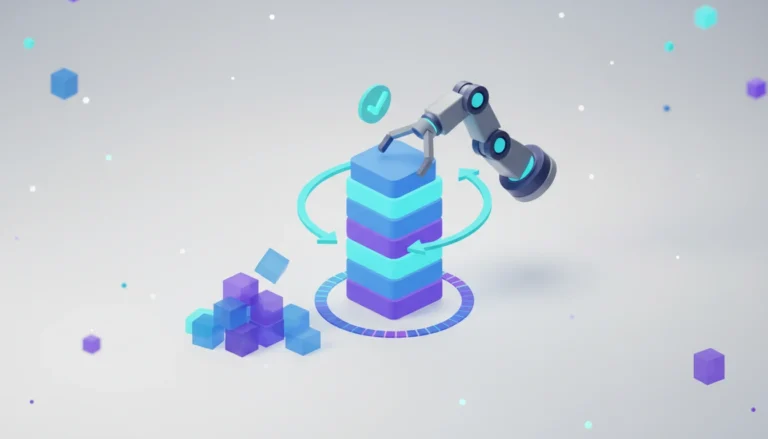
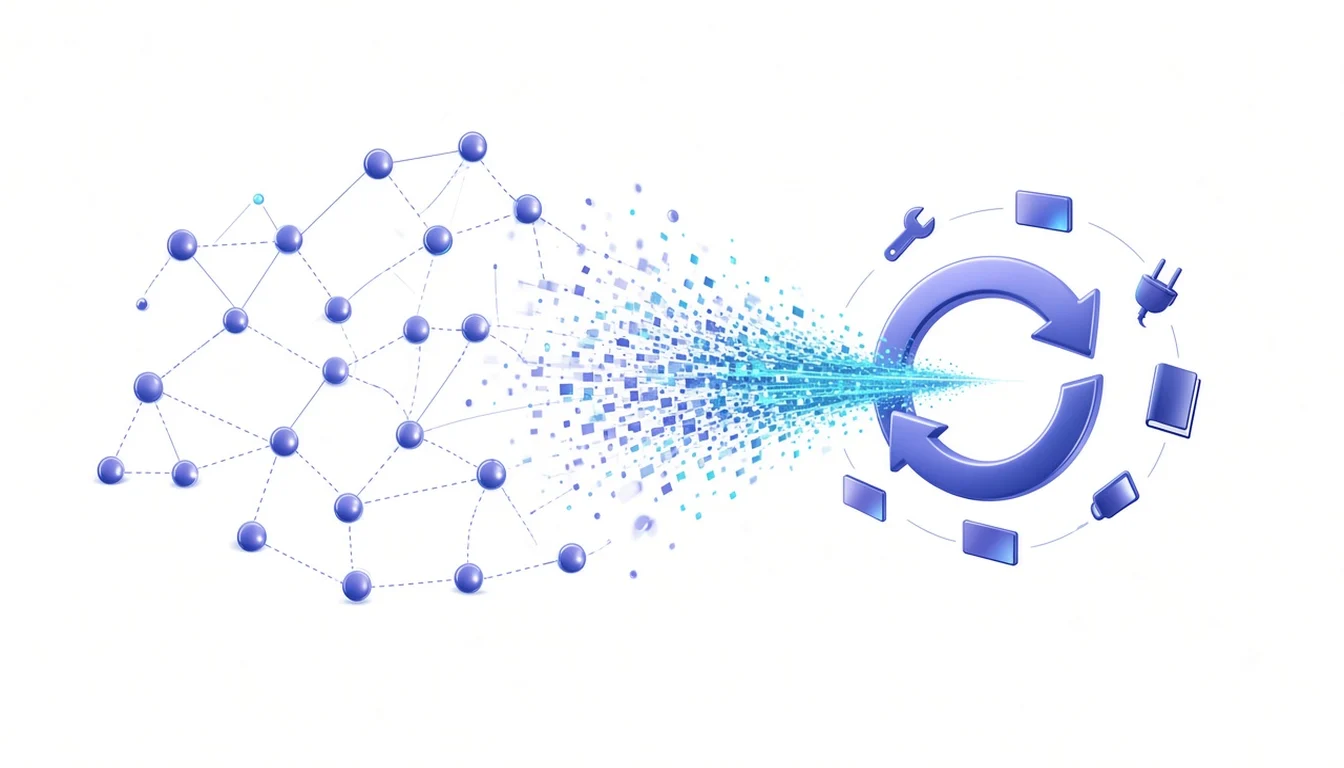
Anthropic names the failure modes: poor context management, subagent sprawl, the “Frankenprompt” stitched together from many teams’ instructions, evaluations that only test individual pieces, and compounding latency. The fix it recommends is progressive disclosure. Instead of loading everything up front, the agent pulls in skills and tools when needed. Anthropic says this approach cut the Claude Code system prompt by more than 80%, and that models have become capable enough since Claude Opus 4.5 to handle the orchestration themselves. It also warns that tool selection degrades once an agent sees roughly 30–50 tool definitions.
The kit ships skills for the workflow, including build-eval, prompt-audit, hillclimb and cost-optimize, plus skill-creator and skill-doctor helpers. In one example, folding a subagent broke a process that showed up in only one of two test runs, which is why Anthropic stresses repeated evaluations.
Why it matters now
The industry has spent the year building ever more elaborate multi-agent systems. Anthropic’s own earlier guidance noted that multi-agent setups can consume 3 to 10 times more tokens. This article goes further, arguing that for many production tasks the extra agents add cost without adding intelligence. Osmani summarized it in an X article on October 29: “For small jobs, subagents multiply cost and latency… they don’t, by default, make things smarter.”
The timing is notable. Consumer agent products, including Grok Bot, are encouraging users to build teams of specialized bots. Anthropic’s advice suggests those teams should be justified by measurement, not by how intuitive an org chart feels.
Who is most affected
Engineering teams running production agents benefit most, because consolidation can cut cost and latency quickly. Vendors selling multi-agent orchestration frameworks face a harder sales pitch.
| Stakeholder | Impact | Why |
|---|---|---|
| Production agent teams | High | Folding subagents can cut cost and latency while improving consistency. |
| Orchestration framework vendors | Medium | Multi-agent complexity is now framed as a cost to justify, not a feature. |
| Consumer agent users | Medium | Agent-team setups are worth testing against one well-equipped bot before scaling. |
The under-reported angle: Conway’s law for agents
The sharpest point in Anthropic’s article is organizational, not technical. Teams tend to design agent systems that mirror their company structure, with one subagent per department, which is Conway’s law applied to AI. The result reflects internal politics rather than what the task needs. The cure is to design around the work and its evaluation set, then split only where measurement shows a single loop is failing. Cognition has argued along similar lines that “writes stay single-threaded”, keeping parallelism for read-only exploration.
What Grok and X are saying
Grok has repeatedly pointed users to the original article on X, summarizing it as showing that a single agent loading skills and tools on demand often beats multiple subagents on quality, cost and latency, with roughly 2x faster runtime in one customer comparison. In other replies, Grok has noted that layered setups, such as a fast model scanning files under a stronger planner, can still cut token waste, which is consistent with Anthropic’s exceptions for parallel, discardable work.
Not everyone is convinced. Some developers on X cited third-party evaluations claiming that multi-agent reviewers catch more bugs, and others shared token-overhead figures for subagent designs; i10x could not verify those numbers independently. The broad consensus is that the debate is about defaults: start single, add agents when the evals demand it.
Our read: the most useful part of Anthropic’s guidance is the method, not the conclusion. Ten golden examples and one change at a time will settle more architecture arguments than any blog post.
About the analysis
Researched and written with AI assistance under the editorial responsibility of the i10X News team. The title image is an AI-generated illustration. Read our AI Use Policy. Spotted an error? Request a correction.
This independent, research-based i10x analysis synthesizes Anthropic’s published guidance and open-source kit, related engineering writing, and verified posts on X.
- Anthropic: When to fold subagents into your main agent loop
- GitHub: anthropics/single-agent-loop-kit
- Anthropic: Building multi-agent systems, when and how to use them
- Addy Osmani on X: You’re probably overprompting Claude
- Addy Osmani: Multi-agent systems
- Grok on X: summary of Anthropic’s single-agent findings
i10x Perspective
Anthropic’s guidance marks a maturing moment for agent engineering: the field is moving from architecture as ambition to architecture as measurement. As models get more capable, the default should be fewer moving parts, with skills, not subagents, as the unit of specialization. Expect the next wave of agent tooling to compete on evaluation and context management rather than on how many agents it can orchestrate.