DeepSeek TileLang: Open-Source CUDA Alternative for Huawei Ascend
⚡ Quick Take
"To break a hardware monopoly, you first have to break the software lock-in. DeepSeek is trying to crack CUDA."
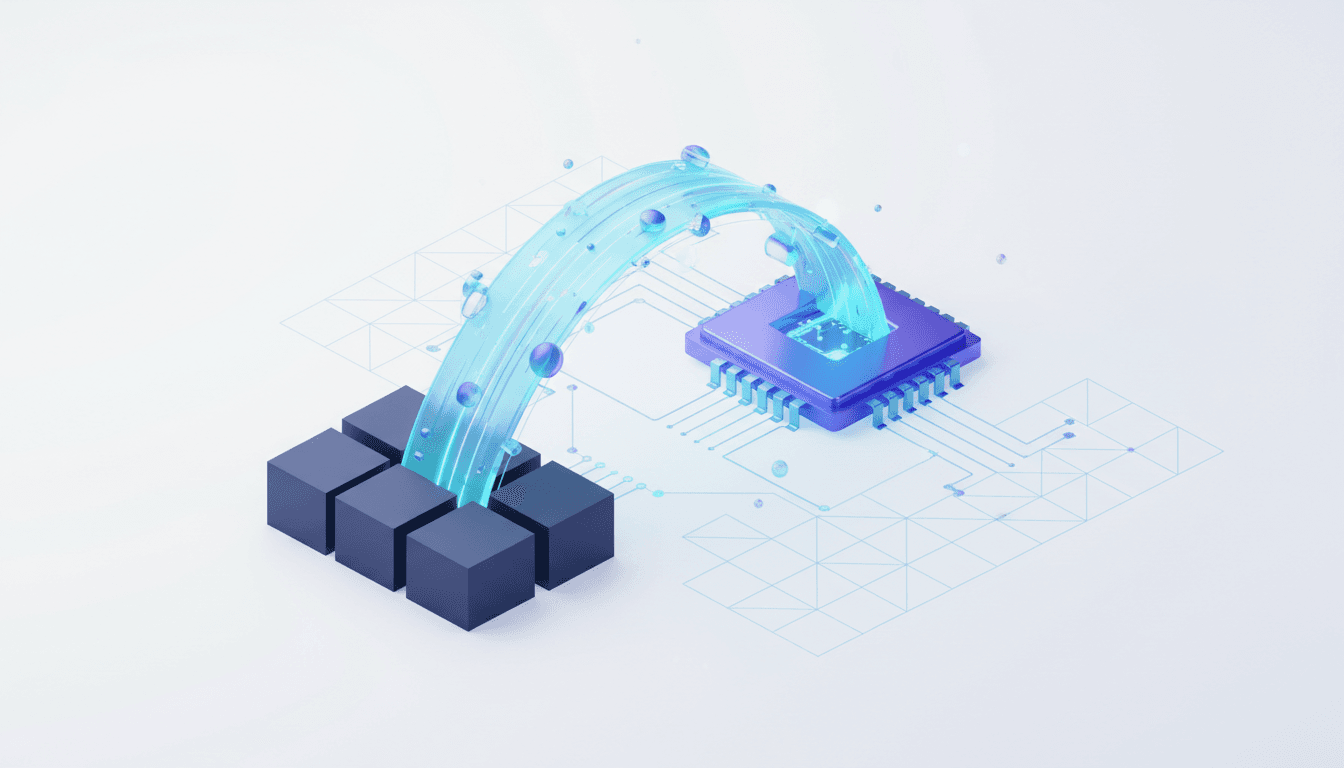
DeepSeek has officially released a free, open-source programming toolkit, including a new language called TileLang, explicitly designed to optimize artificial intelligence workloads on Huawei’s Ascend chips.
Summary
In a strategic partnership that merges frontier AI development with domestic semiconductor ambitions, Chinese AI lab DeepSeek has open-sourced the compute and communication libraries necessary to program Huawei’s Ascend AI accelerators. This move aims to directly challenge Nvidia’s software dominance.
What happened
DeepSeek released a suite of free, open-source software infrastructure—most notably TileLang—that allows developers to write and optimize high-level operations for Huawei’s Ascend NPUs. This follows Huawei's recent "day-zero" hardware and software adaptation for DeepSeek’s V4 models.
Why it matters now
Nvidia’s near-monopoly in the AI market isn't just about silicon; it's heavily protected by CUDA, its proprietary software stack. By providing an open-source bridge to Huawei’s hardware, DeepSeek is attempting to commoditize the software layer, making it practically viable to train and run large language models (LLMs) without Nvidia GPUs.
Who is most affected
AI developers and CTOs looking for cost-effective or accessible compute are the immediate beneficiaries. For Nvidia, this represents a credible, lab-backed threat to its ecosystem moat in the East, while policymakers will see this as a direct consequence of semiconductor export controls.
The under-reported angle
Most coverage treats this purely as a geopolitical "self-reliance" story, but the real significance is technical: a frontier model builder (DeepSeek) is doing the heavy lifting to write communication libraries and kernel optimizations, validating Huawei’s hardware for the broader open-source AI community in a way hardware vendors cannot do alone.
🧠 Deep Dive
Have you ever tried swapping out a familiar tool only to hit invisible walls of compatibility? To understand the AI infrastructure war, you have to look past the physical data centers and examine the software that runs them. For a decade, Nvidia’s CUDA has been the default language of AI—an inescapable software moat that makes deploying non-Nvidia hardware notoriously painful. From what I've seen, DeepSeek’s release of open-source programming tools for Huawei’s Ascend chips is an attempt to rewrite those rules, offering the most credible alternative to CUDA we have seen emerge from the Chinese ecosystem.
At the core of this release is TileLang, alongside specialized compute and communication libraries. While Huawei already has its own base software stack called CANN (Compute Architecture for Neural Networks), developer adoption has historically struggled against the seamlessness of Nvidia’s ecosystem. DeepSeek’s toolkit acts as an optimization layer, allowing developers to program Huawei's neural processing units (NPUs) natively without battling immature base-level drivers. For the first time, developers have access to a high-level programming language tuned by an actual frontier AI lab specifically for domestic silicon.
This software release does not exist in a vacuum; it is the culmination of deep hardware-software co-optimization. As noted in recent industry coverage, Huawei’s Ascend 950PR and 950DT chips enjoyed "day-zero adaptation" for DeepSeek’s latest V4 model. This means DeepSeek isn’t just building theoretical developer tools—they are running one of the world’s most efficient frontier LLMs on Huawei hardware, battle-testing the libraries, and then open-sourcing the very tools they used to achieve that performance.
This creates a fascinating shift in the AI supply chain. Historically, hardware manufacturers had to build software to convince developers to use their chips. Now, model builders facing compute constraints (driven by US export controls and high Nvidia premiums) are vertically integrating and building the chip programming tools themselves. By open-sourcing these libraries, DeepSeek is giving the broader developer community a free, proven playbook for running massive inference and training workloads on alternative hardware.
That said, a toolkit does not erase a decade of CUDA dominance overnight. The ultimate test will be developer friction. Moving an AI ecosystem requires massive community trust, comprehensive documentation, and seamless integration with existing frameworks like PyTorch or Huawei's MindSpore. Yet, if TileLang and these communication libraries prove stable, it fundamentally alters the calculus for cloud providers and data centers. It proves that with the right software abstraction, the underlying silicon is interchangeable—a scenario that threatens the very foundation of Nvidia’s pricing power.
📊 Stakeholders & Impact
- AI / LLM Providers — High — Unlocks viable, cheaper inference and training pathways outside the Nvidia ecosystem, specifically for those utilizing Huawei Ascend clusters.
- Nvidia & Chip Vendors — Medium–High — A natively developed, lab-tested software alternative chips away at the CUDA ecosystem's stickiness, potentially accelerating a bifurcated global chip market.
- AI Developers & Engineers — High — Introduces TileLang as a new required competency for developers deploying models in regions prioritizing domestic hardware self-reliance.
- Regulators & Policy — Significant — Demonstrates that export controls are forcing tight vertical integration between top-tier AI labs and domestic foundries, accelerating software independence.
✍️ About the analysis
This independent, research-based analysis synthesizes global financial reporting, technology policy data, and semiconductor market signals. It is designed for CTOs, AI infrastructure leaders, and developers tracking the evolution of the hardware-software stack and alternative compute ecosystems.
🔭 i10x Perspective
The most critical bottleneck in scaling intelligence is no longer just manufacturing chips; it is the software friction required to make those chips useful. DeepSeek’s open-sourcing of TileLang signals a future where frontier AI labs refuse to be held hostage by hardware monopolies, actively engineering their way out of supply constraints by rewriting the stack.
Over the next five to ten years, observers should watch closely for a permanent bifurcation in global AI infrastructure: a Western ecosystem built on CUDA, and a rapidly maturing, open-source Asian ecosystem optimized for Ascend and its successors. The AI race is shifting from who has the most GPUs to who controls the abstraction layer above them.
Related News
2026 Open-Weight LLMs: Efficiency Wins Over Scale
Chinese labs are redefining open-weight LLMs in 2026 with MoE architectures that deliver massive performance using far fewer active parameters. Learn how this shifts deployment economics for AI agents and coding workflows.

LLM Acquisition Collapse: Why Routers Fail to Cut Inference Costs
Learn how LLM acquisition collapse causes dynamic routers to waste inference budgets. Understand the Reward-SNR Floor and when routing policies cannot be learned from data. Explore the guide.

OpenAI Dots: Always-On Autonomous AI Agents for Enterprise
OpenAI launched Dots at DevDay 2026: persistent AI agents powered by GPT-6 Astra that run 24/7 across 4,000+ apps. Learn how these autonomous digital workers transform enterprise workflows and security. Explore the analysis.