Quick Take
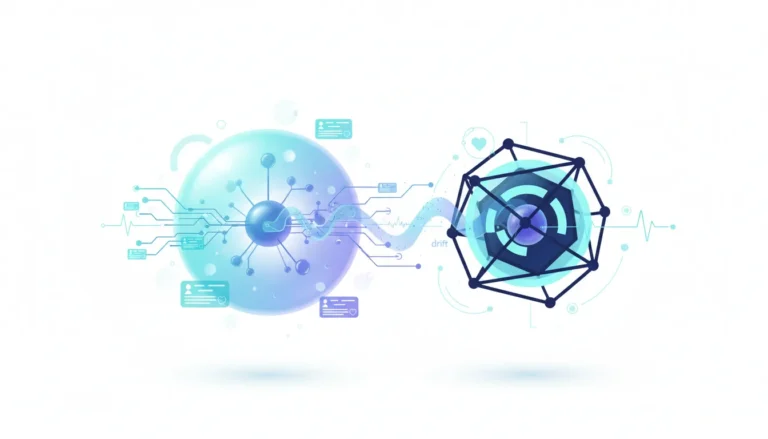
- Summary: A massive new multicenter study has pitted open-weight powerhouse DeepSeek-V3.2 directly against proprietary leader ChatGPT-5.2, evaluating their clinical reasoning across real-world outpatient diagnosis and treatment workflows.
- What happened: Researchers deployed both advanced LLMs across diverse medical settings, systematically scoring their ability to ingest patient vignettes, triage symptoms, and recommend guideline-concordant treatments, while measuring diagnostic accuracy against human clinician baselines.
- Why it matters now: Healthcare remains one of the toughest proving grounds for AI. The head-to-head performance of an elite open-weight model versus OpenAI’s latest flagship will shape hospital IT budgets, cloud compute demand, and whether high-stakes medical AI stays locked behind proprietary APIs or shifts to local, HIPAA-compliant servers. From what I’ve seen, these choices rarely come down to accuracy alone.
- Who is most affected: Hospital IT leaders, medical AI developers, and clinical governance teams deciding how to procure, structure, and safeguard their next generation of clinical decision support systems.
- The under-reported angle: While top-line clinical accuracy grabs the headlines, the real deployment bottlenecks lie in health economics and calibration—specifically, inference token costs, latency trade-offs, and whether the models express accurate uncertainty before suggesting a risky intervention.
Deep Dive
Have you ever considered what happens when these models move past exam questions and into actual exam rooms? The recent multicenter study pitting DeepSeek-V3.2 against ChatGPT-5.2 shifts the focus from tidy multiple-choice benchmarks to the messy, high-stakes work of outpatient diagnostic reasoning. By making these frontier models evaluate rich patient vignettes and form complex clinical decisions, the healthcare sector now gets a clearer stress test of what modern AI can deliver when live patient outcomes hang in the balance.
At the core of this evaluation sits a basic architectural and market tension: open versus closed intelligence. ChatGPT-5.2 represents the cutting edge of proprietary scaling, with its massive parameter counts, alignment overhead, and layered safety systems. DeepSeek-V3.2, meanwhile, shows that carefully tuned open-weight designs can now compete at a level few expected. For developers and hospital CTOs, that parity changes the equation. If an open-weight model can hold its own in subspecialties like cardiology or pediatrics, the math around enterprise AI deployment starts to look very different.
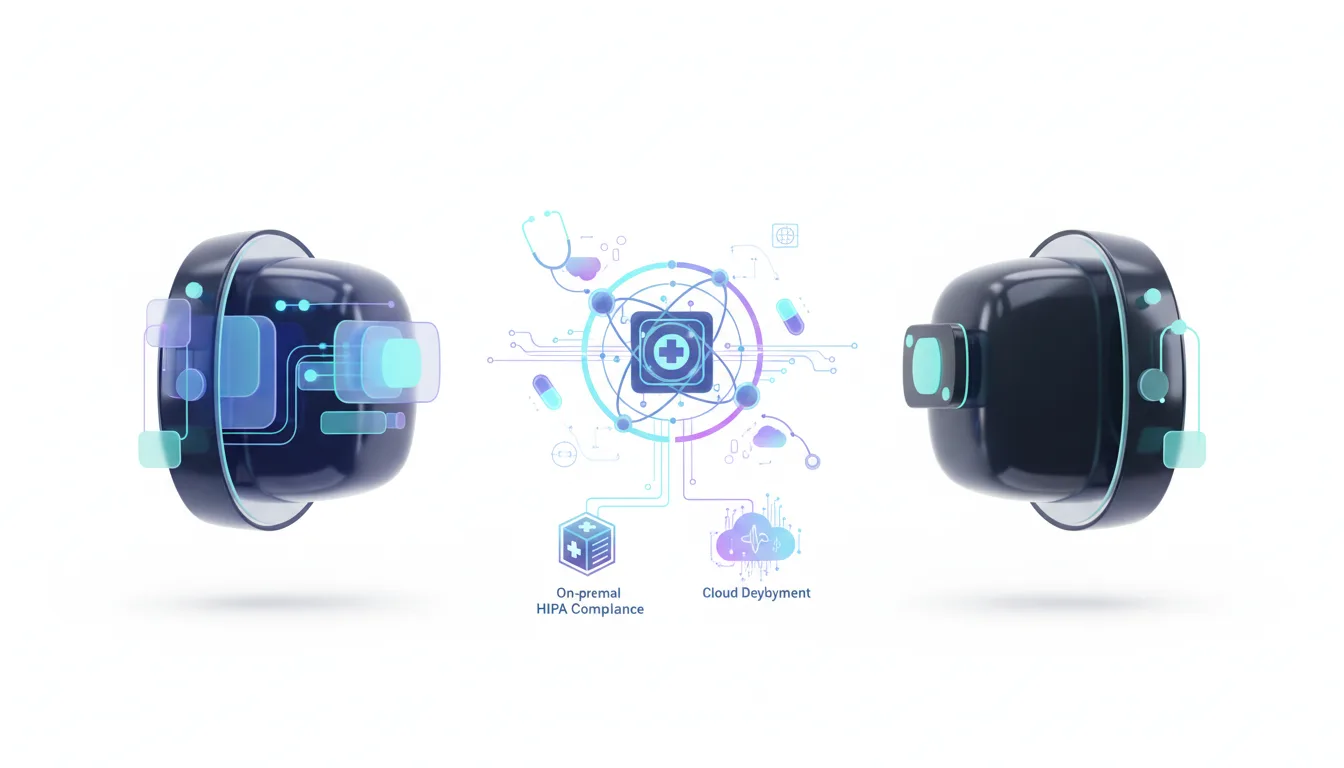
Clinical peer reviews tend to spotlight p-values and clinician-agreement scores, yet the infrastructure side weighs entirely different factors: cost, latency, and throughput. Running hundreds of thousands of diagnostic inferences daily through a proprietary API adds up fast. DeepSeek’s arrival at this level opens a practical path for health IT teams to consider localized, secure on-premise clusters instead—avoiding both the steep AI cloud premium and the data-residency headaches that come with routing Protected Health Information (PHI) off-site.
Still, raw capability only matters once it fits into existing workflows. The details of prompting strategies, chain-of-thought consistency, and tool-use protocols determine whether these models actually succeed. Mapping an LLM into Electronic Health Record (EHR) systems means precise alignment with ICD-10 and SNOMED CT, plus reliable uncertainty quantification. Doctors do not simply need an AI that reaches the right conclusion; they need one that flags when it lacks confidence and routes the case to a human without friction.
Over time, clinical integration will also depend on how well we track model failures. A clear error taxonomy matters for regulatory readiness under frameworks like FDA guidelines or ISO 14971. When DeepSeek-V3.2 or ChatGPT-5.2 produces a harmful suggestion, teams need to distinguish between a factual hallucination, gaps in demographic coverage, or an unaddressed bias. Those edge cases, and the safeguards around them, will likely decide which projects move from pilot to standard practice.
Stakeholders & Impact
- AI / LLM Providers — High impact: Validates whether open-weight architectures (DeepSeek) can erode OpenAI’s moat in high-margin enterprise and regulated sectors.
- Hospital IT & Infrastructure — High impact: Drives decisions between cloud-hosted API deployments (high Opex) vs. heavily capitalized on-premise GPU clusters (high Capex, better privacy).
- Clinicians & End Users — Medium impact: Direct impact on time-on-task, cognitive load, and the necessity to double-check AI-generated diagnosis/treatment proposals.
- Regulators (FDA / EMA) — Significant impact: Accelerates the need for standardized safety rubrics, bias dashboards, and explicit guidelines for autonomous vs. assistive diagnostic tools.
About the analysis
Researched and written with AI assistance under the editorial responsibility of the i10X News team. The title image is an AI-generated illustration. Read our AI Use Policy. Spotted an error? Request a correction.
This is an independent, research-based analysis synthesizing peer-reviewed benchmarking structures and competitive AI market positioning regarding clinical LLM deployments. Designed for health-IT leaders, clinical AI developers, and enterprise CTOs, it reframes raw academic accuracy metrics into operational infrastructure and deployment insights.
i10x Perspective
Healthcare serves as the ultimate test of AI accountability. Seeing DeepSeek-V3.2 go toe-to-toe with ChatGPT-5.2 in outpatient diagnostics signals that baseline frontier intelligence is commoditizing faster than most forecasts anticipated. If medical providers can obtain enterprise-grade clinical reasoning through open-weight models, the trillion-dollar proprietary LLM advantage will rest more on agentic workflows and tool integration than on raw cognitive power alone. Over the next five years, the generative AI healthcare race will likely shift from “who has the smartest model” to “who provides the most reliable calibration of uncertainty for regulatory approval.”