The era of experimental, single-turn chatbots is winding down
Summary
The AI world is shifting fast from training bigger foundational models to getting autonomous agents into production. These agents actively use tools and pull from enterprise data. Cloud providers and open-source projects are rolling out competing platforms to handle this unpredictable workload, which means companies now have to rethink security, access controls, and how token costs actually behave in practice.
What happened
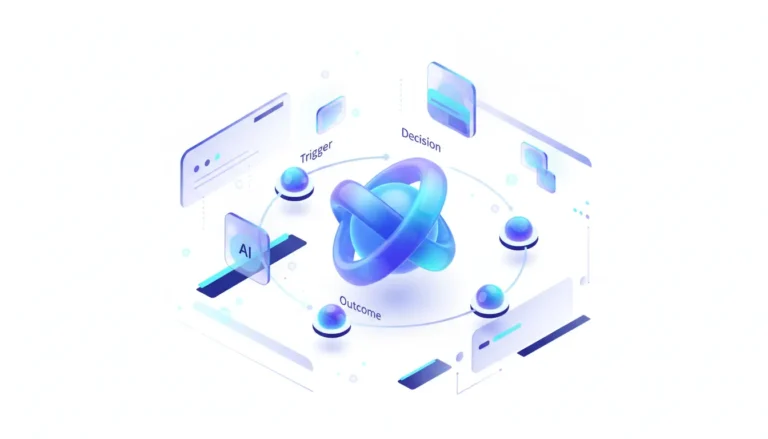
Microsoft Azure, Google Vertex AI, OpenAI, and open-source efforts like LangChain and Hugging Face (smolagents) have all pushed out tools that standardize the perception-planning-action loop. At the same time, platforms such as Salesforce and Power BI are folding agents in, which is creating demand for Bring Your Own LLM setups and tighter enterprise governance.
Why it matters now
Agents do more than generate text. They run code, query databases, and trigger workflows. That recursive behavior turns AI from a fairly predictable inference cost into something that can spike compute use without warning. One agent stuck in a loop can burn through token budgets and push against cloud limits quicker than most teams expect.
Who is most affected
Enterprise IT architects, security teams, and ML engineers are the ones sorting this out. They have to connect open-ended model capabilities with strict data policies—making sure agents do not hallucinate results or sidestep Row-Level Security when they touch private data.
The under-reported angle
Most developer coverage still focuses on prompting techniques like ReAct or function calling. The harder problem is enterprise data integration. There is still no widely accepted way to model threats specific to agents, such as prompt injections meant to pull out semantic data, and few solid frameworks exist for forecasting the cost of autonomous compute.
🧠 Deep Dive
If you look at the current landscape, plenty of groups are still defining what an agent even is—an LLM with memory, a planner, and some APIs. From what I have seen, the market has already moved past that stage. The real work now is orchestration, governance, and the infrastructure needed to run agents safely at scale.
Cloud providers are positioning their managed services as the fix for agent sprawl. Google Vertex AI and Microsoft Azure stress grounding and guardrails. OpenAI’s Assistants API manages state and tool calls natively. Yet many enterprises want more flexibility than these closed systems easily allow. Lighter frameworks like Hugging Face’s smolagents highlight the tension: some teams prefer tightly managed platforms, while others want composable, Bring Your Own LLM approaches.
That tension becomes concrete once agents reach actual business data. When an agent lands in something like Power BI or an enterprise data lake, it must respect Row-Level Security so a regional manager’s agent cannot simply pull global payroll figures. Current writing tends to skip over these details. Generating DAX queries or summarizing dashboards requires hybrid gateways and Entra ID checks—reminding everyone that an agent is only as reliable as the identity layer behind it.
The economics shift too. A standard LLM call has a known token count. An agent running a plan-and-execute loop might query a database, hit an error, rewrite the query, and repeat several times before finishing. That pattern makes capacity planning difficult and can pressure systems like Microsoft Fabric or Snowflake in ways most forecasts did not anticipate.
We are seeing a new middleware layer take shape. Unpredictable token use, cross-platform coordination, and the need for detailed audit trails are pushing a gap between basic developer tools and production-grade platforms. Organizations that want to run multi-agent systems will need observability built specifically for tracking reasoning paths, catching runaway loops, and enforcing spending caps at the infrastructure level.
📊 Stakeholders & Impact
| Stakeholder / Aspect | Impact | Insight |
|---|---|---|
| AI / LLM Providers | High | Agent loops can multiply token use. Providers need to optimize for quick tool calls, not just readable output. |
| Enterprise IT & Security | High | New governance is required to stop agents from bypassing Row-Level Security or falling for data-exfiltrating prompt injections. |
| Data & BI Analysts | Medium–High | Agents speed up reporting, yet teams still need human review of any generated logic such as DAX or SQL. |
| Cloud Infrastructure Providers | Significant | New tools for capacity planning, usage limits, and sandboxed execution environments are becoming necessary. |
✍️ About the analysis
Researched and written with AI assistance under the editorial responsibility of the i10X News team. The title image is an AI-generated illustration. Read our AI Use Policy. Spotted an error? Request a correction.
This is an independent look at how major providers and open-source projects are positioning themselves, alongside trends in enterprise BI integration. It is meant for CTOs, engineering managers, and architects who are moving from static LLM apps to live agent infrastructure.
🔭 i10x Perspective
Moving to agentic AI is not a simple upgrade. It changes how compute gets consumed. As models fade into the background and act more like routing engines, the real advantage for AI companies will come from secure integration—building reliable connections between models and enterprise data. Over the next several years, expect strong competition between cloud platforms offering tightly coupled agent systems and open-source efforts that favor vendor-neutral, Bring Your Own LLM orchestration.