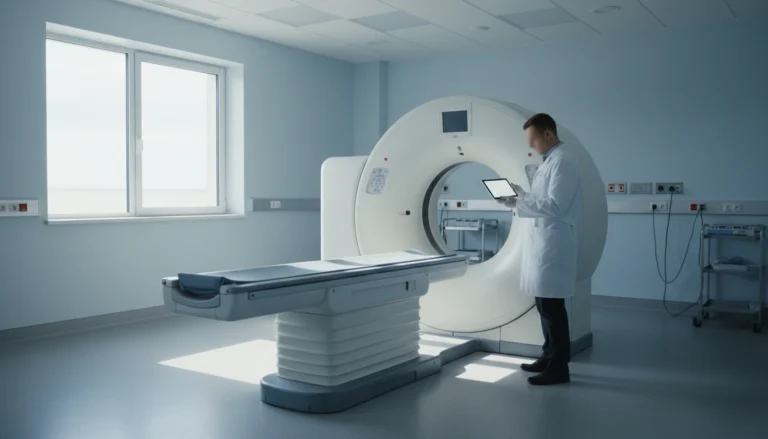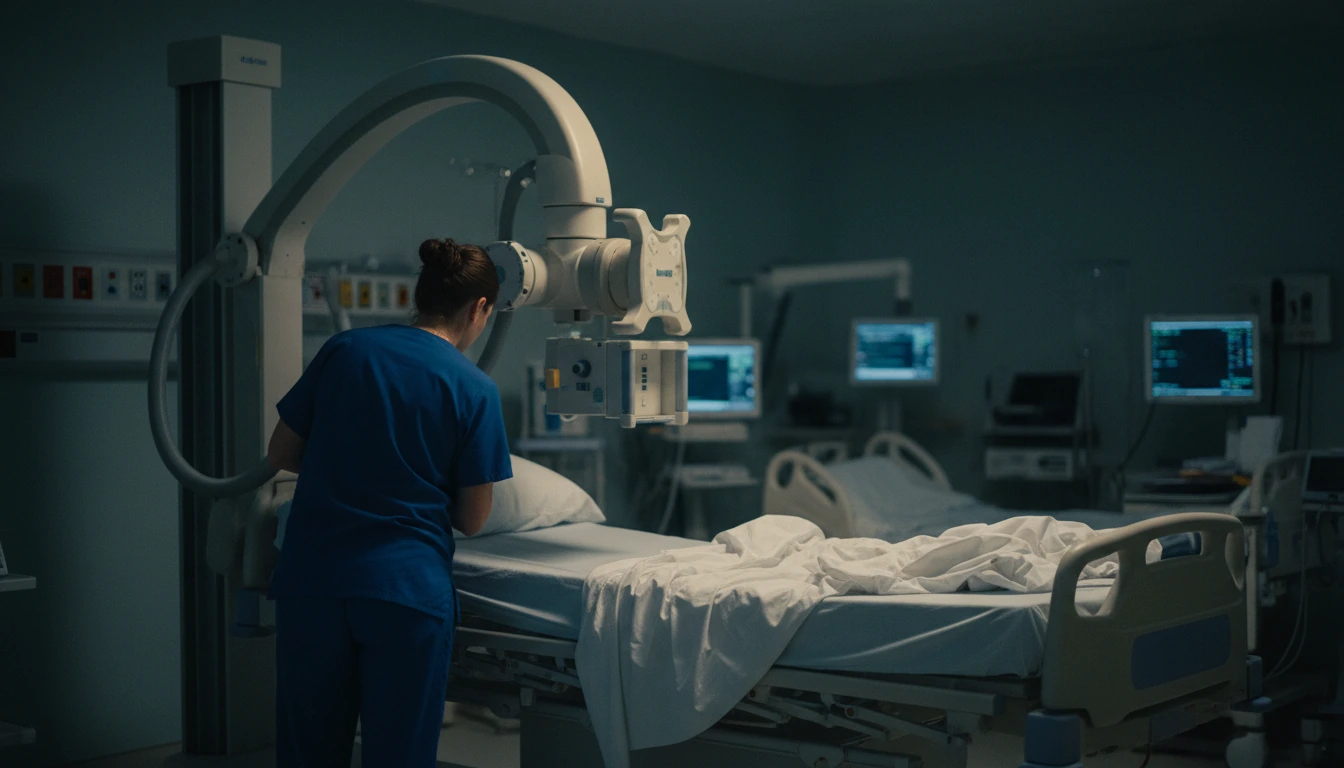
GE HealthCare has received FDA 510(k) clearance for Critical Care Suite 3.0, AI software that runs directly on mobile X-ray machines and automatically detects feeding tubes on the image to help clinicians check whether the tube sits in the right place. For the first time, the feeding tube algorithm also covers pediatric patients. Because the AI is embedded in the device, it works at the bedside without internet or cloud connectivity. Separately, Stockholm-based Sine Health received FDA clearance on the same day for a smartphone app that monitors essential tremor.
Quick Take
- The clearance: FDA 510(k) clearance for GE HealthCare’s Critical Care Suite 3.0, announced November 17.
- What it does: Detects enteric (feeding) tubes on X-ray images and identifies the tube path, tip and side port, while highlighting the airways and diaphragm as reference points.
- What is new: Feeding tube assessment now supports pediatric patients as well as adults.
- Test results: GE HealthCare reports 99.2 percent sensitivity for tube detection and 91.6 percent mean DICE localization against expert radiologist annotations.
- Also cleared today: Sine Health’s smartphone-based essential tremor monitoring system (K261026).
In plain English
Many patients in intensive care get nutrition through a thin tube that runs through the nose into the stomach. If the tube ends up in the wrong place, for example in the lungs, it can cause serious harm, so doctors take an X-ray to check. GE HealthCare’s software looks at that X-ray right on the portable machine and marks where the tube is and where its tip ends. The doctor still decides, but gets help faster, now also for children.
What happened
GE HealthCare announced the clearance from Chicago. The company cites research estimating that 80 percent of intensive care unit patients receive enteral nutrition through nasogastric or nasoenteric tubes, and says 75 percent of mobile X-ray usage takes place in emergency departments and 51 percent in intensive care units.
“Critical care teams need to make timely clinical decisions in complex, rapidly changing environments when every minute counts,” said Larry Boyd, vice president and general manager, Global X-ray, GE HealthCare. “Expanding the algorithm portfolio to include feeding tube assessment capabilities for pediatric patients is an important step in supporting care teams across a broader range of patients with technology designed to fit naturally into the way they work.”
“Critical Care Suite 3.0 gives our team access to feeding tube assessment information right at the bedside, supporting more timely clinical decisions and better patient care,” said Adam Walbrun, clinical manager, imaging services, at Emplify Health in La Crosse, Wisconsin.
Also cleared: Sine Health’s smartphone tremor monitor
Sine Health announced FDA 510(k) clearance (K261026) for Sine, which measures essential tremor passively through the sensors in a patient’s own smartphone, like a step counter running in the background. The company describes its approach as turning smartphone and wearable sensor streams into a continuous, AI-based neurological examination. Sine Health says essential tremor affects about 7 million Americans and that this is its second FDA clearance, after its Apple Watch based Parkinson’s disease monitoring system was cleared in June 2026. “With several new therapies for essential tremor arriving the need to measure how patients actually do at home is growing,” said Jakob Gerstl, founder and CEO of Sine Health.
Background: AI moves onto the device
Most clinical AI so far runs in the cloud or in hospital servers. On-device AI matters in places like ICUs and emergency rooms, where network access is unreliable and seconds count. Both clearances also show a trend toward AI that works in the background of existing tools, the X-ray machine or the phone, instead of new workflows. Our FDA AI Medical Device Tracker follows clearances like these, and the Health & Medical Research section covers the wider field.
Why it matters
Feeding tube checks are routine, frequent and high stakes, the kind of task where reliable AI can save time without changing who makes the decision. Pediatric support is a meaningful step because children’s anatomy and imaging protocols differ, and many medical AI tools are cleared for adults only. Sine’s clearance points in another direction: continuous measurement at home, which could change how neurologists adjust treatment between visits.
What’s still open
- How Critical Care Suite 3.0 performs across hospitals, patient groups and image quality in everyday use, beyond the 510(k) test data.
- Whether hospitals with older GE mobile X-ray systems can upgrade to the new software.
- How Sine’s smartphone measurements compare with clinic assessments over months.
- Whether insurers will pay for continuous remote tremor monitoring.
About the analysis
This independent i10x analysis is based on the companies’ announcements. Performance and prevalence figures are company statements and cited research, and were not independently verified.
Sources (plain text, no links):
- GE HealthCare press release: “GE HealthCare’s Critical Care Suite 3.0 brings first on-device AI for feeding tube detection to X-ray imaging in adult and pediatric care” (November 17, 2026)
- Sine Health press release: “Sine Health Receives FDA 510(k) Clearance for the First Smartphone Essential Tremor Monitoring Device” (PR Newswire, November 17, 2026)
i10x Perspective
The most useful medical AI is often the least visible: a marker on an X-ray, a background measurement on a phone. Neither clearance is a breakthrough on its own, but together they show where clinical AI is heading, into the devices clinicians and patients already use, at the moment the information is needed.