Quick Take
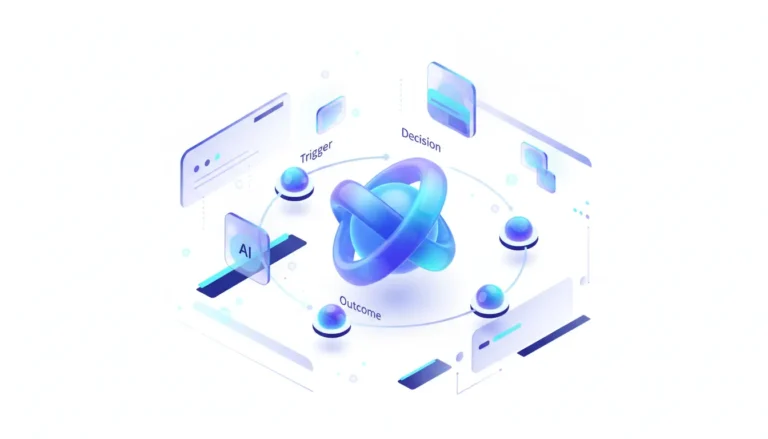
The era of the chatbot is receding. With Gemini 3.5 Flash, Google is openly declaring that the next frontier of artificial intelligence belongs to agents—highly efficient, tool-wielding models working invisibly in the background.
From what I’ve seen in recent deployments, this release isn’t just another incremental update. Google has unveiled Gemini 3.5 Flash, an ultra-fast, low-cost multimodal AI model specifically designed to power autonomous agents, function calling, and enterprise coding workflows rather than casual conversational interfaces.
Emphasizing raw speed and workflow orchestration, Google launched Gemini 3.5 Flash into its AI Studio and Vertex AI pipelines, arming developers with new schemas for agentic loops, precise tool use, and latency optimization.
As AI scales out of the prototype phase, enterprise multi-agent setups—like planner-executor models or advanced RAG (Retrieval-Augmented Generation)—demand thousands of rapid, cheap LLM calls. An intelligence layer optimized for Total Cost of Ownership (TCO) and rapid function execution is critical to making these viable, really.
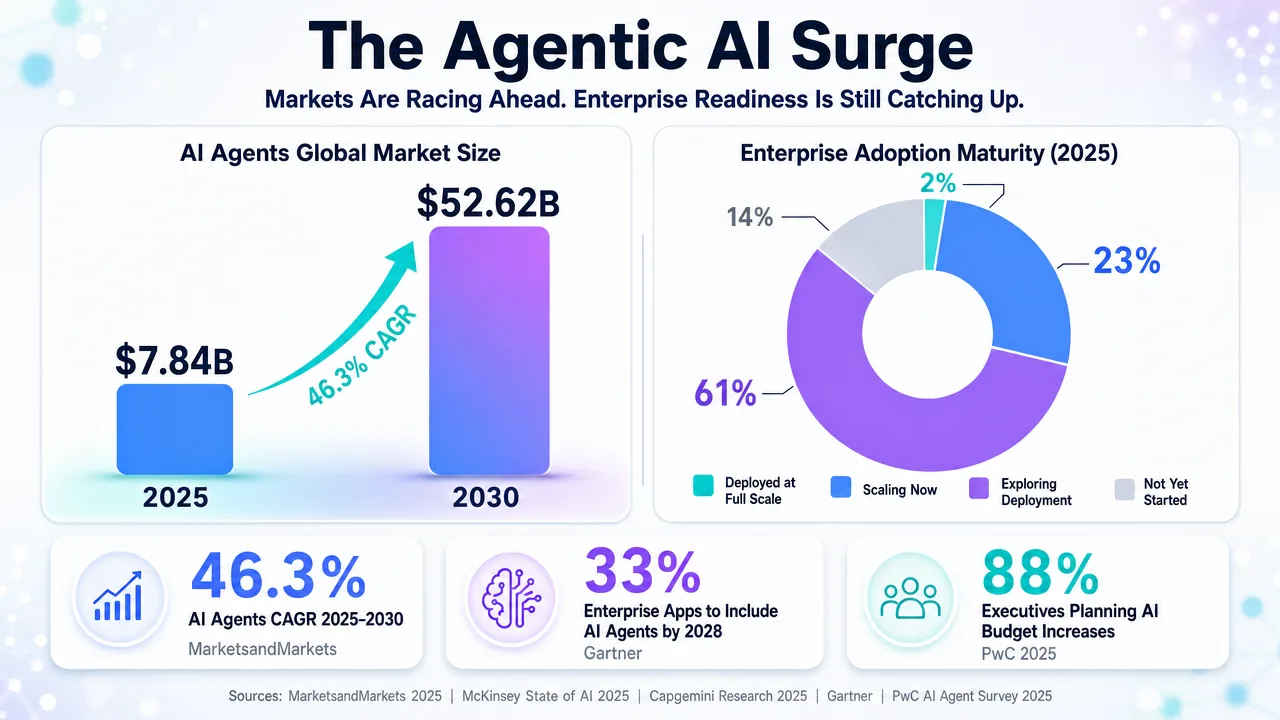
AI developers, solution architects, and data platform teams feel this shift most. They must build robust, production-grade applications that connect LLMs to internal databases and external APIs without massive latency or infrastructure bloat.
While the strategic pivot from chatbots to agents dominates mainstream headlines, the real technical bottleneck—and Google’s underlying infrastructure play—lies in productionizing tool-use reliability, enforcing strict programmatic guardrails, and managing the high-throughput failover scenarios inherent to autonomous agents.
Deep Dive
Google’s rollout of Gemini 3.5 Flash is less about reaching a new summit in artificial general intelligence and more about mastering the economics of AI infrastructure. Consumer media largely views this release through the lens of device integration and consumer convenience, but for the engineering ecosystem, the signal is unmistakably clear: we are moving past the chatbot. By explicitly optimizing 3.5 Flash for agentic workflows rather than verbose conversation, Google is engineering an execution engine designed to hit external APIs, write code, and orchestrate tools at scale.
For enterprise IT leaders and platform teams—who are currently wrestling with the Total Cost of Ownership (TCO) of large models—Gemini 3.5 Flash is a direct answer to a compounding infrastructure problem of multi-agent architectures. When an application requires a “planner” agent, multiple “executor” agents, and continuous RAG (Retrieval-Augmented Generation) loops, using flagship frontier models creates unsustainable latency and compute burn. By stripping down the conversational fat and upgrading the model’s structural JSON outputs, function-calling accuracy, and streaming capabilities, Google is shifting the battleground from “who has the smartest model” to “who has the cheapest, fastest macro-tool.”
That said, beneath the polished benchmarks and Vertex AI integration paths, a massive gap remains in the wider tech narrative: the chaotic reality of actual implementation. Building agentic architectures with 3.5 Flash demands deep expertise in network retry logic, prompt patterns for idempotent external calls, and sophisticated observability routines. If a chatbot hallucinates, the user is lightly annoyed; if a high-throughput autonomous agent hallucinates a database schema and executes a flawed SQL command, it’s a systemic incident.
Because of this, the most crucial elements of the 3.5 Flash ecosystem aren’t just its speed, but its enterprise governance rails. Moving from legacy deployments (like Gemini 1.5 Flash) to this new paradigm requires more than just swapping an API key. It demands robust sandboxing for tool execution, rigorous role-based access control (RBAC), and continuous human-in-the-loop evaluation frameworks. Google is aggressively pushing 3.5 Flash into Vertex AI specifically to lock in this enterprise compliance and integration layer, positioning Google Cloud as the default operating system for agentic fleets.
Ultimately, Gemini 3.5 Flash forces the market to rethink how AI models interact with data centers. This isn’t software you talk to; it’s a dynamic routing layer that acts, calculates, and coordinates. As competitors like OpenAI and Anthropic push their own “lite” models, the focus of the AI race is squarely on throughput optimization, silicon utilization, and the architectural blueprints that turn disparate API endpoints into unified autonomous workflows.
Stakeholders & Impact
| Stakeholder / Aspect | Impact | Insight |
|---|---|---|
| AI Developers & MLEs | High | Deep shift toward function calling and tool optimization. Requires new frameworks for evaluating agent reliability and managing context memory. |
| Enterprise IT & Cloud | High | Massive reduction in TCO for complex RAG and workflow orchestration, reinforcing Google Cloud/Vertex AI lock-in. |
| Infrastructure & Grid | Medium | High volume, low-latency API traffic alters data center compute profiles, slightly shifting the load from massive batch inference to continuous, agile streaming execution. |
| Security & Governance | Significant | Autonomous agents executing tasks necessitate new frameworks for least-privilege tool access, PII redaction, and audit logging. |
About the analysis
Researched and written with AI assistance under the editorial responsibility of the i10X News team. The title image is an AI-generated illustration. Read our AI Use Policy. Spotted an error? Request a correction.
This independent analysis synthesizes technical documentation, major developer portal guidelines, and tech industry coverage concerning the launch of Gemini 3.5 Flash. It is crafted to help CTOs, product managers, and AI platform engineers navigate the noise and understand the strategic, architectural, and infrastructure-level shifts of moving from conversational to agentic AI paradigms.
i10x Perspective
The launch of Gemini 3.5 Flash accelerates the commoditization of the LLM execution layer. Over the next five years, raw intelligence will fade into the background, operating not as a UI, but as the conversational glue connecting sprawling microservices. By making agents fast, cheap, and structurally reliable, Google is betting that the defining moat of the AI era will not be winning standard benchmarks, but rather hosting the most frictionless platform for automated enterprise labor. As workloads migrate from foreground chat windows to background orchestration, the critical challenge for observers and regulators will be tracking the “blast radius” of these interconnected, high-speed autonomous agents.