Gemini 3.5: Pro, Flash, and Nano
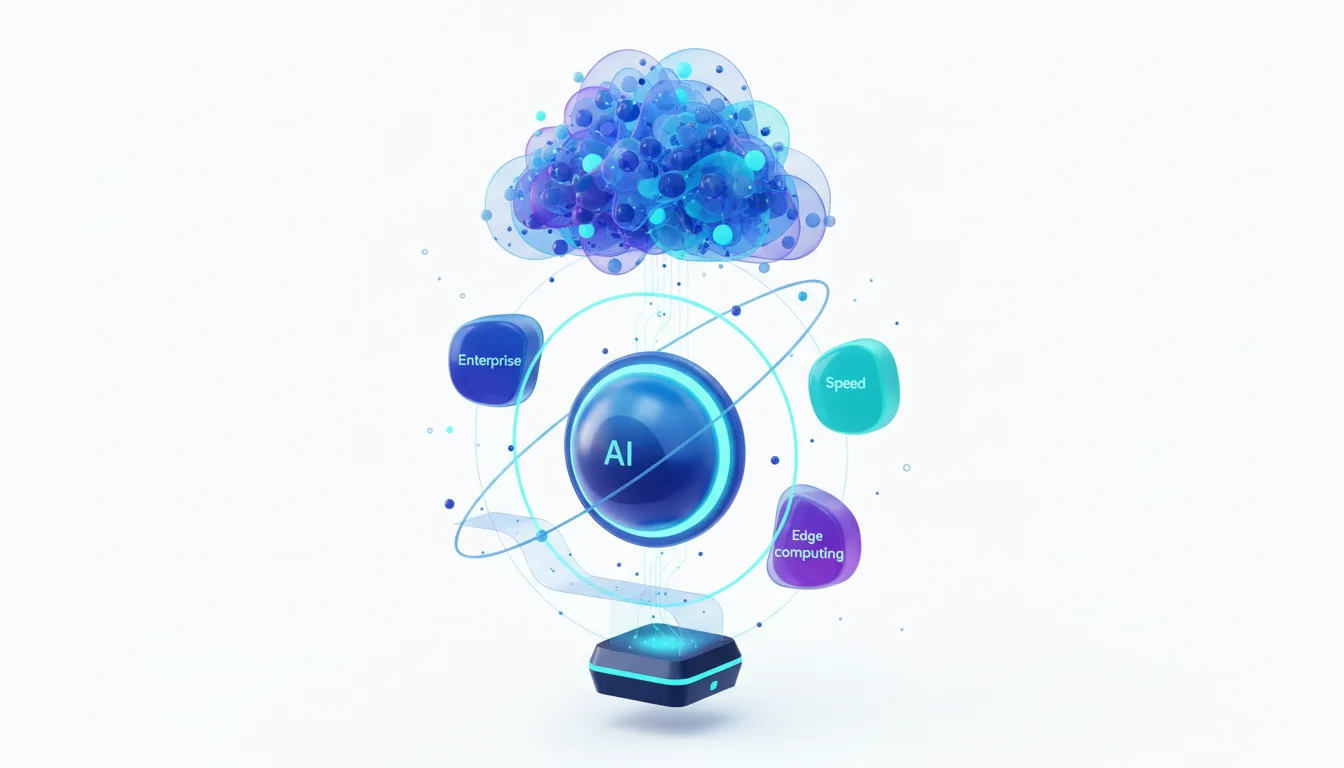
Google just rolled out the Gemini 3.5 family, complete with a three-tier lineup of Pro, Flash, and Nano. The goal is straightforward enough: cover everything from complex enterprise workflows down to on-device processing without forcing every user into the same oversized model.
DeepMind and Google have pushed the update through AI Studio, Vertex AI, and their consumer tools, highlighting gains in multimodal reasoning and tool use along the way. The Flash variant emphasizes speed while Nano focuses on running smoothly in mobile or edge settings.
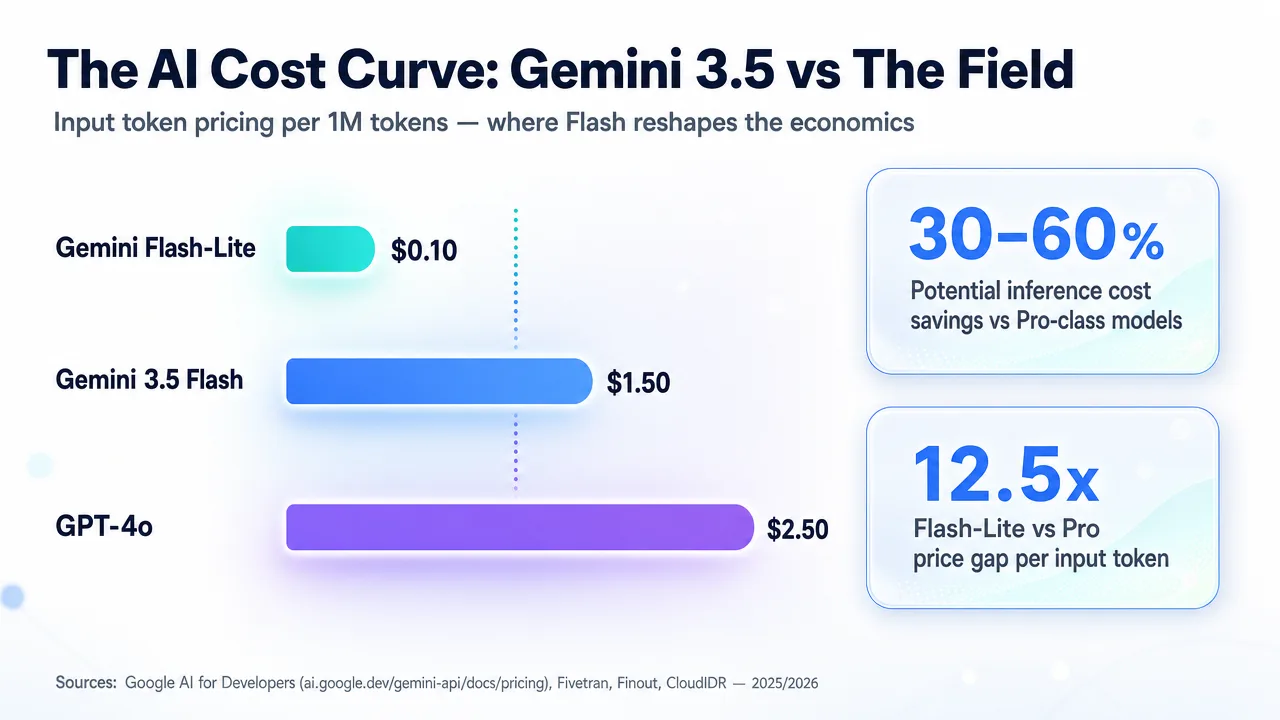
What stands out is the shift this creates in the broader AI race. It moves attention away from raw model size and toward practical questions of cost, latency, and how well everything integrates from the device up to the cloud. By sharpening Flash for lower latency and better economics, Google is using its infrastructure to put pressure on competitors’ margins.
CTOs, enterprise architects, and developers feel this most directly. They now have to keep rechecking model choices, API changes, and overall ownership costs across Google, Anthropic, and OpenAI options.
The part that usually gets less attention is real-world variance. Benchmarks look strong on paper, yet the difference between serverless setups and provisioned hardware can still create noticeable friction, especially when moving from earlier Gemini versions to the 3.5 pipelines.
🧠 Deep Dive
From what I’ve seen, Google’s Gemini 3.5 release has less to do with some sudden leap in general intelligence and more to do with a deliberate segmentation strategy. Splitting the family into Pro, Flash, and Nano tackles the real tension teams face: balancing solid reasoning against the cost of running it at scale. Plenty of coverage repeats the “frontier-level” line from Google’s materials, but the practical story is how the company is leaning on its TPU hardware to make certain workloads more affordable.
Benchmark fatigue has set in across the industry. While the improvements in multimodal reasoning and planning get the spotlight, developers and technical teams are focused on something else entirely—how reliable these systems actually are once they leave the demo environment. The distance between a clean zero-shot result and a dependable agentic workflow remains wide. Gemini 3.5 adds better function calling and grounding to help close that gap, but many teams still need clearer ways to measure issues like streaming delays or unexpected hallucinations in production.
The bigger disruption right now sits with Gemini 3.5 Flash and its economics. This variant targets high-volume inference with optimizations around caching, batching, and throughput. Organizations could see inference costs drop noticeably—sometimes in the 30–60% range—which pushes competitors to compete on price per task rather than capability alone.
At the same time, Nano 3.5 pushes capability toward the edge. Handling localized decisions, privacy-sensitive work, and offline cases directly on devices reduces load on central systems and supports stricter rules around data residency. The hybrid pattern—letting Nano manage quick, secure tasks locally while routing heavier work to Pro via Vertex AI—creates an advantage that pure API providers find hard to match.
Even so, migration remains a practical hurdle. Teams moving from Gemini 1.5 or 2.0 still run into API differences, behavior changes, and the need to test multi-step agent reliability. The real measure of success will show up in how fast enterprises can add effective caching, build in safety controls, and choose the right model for each job.
📊 Stakeholders & Impact
| Stakeholder / Aspect | Impact | Insight |
|---|---|---|
| AI Providers (OpenAI, Anthropic) | High | Google is driving down the floor price for fast inference (Flash) while challenging reasoning ceilings (Pro), threatening competitor margins. |
| Enterprise CTOs & Architects | High | Must constantly recalculate TCO, optimize prompt caching, and decide if the migration cost from earlier Gemini versions is worth the performance delta. |
| Cloud & Infrastructure Layers | Medium–High | Shifting compute to edge devices (Nano 3.5) alters expected data center load, potentially easing grid constraints for lighter consumer AI tasks. |
| Safety & Compliance Teams | Significant | Nano allows for on-device processing of sensitive data, changing the math on data residency, compliance, and enterprise data governance. |
✍️ About the analysis
Researched and written with AI assistance under the editorial responsibility of the i10X News team. The title image is an AI-generated illustration. Read our AI Use Policy. Spotted an error? Request a correction.
This independent look draws together search patterns, content gaps, and real developer feedback around the Gemini 3.5 launch. It is meant for technical leaders who need straightforward perspectives when weighing infrastructure choices and long-term costs.
🔭 i10x Perspective
Gemini 3.5 makes it clear that large models no longer function as standalone, all-purpose systems. Intelligence now acts more like flexible infrastructure—routed between a phone’s local processor and a larger cluster depending on speed, privacy needs, and budget. Google’s advantage comes from tying Android, Workspace, AI Studio, and Vertex AI together into one environment that keeps developers inside its orbit. As others respond, the next real constraint will likely be the tooling required to manage this mix of local and cloud intelligence without adding unnecessary complexity.