Google I/O 2026 — Gemini’s OS-Level Pivot
Summary
Google’s I/O 2026 event marked a critical pivot for its AI strategy, embedding its Gemini models deeply into the operating system layer across Android 17 and incoming XR hardware. From what I’ve seen in similar rollouts, these kinds of foundational shifts often feel smaller in the moment than they turn out to be.
What happened
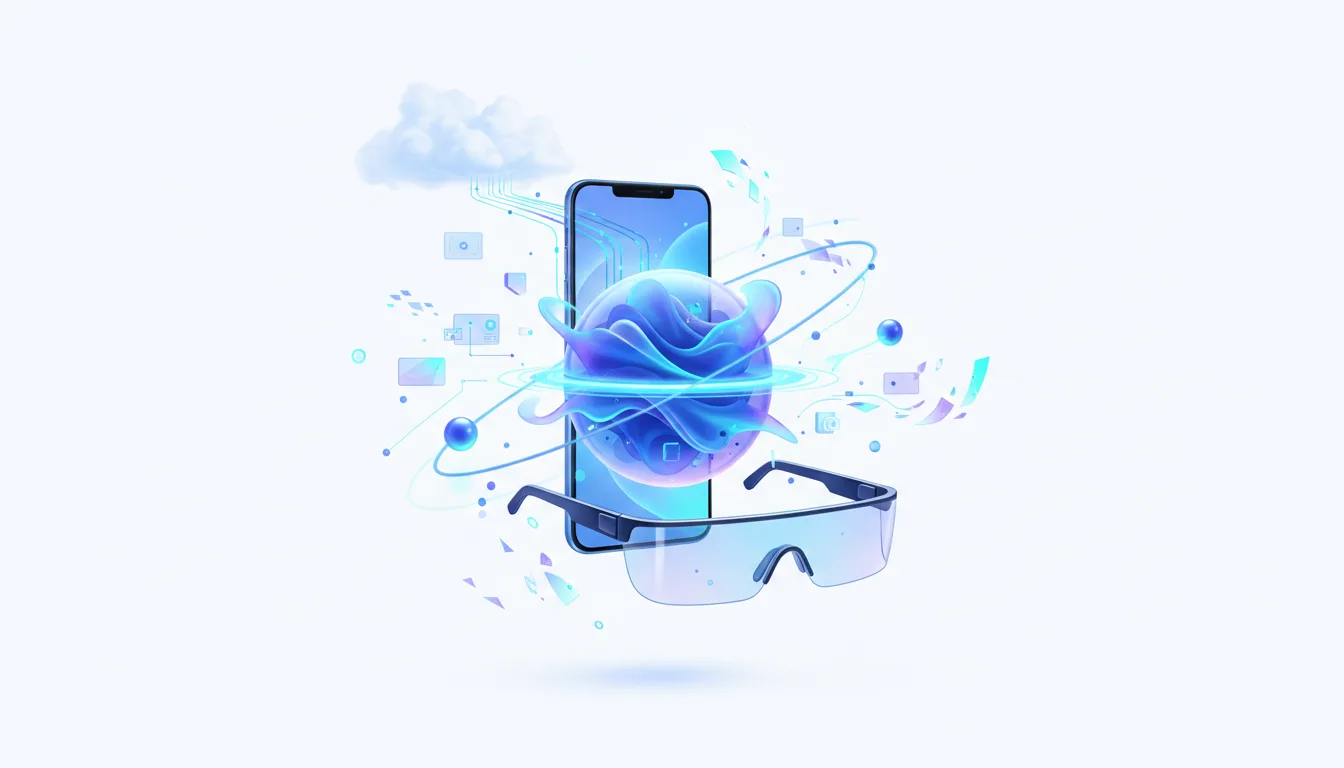
Alongside a highly capable native video-generation model, Google launched deep integrations for its on-device Gemini Nano variant via AICore in Android 17, extending these multimodal capabilities directly to head-worn Android XR smart glasses.
Why it matters now
The LLM race has shifted from browser-based chatbots to ubiquitous, systemic integration. By weaving multimodal intelligence into the OS, Google is striving for a localized intelligence mesh, fundamentally reshaping how models are deployed, scaled, and paid for.
Who is most affected
Hardware OEMs, enterprise device managers, application developers targeting Android 17, and hyperscale competitors tracking the shift from cloud to edge inference are the primary groups impacted.
The under-reported angle
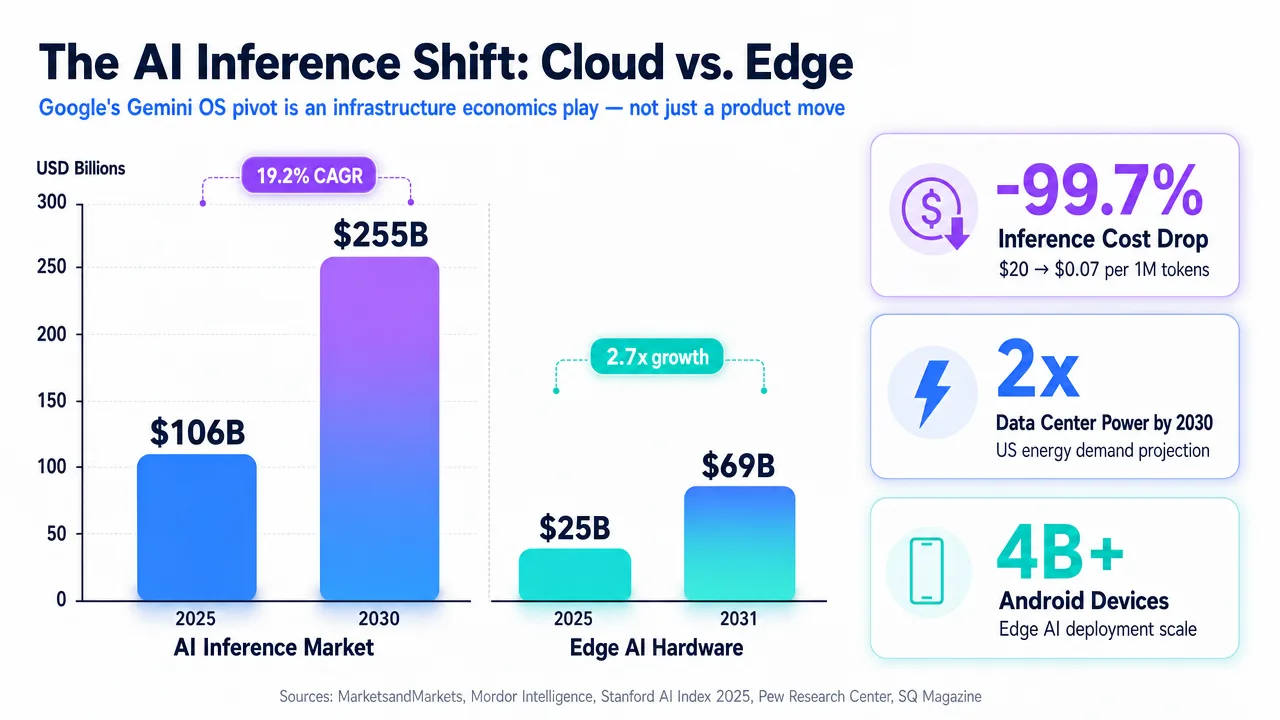
Behind the consumer hype of video models and smart glasses lies an urgent infrastructure play. Google is strategically offloading immense inference demands and compute costs from its data centers directly onto edge devices to preserve its compute economics.
Deep Dive
Google’s 2026 I/O suite of Gemini announcements isn’t just a product update. It represents an aggressive re-architecting of where intelligence actually lives. Sifting through the coverage — from DeepMind’s rigorous benchmarking papers to the breathless live-blogs — one clear theme emerges: parsing and generating multimodal data, especially real-time video, is quickly becoming the new computing baseline.
The technical reality beneath the PR buzz is a pressing need to manage inference scaling laws. As context windows grow to millions of tokens and video-to-text workflows become standard, running everything on cloud GPUs is financially and energetically unsustainable. Enter Gemini Nano and AICore. By pushing latency-sensitive, privacy-heavy workloads to consumer edge devices, Google is decentralizing AI compute. This relieves the crushing strain on geographic data centers and localized power grids while preserving Google’s cloud capacity for complex, high-reasoning tasks via Gemini Advanced.
That said, current industry framing leaves critical enterprise blind spots. While consumer tech sites highlight hands-on XR demos and DeepMind touts evaluation scores, infrastructure leads are hunting for practical data on deployment trade-offs. The latency, battery impact, and fidelity drops between running Gemini on Nano (on-device) versus the cloud remain opaque. For an enterprise evaluating Android 17 fleet upgrades, a transparent Total Cost of Ownership (TCO) calculator mapping these compute-footprint differences is urgently needed but entirely missing from Google’s commercial materials.
At the same time, the debut of a native Gemini video model forces an immediate reckoning in AI governance. With intelligent software soon able to ingest and generate reality seamlessly through head-worn XR devices, cryptographic watermarking — like Google’s SynthID — and C2PA content provenance become non-negotiable. Without transparent audit logs, rigorous PII handling at the edge, and clear licensing rules for generated media, adoption within regulated, compliance-heavy industries will face severe bottlenecks.
Tying Gemini to the hardware ecosystem forces competitors into a corner. OpenAI’s Apple partnership and Meta’s open-weights push on smart glasses both aim at the exact same target: securing a hardware distribution channel. If Google successfully establishes Android 17 and XR as the default gateway for multimodal interactions, it dictates the API standard for the next decade of application development, leaving stand-alone LLM wrappers obsolete.
Stakeholders & Impact
- AI / LLM Providers — High impact: Shifts competition from “smartest cloud model” to “most efficient quantized edge model.”
- Infrastructure & Cloud — Significant impact: Offloading inference to device CPUs/NPUs via AICore mitigates runaway AI data center power demand.
- Enterprise IT & Devs — High impact: Demands re-skilling around edge-AI workflows, latency optimization, and new XR context-capture APIs.
- Regulators & InfoSec — High impact: Live video parsing via smart glasses raises massive data governance and deep-fake provenance (C2PA) challenges.
About the analysis
Researched and written with AI assistance under the editorial responsibility of the i10X News team. The title image is an AI-generated illustration. Read our AI Use Policy. Spotted an error? Request a correction.
This independent, research-based analysis synthesizes semantic search logic, competitor framing (via Google DeepMind, mainstream tech live-blogs, and encyclopedic sources), and structural market gaps surrounding the Gemini I/O 2026 cycle. It is designed for AI infrastructure engineers, enterprise CTOs, and product strategists navigating the transition from cloud-first to OS-level LLM deployments.
i10x Perspective
The integration of Gemini into Android 17 and XR proves that the next era of scaling isn’t just about larger parameter counts in the data center. It’s about efficient quantization on consumer silicon. Google is signaling that whoever commands the local OS API natively controls the global flow of multimodal intelligence. Over the next five years, expect a brutal proxy war where the heavyweights fight less over benchmark superiority in the cloud and more over whose hardware moat successfully captures the user’s real-time physical context.