Quick Take
- Summary: Google has updated its developer documentation, officially gating its “Gemini Intelligence” suite behind a minimum requirement of Gemini Nano 3, while simultaneously revealing the first wave of devices shipping with the next-generation Gemini Nano 4.
- What happened: Following the launch of the Pixel 11, Google’s AICore docs now explicitly mandate Nano 3 for core Android AI features, effectively bifurcating the mobile ecosystem into capable edge-AI devices and cloud-dependent legacy hardware.
- Why it matters now: This establishes a strict hardware floor for on-device LLMs. It shifts the AI bottleneck from cloud compute constraints to local NPU (Neural Processing Unit) thermals and memory bandwidth, fundamentally altering how intelligence is distributed and scaled.
- Who is most affected: Android developers and mobile ML engineers who now must manage a fragmented edge-AI landscape, along with OEMs racing to secure adequate silicon to support the Nano 4 threshold.
- The under-reported angle: The real story isn’t just the new phone release cycle; it’s the quiet introduction of complex “graceful degradation” policies. As Google pushes larger context windows and multimodal capabilities to the edge via Gemini Nano 4, privacy-first local processing is becoming a premium hardware differentiator rather than a standard software feature.
Deep Dive
Have you noticed how quickly the conversation around mobile AI has moved past “it works on phones” to “only on certain phones”? The AI Overview on Google is already highlighting this shift: AI on mobile is no longer a monolith. The latest updates to Google’s Android developer documentation map out a tiered reality for edge inference. By drawing a hard line that “Gemini Intelligence” requires at least Gemini Nano 3, Google is tying its foundational OS features directly to local silicon capabilities. This effectively ends the era where every Android device could expect a uniform software experience, replacing it with a hardware-gated AI capability matrix.
Enter Gemini Nano 4 and the Pixel 11. While mainstream coverage focuses heavily on consumer device lists and upgrade cycles, the deeper infrastructural shift is happening within the AICore framework. Nano 4 brings expanded context lengths, improved int4/int8 quantization, and enhanced safety classifiers directly to the device’s NPU/TPU. By executing these tasks locally, Google drastically cuts down on cloud inference costs and latency, pushing the heavy lifting of generative AI onto the consumer’s hardware.
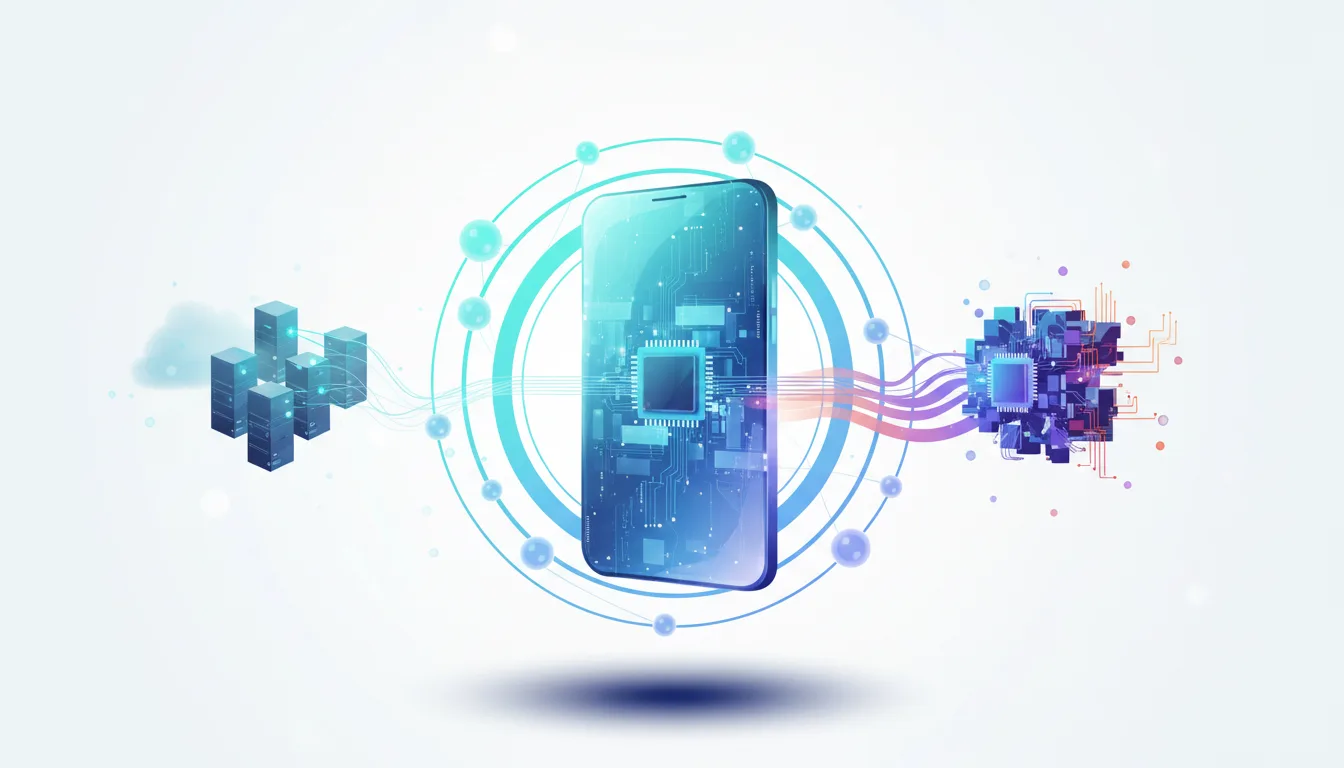
But here’s the thing – this transition introduces severe friction for builders. According to official developer guidelines and technical community trackers, the ecosystem is facing acute capability fragmentation. Mobile ML engineers are being handed a complex migration playbook. They now have to implement runtime version checks via AICore – probing whether a device can handle Gemini Nano 4‘s advanced capabilities, scrape by with Gemini Nano 3, or if the application must forcefully fall back to cloud-based Gemini APIs. This creates a volatile developer experience where latency and privacy vary wildly based on the user’s handset.
Ultimately, the Nano 4 rollout highlights a critical trade-off between power, privacy, and performance. On-device LLMs guarantee zero-data-retention – a massive win for privacy-first enterprise apps and offline functionality. Yet, as Nano 4 scales up in model size and capability, the stress on local smartphone hardware (battery drain, thermal throttling, memory footprint) intensifies. We are seeing the exact same constraints that plague massive AI data centers – power and cooling – replicated at the micro-level on mobile SoCs. From what I’ve seen, that parallel is only going to get harder to ignore.
Stakeholders & Impact
| Stakeholder / Aspect | Impact | Insight |
|---|---|---|
| AI / LLM Providers | High | Pushing Nano 4 to the edge reduces cloud inference costs and allows Google to scale AI features without proportionally scaling data center compute. |
| Mobile OEMs & Silicon | High | NPUs and thermal management are now the primary battlegrounds for smartphone differentiation; devices failing to support Nano 3+ will be left out of core Android features. |
| Android Developers | High | Increased complexity. Teams must build fallback architectures (Nano 4 → Nano 3 → Cloud) and optimize for local memory and battery constraints via AICore. |
| Enterprise & Privacy | Significant | Nano 4 enables more robust on-device safety classifiers and offline processing, easing compliance for enterprise apps that cannot send data to the cloud. |
About the analysis
Researched and written with AI assistance under the editorial responsibility of the i10X News team. The title image is an AI-generated illustration. Read our AI Use Policy. Spotted an error? Request a correction.
This independent, research-based analysis is built on a synthesis of official Android developer documentation, industry news coverage, and technical ecosystem trackers. It is designed for CTOs, mobile ML engineers, and AI product managers navigating the transition from cloud-dependent applications to edge-native AI infrastructure.
i10x Perspective
The graduation to Gemini Nano 4 signals a fundamental pivot in how AI infrastructure scales: moving inference from expensive, power-hungry cloud GPUs directly into the pockets of billions of users. As Google and Apple battle for edge-intelligence supremacy, the smartphone is morphing into a decentralized inference node. NPU tokens-per-second, local context retention, and how gracefully developers can bridge the gap between edge and cloud will be the defining metrics for mobile infrastructure over the next five years.