Quick Take
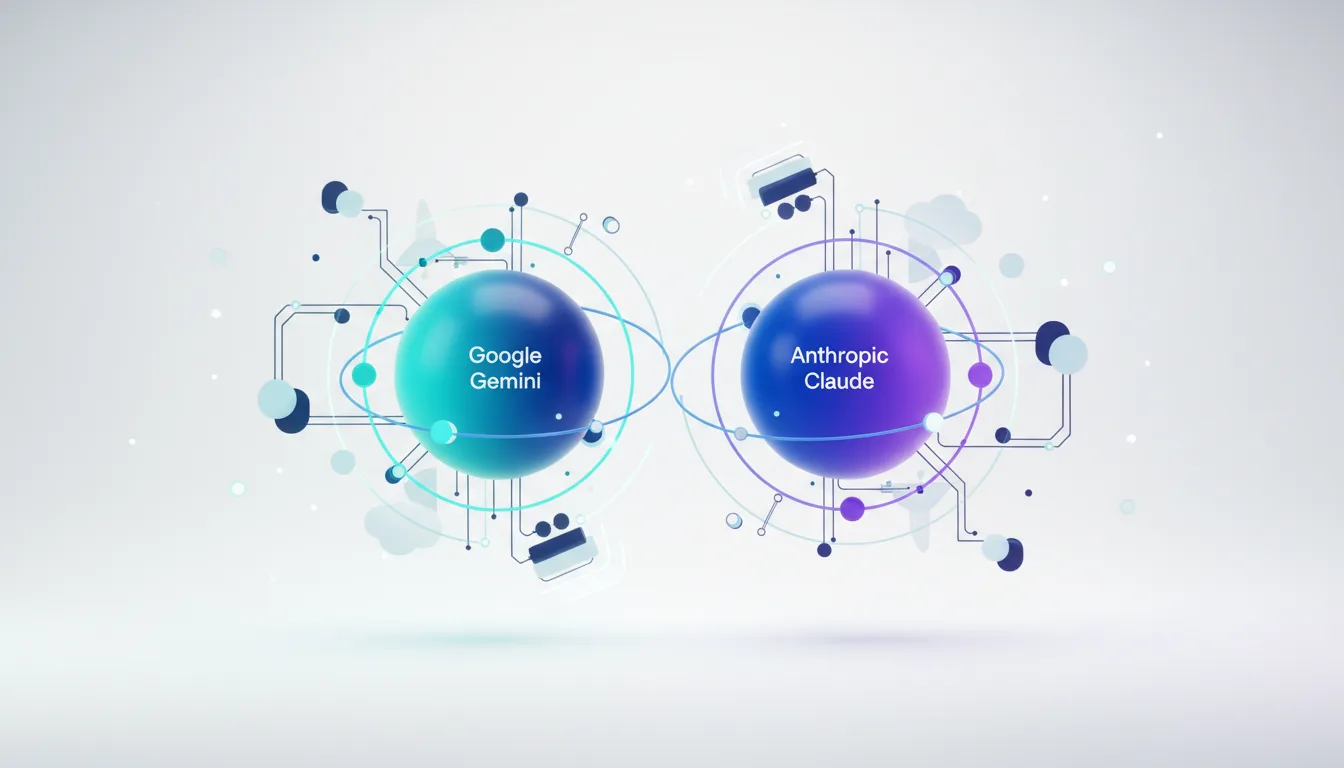
The rivalry between Google’s Gemini and Anthropic’s Claude has moved well beyond casual chatbot comparisons. It is now a high-stakes contest over enterprise infrastructure and developer ecosystems.
From what I’ve seen, once organizations shift from testing AI to actually rolling it out, the decision stops being about which model writes nicer paragraphs. It turns on ecosystem lock-in, data privacy, and how the tools fit existing architecture.
Mainstream reviews still focus on consumer pricing and side-by-side chat tests. The real competition, though, is playing out around API latency, retrieval-augmented generation at scale, and how cleanly each model slides into the stacks teams already run.
Model performance is converging fast. That leaves CTOs and engineering leads weighing infrastructure realities instead. Google is leaning on its Workspace footprint, while Anthropic is pitching Claude as a secure, vendor-neutral layer that avoids forcing a full cloud switch.
Enterprise decision-makers, IT admins, and development teams feel this most directly. They are the ones balancing Google’s bundled integration against Anthropic’s more flexible, third-party approach. Most coverage still glosses over Total Cost of Ownership and compliance details like SOC 2 or data residency. Those quieter factors—rate limits, tool compatibility, retention policies—often decide the outcome.
Deep Dive
Have you ever noticed how quickly the conversation about two AI models turns into a feature checklist? The technology press has largely treated the Gemini versus Claude question as a consumer taste test. Both services sit around the same price point for premium access, and reviewers happily compare short coding prompts or creative writing samples. That lens helps everyday users, yet it misses the larger shift underway in enterprise infrastructure.
Google’s approach with Gemini follows a familiar pattern of vertical integration. By placing the model inside Workspace, Docs, and Drive, the company aims to make it the default intelligence layer for teams already committed to its tools. The upside is clear: Gemini can draw on large amounts of internal company data through its context windows, which appeals to groups already operating inside Google Cloud.
Anthropic has taken the opposite route. Claude—especially the 3.5 Sonnet and Opus versions—is positioned as a neutral, high-performance option without a native productivity suite to defend. It competes on coding strength, strict security standards, and the ability to slot into mixed environments like Slack, GitHub, or Notion. The goal is to serve developers who prefer not to lock themselves into one vendor’s garden.
This difference creates a noticeable gap in how the models get evaluated. While consumer pieces debate interface details, architects inside companies are running the numbers on Total Cost of Ownership over a full year. They test rate limits, measure latency for RAG workloads, and review compliance frameworks such as SOC 2, ISO 27001, and local data rules.
The choice ultimately shapes how an organization grows its AI use. Gemini ties the bet to Google’s ability to move data across its own hardware and software. Claude signals a preference for strong benchmark results, tighter privacy controls, and the freedom to stay cloud-agnostic as the field keeps changing.
Stakeholders & Impact
| Stakeholder / Aspect | Impact | Insight |
|---|---|---|
| AI / LLM Providers | High | Google counts on distribution advantages, while Anthropic needs consistent model quality and earned trust to hold its ground. |
| Enterprise IT & CTOs | High | They face detailed TCO work, weighing bundled Workspace costs against Claude’s API speed and easier integration options. |
| Developers & Engineers | High | They feel the effects through coding performance, context limits, and API response times when building RAG pipelines. |
| Regulators & Policy | Significant | Attention is rising around data retention settings, opt-out flows, and compliance requirements as models handle sensitive corporate information. |
About the analysis
Researched and written with AI assistance under the editorial responsibility of the i10X News team. The title image is an AI-generated illustration. Read our AI Use Policy. Spotted an error? Request a correction.
This independent review draws on current market reporting, technical benchmarks, and enterprise API observations. It is meant for CTOs, engineering leads, and procurement teams who need to look past consumer-focused stories when planning longer-term infrastructure decisions.
i10x Perspective
The Gemini versus Claude contest highlights a basic strategic split that will shape the next phase of AI: bundled distribution against best-in-class neutrality. As the core models draw closer in raw capability, the lasting advantage for any provider will come less from intelligence benchmarks and more from ecosystem reach and enterprise trust. Over the coming years it will be worth watching whether Anthropic’s hardware-neutral, security-focused stance can hold its position against Google’s broad, vertically integrated enterprise presence.