Generative UI Standardization: Agent-Orchestrated Components
⚡ Quick Take
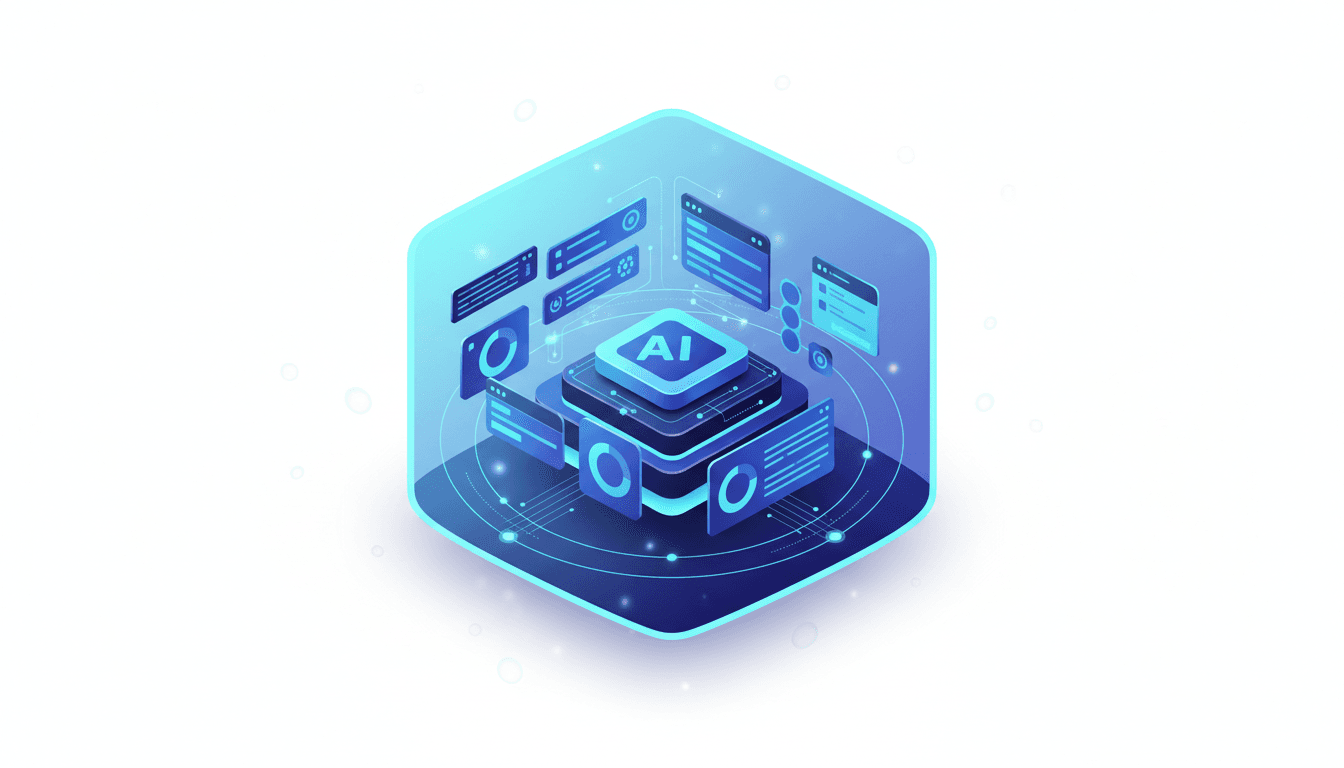
Summary: The AI industry is standardizing Generative UI (GenUI), shifting away from fragile, LLM-generated HTML toward governed, agent-orchestrated component catalogs that dynamically build interfaces on the fly.
What happened: Developer ecosystems and tech giants like Google have begun coalescing around structured GenUI frameworks—where LLMs output strict JSON intents mapped to pre-approved React components, powered by emerging protocols like A2UI.
Why it matters now: As LLMs excel at structured outputs and tool calling, GenUI bridges the gap between static text chat and interactive software, demanding new inference latency budgets and schema-following capabilities from foundation models.
Who is most affected: Front-end developers, AI product engineers, and enterprise architects, who must pivot from designing static screens to building "agent-native" design systems and runtime governance pipelines.
The under-reported angle: The real bottleneck for enterprise GenUI isn't model intelligence—it's deterministic security. Validating LLM outputs in real-time, enforcing capability-based sandboxing, and preventing agent hallucinations from breaking accessibility contracts or triggering unauthorized backend side-effects is the actual frontier.
🧠 Deep Dive
Have you ever watched an LLM spit out raw HTML and wondered how long that trick could last in production? For the past year, "Generative UI" mostly felt like a clever demo—models hallucinating JavaScript or React into an iframe, only to break on the next prompt. That approach is giving way to something more deliberate.
The market is settling on a cleaner pattern. Instead of asking models to write code, teams now hand agents a fixed set of trusted components: charts, forms, cards, and the like. The LLM simply chooses which ones to use and fills in the data. From what I've seen, this works because today's models from OpenAI, Anthropic, and Google handle structured JSON reliably enough to make the handoff practical.
There's an active debate about how much freedom to allow. Google Research tends to favor rich, on-the-fly generation, while companies focused on enterprise needs stress brand rules and accessibility. The emerging middle ground is strict schema validation—Zod or JSON Schema—so the output stays compliant and safe.
New intent protocols are speeding things up. Google's A2UI proposal and similar open efforts let a single model response render correctly on iOS, the web, or even trigger background tasks. That portability removes the need for every platform to maintain its own rendering layer.
Still, the shift puts real pressure on performance and safety. Time-to-first-token and generation speed now directly affect whether an interface feels responsive. Teams are turning to streaming partial UIs and suspense boundaries to hide latency. At the same time, observability becomes essential—someone has to watch token budgets and catch visual regressions before users do.
The hardest remaining problem is side-effect isolation. If a generated interface can trigger database writes or API calls, you need clear boundaries. Capability-based checks, strict content security policies, and quick rollback paths are moving from nice-to-have to baseline requirements.
📊 Stakeholders & Impact
Stakeholder / Aspect | Impact | Insight |
|---|---|---|
AI / LLM Providers | High | Forces prioritization of native structured JSON outputs, ultra-low latency, and reliable tool-calling accuracy to serve as real-time UI orchestrators. |
Front-End & UX Teams | High | Shifts the role from static pixel-pushing to designing "agent-native" component vocabularies and intent schemas that models can compose at runtime. |
Enterprise Architects | High | Requires new governance pipelines, capability-based security, schema registries, and observability telemetry specifically for dynamic, non-deterministic UIs. |
End Users | Medium–High | Software transitions from rigid, one-size-fits-all dashboards to hyper-personalized, context-aware interfaces that adapt to their immediate intent. |
✍️ About the analysis
This independent, research-based analysis is designed for CTOs, AI product engineers, and frontend architects. It synthesizes current market positioning across developer ecosystems (like CopilotKit, A2UI, and assistant-ui) to map the transition from static web development to agent-orchestrated interface generation.
🔭 i10x Perspective
Generative UI points to the slow end of static applications. Just as HTML once hid machine code from web developers, intent protocols like A2UI are starting to hide front-end code from the models that assemble it. For the teams building foundation models, the next real advantage may not be raw reasoning power but reliable orchestration—consistent, low-latency structured output that can drive live interfaces. Over the next couple of years, that capability will likely pull GenUI rendering and protocols like the Model Context Protocol (MCP) closer together.
Related News

Gemini 4 Post-Training: Google's Agentic AI Shift
DeepMind confirms Gemini 4 has entered post-training, focusing on persistent agents and long-context capabilities for software development. Discover the enterprise implications and infrastructure challenges.
CLM-8B: Open-Source Contrastive Model for Fast AI Agents
CLM-8B delivers up to 9x faster agentic decision-making by scoring actions instead of generating tokens. Discover how this open-source model cuts latency and TCO for real-time AI workflows. Explore the analysis.

AI Safety: From Academic Theory to Enterprise Engineering
AI safety is moving from existential risk research to practical mandates like guardrails and compliance. Learn how regulators and LLMOps teams are implementing measurable controls. Explore the guide.