Google launches Gemini 3.8 Flash and Gemini 3.8 Flash Cyber
Summary
Gemini 3.8 Flash and a specialized offshoot, Gemini 3.8 Flash Cyber, have been released by Google as a clear push into agentic workflows and automated security operations, two rapidly growing areas.
What happened
Google expanded its lighter-model lineup with a version tuned heavily for function calling, tool use, and the kind of planner-executor setups that agents rely on. Simultaneously, it released a cyber-focused variant fine-tuned for threat simulation, red-teaming, and assisting Security Operations Center teams with routine tasks.
Why it matters now
Teams moving from simple chatbots to agents that perform multi-step work autonomously often hit friction: slower models become the weak link. This release signals Google’s shift toward faster, high-volume orchestration tools that can manage complex API calls and retrieval-augmented generation without creating latency bottlenecks.
Who is most affected
- Developers assembling agentic systems and planner-executor architectures.
- CISOs and SOC teams aiming to automate the first two levels of triage.
- Competing AI labs (OpenAI, Anthropic, Meta) working in the lightweight model space.
The under-reported angle
Splitting the Flash line into a general agentic model and a purpose-built Cyber model signals Google’s bet that narrowly trained models will often outperform general ones in high-stakes enterprise settings.
🧠 Deep Dive
Have you ever watched a security team get buried under alerts and wondered how any single model could actually help? The arrival of these two Flash variants shows Google moving past selling another text generator toward offering an orchestration layer designed for repeated, fast inference and reliable tool use.
Planner-executor focus
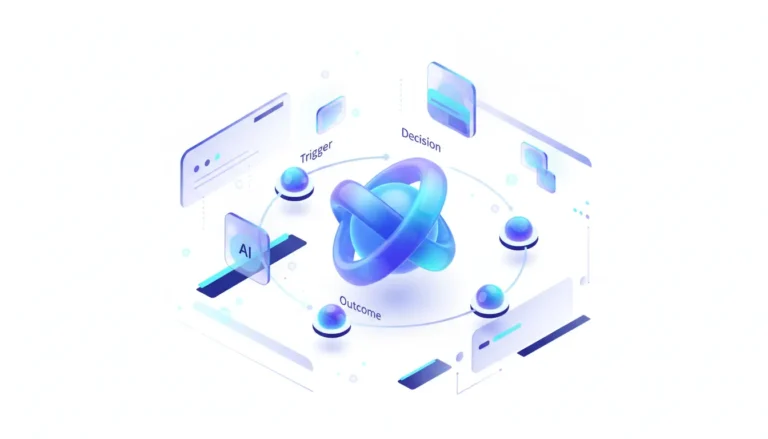
The core technical emphasis for planner-executor loops is speed and dependable function calling: those loops demand repeated inference calls, so throughput and robust tool integration matter more than peak-pass reason metrics.
Flash Cyber: targeted security tooling
The sharper move is the cyber-focused variant. Security teams face alert fatigue, clunky SIEM and SOAR integrations, and a shortage of models trained on incident response playbooks. By training on cyber threat intelligence and malware triage, Google aims to ease that pain while enabling threat simulation and red-teaming workflows.
Most coverage frames this release as routine alongside other lightweight models, but that misses the practical shift enterprises will feel: total cost of ownership, latency trade-offs for stateful agents, integration complexity, token budgets, and compliance constraints. Google has added safety evaluations and data-residency controls to encourage adoption, but teams still need to migrate from earlier Flash versions and adapt to how 3.8 manages its context window. As pilots become live automation, benchmarks that measure actual agent success rates will matter more than conventional academic scores.
📊 Stakeholders & Impact
- AI Developers & Architects — High impact: Unlocks faster, more reliable planner-executor loops; requires updates to tool routing and function schemas.
- Enterprise Security (CISOs/SOCs) — High impact: Flash Cyber offers targeted Level 1/2 triage capabilities, reducing manual workload but demanding deep SIEM/SOAR integration.
- Rival AI Providers — Medium impact: Pressures competitors to show that their lightweight models can match Gemini’s domain-specific fine-tuning and inference speed.
- Cloud Infrastructure (GCP) — Significant impact: Drives demand toward specialized inference instances and leverages Google’s TPUs for high-volume enterprise API calls.
✍️ About the analysis
Researched and written with AI assistance under the editorial responsibility of the i10X News team. The title image is an AI-generated illustration. Read our AI Use Policy. Spotted an error? Request a correction.
This independent, research-based analysis synthesizes official model documentation, developer pain points, and enterprise adoption trends. It is aimed at CTOs, AI engineers, and security leaders evaluating next-generation lightweight, high-throughput models for production.
🔭 i10x Perspective
Pairing a general Flash model with a dedicated Cyber variant points to the end of the one-size-fits-all LLM era. The next phase will likely favor clusters of fast, narrowly focused inference engines (e.g., Flash Legal, Flash Med, Flash Finance), changing how companies budget for and deploy AI tools.