
Quick Take
- Summary: xAI has quietly pushed Grok 4.5 into a private beta, along with early docs claiming the model now holds its own against top frontier systems on complex reasoning and coding.
- What happened: Elon Musk’s xAI moved its flagship to version 4.5, keeping access limited to a waitlisted private beta. The positioning takes direct aim at models like GPT-4o and Claude 3.5, marking a clear step from consumer chatbot toward something developers might actually build on.
- Why it matters now: The frontier race is tightening on capabilities, so xAI’s speed proves its GPU investments are paying off in model quality. Yet matching scores alone won’t decide the next phase – seamless integration will.
- Who is most affected: Engineering managers weighing routing choices, developers testing new models, enterprise CTOs tracking cost-per-token, and the rival labs still fighting for both hardware and mindshare.
- The under-reported angle: Most coverage repeats xAI’s numbers without much pushback. The real questions sit in what the release leaves out – independent latency data, how context holds up under load, and the SLAs teams need before any migration.
Deep Dive
Have you ever watched a new model claim parity only to hit friction the moment teams try to wire it into production? xAI’s framing for the Grok 4.5 beta reads confident, positioning the upgrade as a genuine rival to current frontier systems and moving Grok away from its X-platform roots toward heavier reasoning work. The underlying bet is straightforward: enough compute and talent can turn large GPU clusters into competitive intelligence.
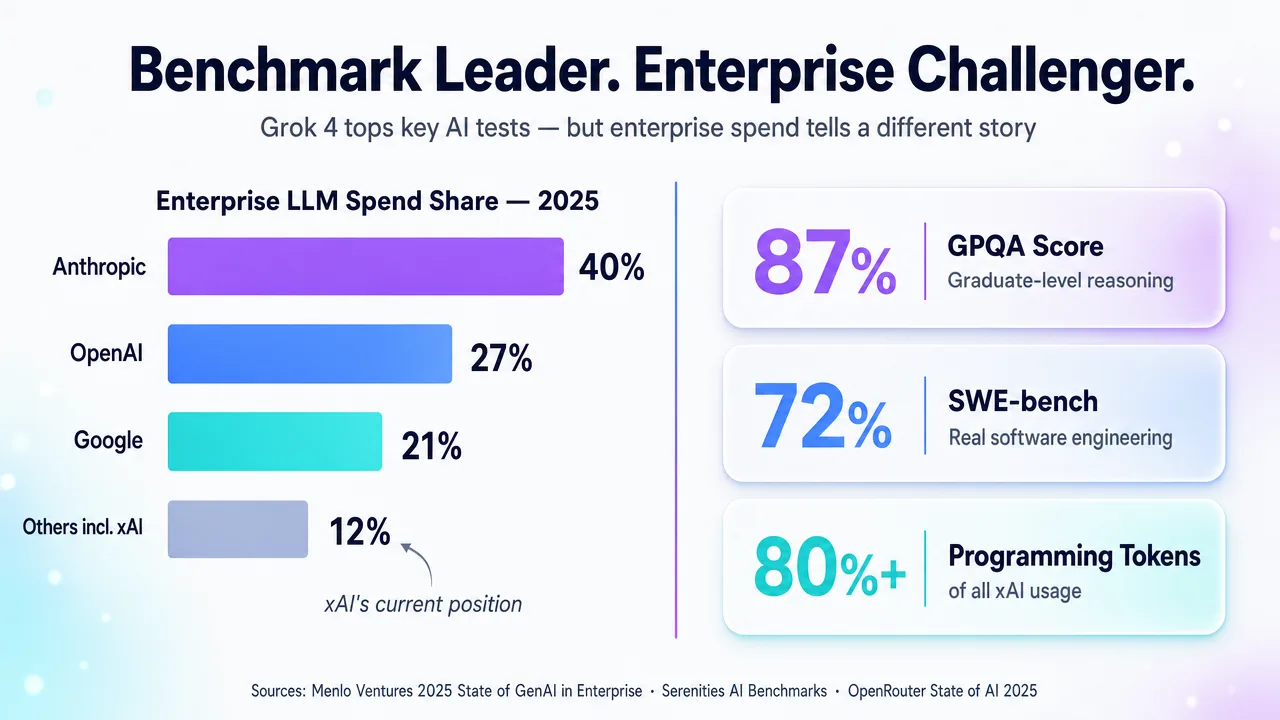
That said, reactions across the developer community tell a different story. Outlets are largely passing along feature lists and waitlist details, while the people actually shipping products keep asking for harder proof. They want numbers on tool-use speed, reliable retrieval over long contexts, and consistent function calling when traffic spikes – not just polished demos.
This gap shows up clearly around Grok 4.5. To sit alongside the OpenAI or Anthropic stacks, the model will need more than raw performance. Native support in tools like LangChain or LlamaIndex, predictable prompt behavior, and a practical migration path from earlier versions all matter. Without those pieces, high scores stay mostly theoretical.
Enterprise readiness adds another layer. Grok’s reputation for less restricted outputs works in some consumer settings, but company decision-makers need steady refusal patterns, audit trails, SOC2 alignment, and clear data boundaries. From what I’ve seen in similar transitions, those requirements rarely appear as afterthoughts.
In the end, Grok 4.5 tests how quickly any new player can move from impressive training runs to dependable production use. The capital and hardware hurdles are real, but the next stretch involves tighter API work, better red-teaming visibility, and the less glamorous integration details that actually keep systems running.
Stakeholders & Impact
| Stakeholder / Aspect | Impact | Insight |
|---|---|---|
| AI Developers & EMs | High | Will need independent benchmark suites to test function-calling and latency before weaving Grok 4.5 into multi-agent workflows. |
| Enterprise CTOs | Medium | Assessing Grok 4.5 requires looking past capability claims toward missing SOC2/ISO compliance and data retention SLAs. |
| Rival AI Providers | High | xAI’s rapid iteration cycle forces OpenAI, Google, and Anthropic to maintain velocity, increasing pressure on their own R&D and compute acquisition. |
| Compute & Infrastructure | Significant | Models of this scale require continuous, massive inference capacity, straining grid dynamics and GPU supply chains as xAI scales its beta. |
About the analysis
Researched and written with AI assistance under the editorial responsibility of the i10X News team. The title image is an AI-generated illustration. Read our AI Use Policy. Spotted an error? Request a correction.
This independent analysis synthesizes cross-market coverage, official product positioning, and developer sentiment to map the true impact of the Grok 4.5 release. Designed for CTOs, AI developers, and infrastructure leaders, it strips away standard tech PR to focus on integration readiness, latency constraints, and the realities of enterprise AI adoption.
i10x Perspective
Grok 4.5 underscores that the real edge in generative AI comes down to compute access, capital discipline, and how quickly a team ships. As performance levels out across labs, the contest moves toward economics and tooling. In the next few years the bigger test for xAI will likely be whether it can deliver the steady, enterprise-grade layers needed to make a strong model reliable at scale.