LLM Medical Prognosis Limits: Why Models Fail Survival Forecasts
⚡ Quick Take
Summary: Academic researchers and healthcare developers are stress-testing frontier models like GPT-4o, DeepSeek R1, and Grok 3 to see whether Large Language Models (LLMs) can reliably predict medical prognosis, patient survival, and disease staging.
What happened: Recent peer-reviewed benchmarks across oncology, cardiology, and mental health point to a clear split in capability. LLMs handle extracting prognostic signals from messy, unstructured records quite well, yet they stumble when asked for calibrated, long-term risk estimates and outcome forecasts.
Why it matters now: As AI moves deeper into clinical systems, the mismatch between fluent language output and actual statistical calibration highlights hard limits in general-purpose models. That gap is already pushing the market toward specialized tuning and hybrid setups.
Who is most affected: Clinical AI developers, healthcare IT teams, medical regulators, and the frontier labs (OpenAI, Google, Anthropic) all chasing the healthcare opportunity.
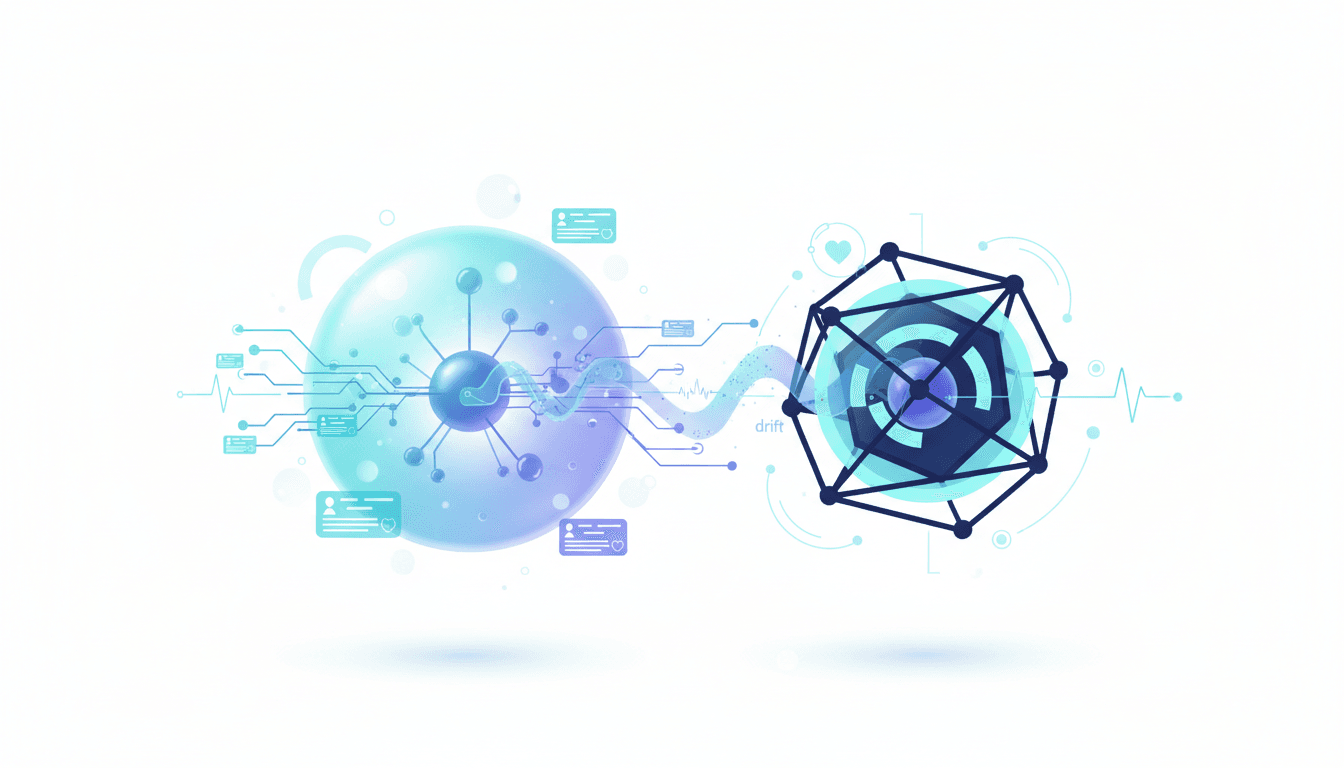
The under-reported angle: The real obstacle to clinical use is not missing medical knowledge inside the models. It is inference instability. Run the same patient data through slightly different prompts and the survival estimates can swing sharply—a problem often called “prediction drift.”
🧠 Deep Dive
Have you ever considered what it would take for an AI to look at today’s clinical notes and say, with any real confidence, how a patient will fare five years from now? That shift from spotting what is wrong right now to forecasting what lies ahead is where current foundation models are being pushed hardest. In oncology, hepatology, and cardiology, researchers are testing whether GPT-4o, DeepSeek R1, or Grok 3 can serve as predictive engines. So far the results show the models can parse and organize complex histories at remarkable speed, but treating them as standalone prognostic tools runs into basic architectural friction.
Benchmarks reveal a sharp line between extraction and calculation. In oncology, both closed and open-weight systems like Llama and Mistral do well at turning unstructured pathology reports into cancer types and AJCC stages. Ask the same models to reason from that extracted data toward long-term survival, though, and performance falls off. These are still autoregressive systems built to predict the next token, not to output well-calibrated probabilities. They generate coherent text easily; they do not natively produce the statistical grounding medicine requires.
That shortcoming shows up clearly in cardiovascular work. When GPT-4o, DeepSeek R1, and Grok 3 were tested on one-year Major Adverse Cardiovascular Events in acute coronary syndrome patients, they tended to overestimate risk relative to established tools such as GRACE and TIMI. Worse, the predictions were unstable. Without tight temperature settings and deterministic controls, repeating the identical prompt could produce noticeably different forecasts—an immediate disqualifier for any real clinical role.
Safety training adds another layer. In psychiatric vignette studies, different models displayed distinct leanings: one version of ChatGPT leaned pessimistic about recovery compared with human psychiatrists, while Claude and GPT-4 showed varying degrees of optimism. The point is not which model was “right,” but that alignment choices made during development can quietly tilt clinical outlooks. That raises obvious questions about governance and liability when hospitals rely on API outputs.
Developers are already adjusting. Rather than zero-shot use of general models, teams are building instruction-tuned systems (Path-Llama3.1 is one example) and composite pipelines. In these setups the LLM functions mainly as a data organizer—pulling structure from free-text notes—while handing the cleaned output to conventional, mathematically calibrated models that compute the actual risk score.
📊 Stakeholders & Impact
Stakeholder / Aspect | Impact | Insight |
|---|---|---|
AI / LLM Providers | High | Expect demand for stricter enterprise controls, fixed-seed reproducibility, and healthcare-specific fine-tuning. |
Clinical AI Developers | High | The shift is away from “LLM as decision-maker” toward pipelines where the language model only manages unstructured extraction. |
Healthcare Providers | Medium | Efficiency gains in note processing are real, yet governance must keep models from issuing standalone risk scores. |
Regulators & Policy | Significant | FDA and international bodies will require external validation, calibration checks, and transparency before any LLM-driven prognosis tool reaches patients. |
✍️ About the analysis
This independent review draws on recent peer-reviewed work published in Nature, the BMJ, and PMC. Those studies evaluated GPT, Claude, Llama, Grok, and DeepSeek models across multiple medical fields. It is intended for clinical AI teams, CTOs, and policymakers watching how machine learning is actually implemented in high-stakes settings.
🔭 i10x Perspective
The push for “LLM prognosis” makes the underlying mismatch obvious: language models are not built to perform the kind of calibrated, longitudinal risk calculations medicine demands. From what I have seen in similar deployments, that limitation marks a practical boundary for today’s scaling approach. The next phase of healthcare AI will not be one all-knowing chatbot. It will be modular infrastructure in which LLMs serve as the translation layer between messy clinical language and the precise statistical engines that follow. Value is already moving from the base models themselves to the routing, validation, and orchestration layers built around them.
Related News
Shadow AI Risks: Securing Developer Endpoints in LLM Workflows
Enterprises secure production AI but overlook Shadow AI risks from unvetted developer tools and personal LLM keys. Discover how AI Bills of Materials and full-lifecycle controls close the gap.
Grok for Startups: xAI Credit Program for Founders
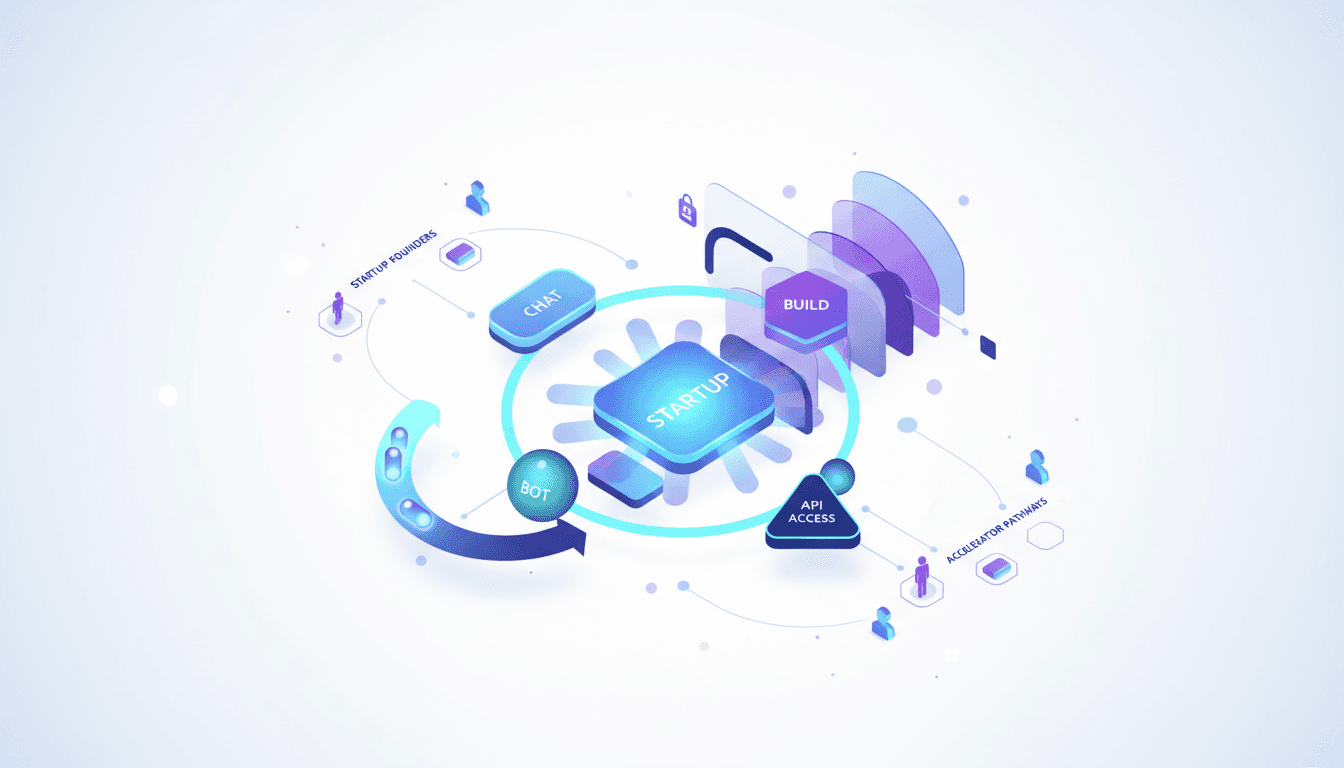
xAI launches Grok for Startups with 6-12 months of unified credits for Grok, API, Build and Bot. Discover the 20/80 staged release to cut early burn rates and secure ecosystem access.
Gemini in Cars: Google’s Personal Intelligence for Vehicles
Google brings Gemini to Android Auto and cars with Google built-in, creating a context-aware AI agent with access to personal data. Explore the impact on automakers, drivers, and automotive AI.