Grok for Startups: xAI Credit Program for Founders
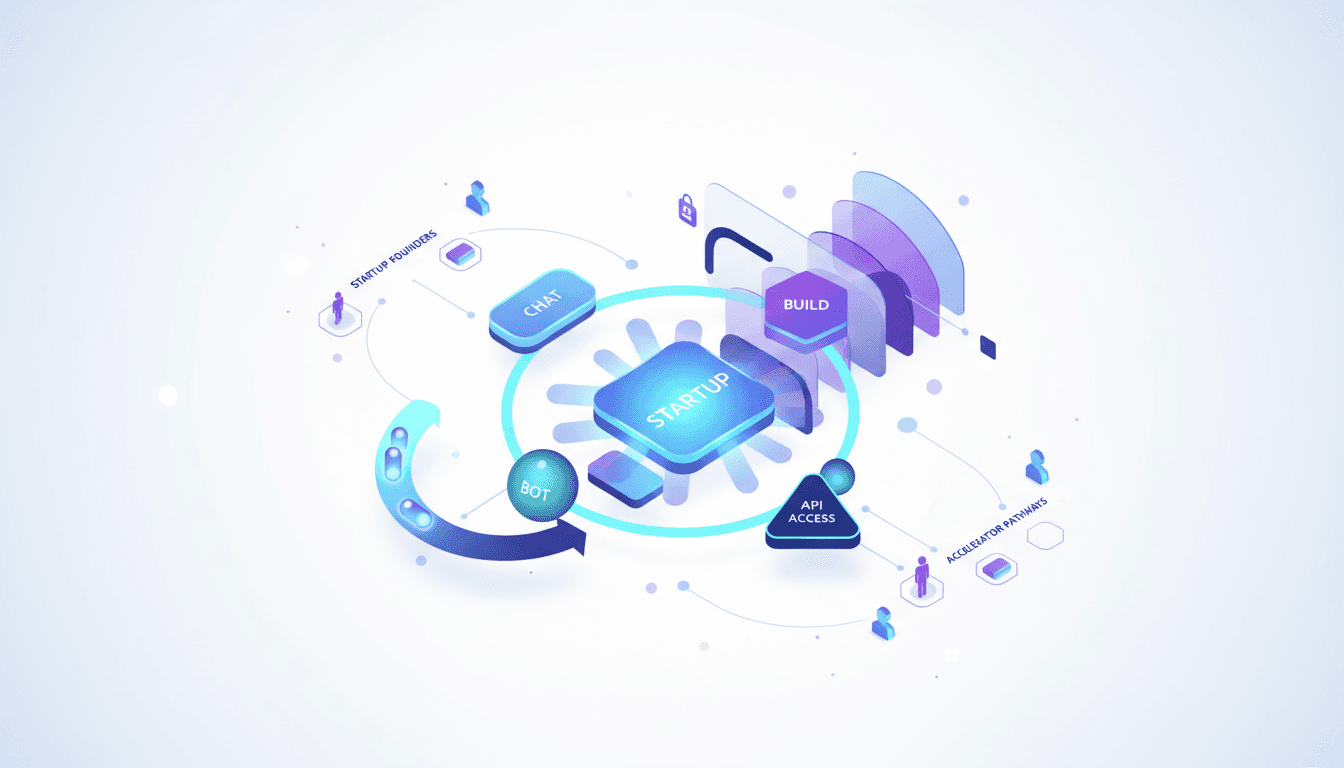
Grok for Startups: xAI Launches Credit Program
⚡ Quick Take
In the proxy war for AI developer mindshare, startup credits are the new customer acquisition cost. xAI is officially entering the battlefield to lock in the next generation of builders.
Grok for Startups has launched "Grok for Startups," a structured, application-gated credit program designed to subsidize six to twelve months of real-world AI infrastructure usage for early-stage companies.
Moving past its historical public beta handouts, xAI formalized a unified credit system that gives technical founders subsidized access across its entire ecosystem, including Grok, Grok Build, Grok Bot, and the Grok API.
Foundation model providers (OpenAI, Anthropic, Google) are aggressively fighting to become the default intelligence layer for native AI apps. By subsidizing API and tooling costs, xAI is positioning Grok as a financially viable alternative for startups facing massive upfront inference and compute burdens.
Technical startup founders, CTOs evaluating LLM APIs, and VC/accelerator partners who can now route their portfolio companies through xAI’s official partner pathways are the most affected.
To combat "credit farming"—where startups hoard free API credits and churn—xAI has instituted a staged release mechanism. Startups receive only 20% of their credits upon approval, unlocking the remaining 80% only after completing hands-on onboarding and technical setup. This initial allocation and unlock flow is implemented as a 20/80 staged release mechanism.
🧠 Deep Dive
Have you ever tried piecing together scattered startup perks only to hit expired offers or mismatched terms? The LLM space is rapidly commoditizing at the API layer, and the battle for foundation model dominance is now largely a battle for developer distribution. Until recently, founders looking to build on xAI were forced to navigate a fragmented landscape of confusing third-party partner perks, data-sharing monthly allowances, and expired $25/month public beta offers from late 2024. With the launch of the official Grok for Startups program, xAI is signaling a maturation of its go-to-market strategy, aiming directly at the application-gated startup programs run by Anthropic and OpenAI.
What separates xAI’s approach from traditional cloud credit models is its unified ecosystem strategy. Founders don’t just receive API credits; they get a single, shared credit balance that spans Grok (consumer chat), Grok Build, Grok Bot, and the Grok API. This is a deliberate ecosystem lock-in play. A startup can use Grok Build to prototype internal workflows, deploy Grok Bot for research agents, and scale customer-facing features via the API—all drawing from the same subsidized pool designed to last six to twelve months.
That said, xAI is acutely aware of the compute constraints and infrastructure costs associated with running massive frontier models. Providing blanket, upfront credits often results in dead compute allocation—startups claiming resources they never use. To solve this, xAI has engineered a strict 20/80 staged release mechanism. Approved startups receive an initial 20% allocation to begin validating their product. The remaining 80% is firewalled behind a mandatory hands-on onboarding and setup phase, ensuring that xAI’s direct support team is actively integrating with high-signal, high-intent founders.
This structured approach clears up a significant blind spot in the market. Search engines and aggregator directories are currently flooded with conflicting claims about self-serve API console limits and third-party deposit-matching schemes. By centralizing the funnel through an official application—and leaning heavily on partner pathways via VCs and accelerators—xAI is bringing enterprise-grade rigor to its developer acquisition funnel.
From what I've seen, Grok for Startups forces CTOs and technical leads to make a calculated choice. It’s no longer just about testing Grok's model weights against GPT-4 or Claude 3.5; it’s about deciding whether xAI’s hands-on support, unified product suite, and structured financial runway provide the best strategic anchor for a startup's first critical year of scale.
📊 Stakeholders & Impact
Stakeholder / Aspect | Impact | Insight |
|---|---|---|
AI / LLM Providers | High | xAI is utilizing credits as customer acquisition cost (CAC) to secure downstream API volume and challenge OpenAI/Anthropic for developer mindshare. |
Startup Founders & CTOs | High | Access to 6–12 months of unified runway lowers early-stage burn rates, but requires committing to the broader xAI product ecosystem (Build, Bot, API). |
VCs & Accelerators | Medium | Provides a new, high-value infrastructure perk for portfolio companies, facilitated through dedicated xAI partner pathways. |
Third-Party Perk Platforms | Medium | Platforms pushing fragmented or outdated Grok credit offers will lose relevance as xAI centralizes its official, application-gated pipeline. |
✍️ About the analysis
This independent analysis synthesizes competitive positioning data, official xAI program documentation, and third-party platform narratives to clarify the evolving LLM API market. It is specifically designed for CTOs, engineering managers, and technical founders evaluating AI infrastructure costs and provider lock-in risks.
🔭 i10x Perspective
The rollout of Grok for Startups proves that the "AWS Activate" playbook of the 2010s cloud computing era is repeating itself in the intelligence layer. But xAI’s 20/80 staged rollout reveals a critical reality of the 2024–2025 AI race: GPU compute is simply too precious to waste on zombie startups. The battle for foundation model dominance is no longer won solely on benchmark scores; it is won by whoever can subsidize the application layer just long enough to create an inescapable, unified ecosystem lock-in.
Related News

Gemini in Cars: Google’s Personal Intelligence for Vehicles
Google brings Gemini to Android Auto and cars with Google built-in, creating a context-aware AI agent with access to personal data. Explore the impact on automakers, drivers, and automotive AI.

Saluki 27B: Local AI Model Analysis & Hardware Guide
Saluki 27B by Underdog AI shrinks Qwen3.8-27B to 7.89 GB with 96% performance. Learn how this quantized model powers local tool-calling agents on 12GB GPUs. Explore the guide.

Anthropic IPO: $2 Trillion Valuation and AI Market Impact
Anthropic edges toward a landmark IPO with targets up to $2 trillion. This analysis examines the revenue forecasts, infrastructure costs, and effects on AI labs, cloud providers, and investors. Explore the guide.