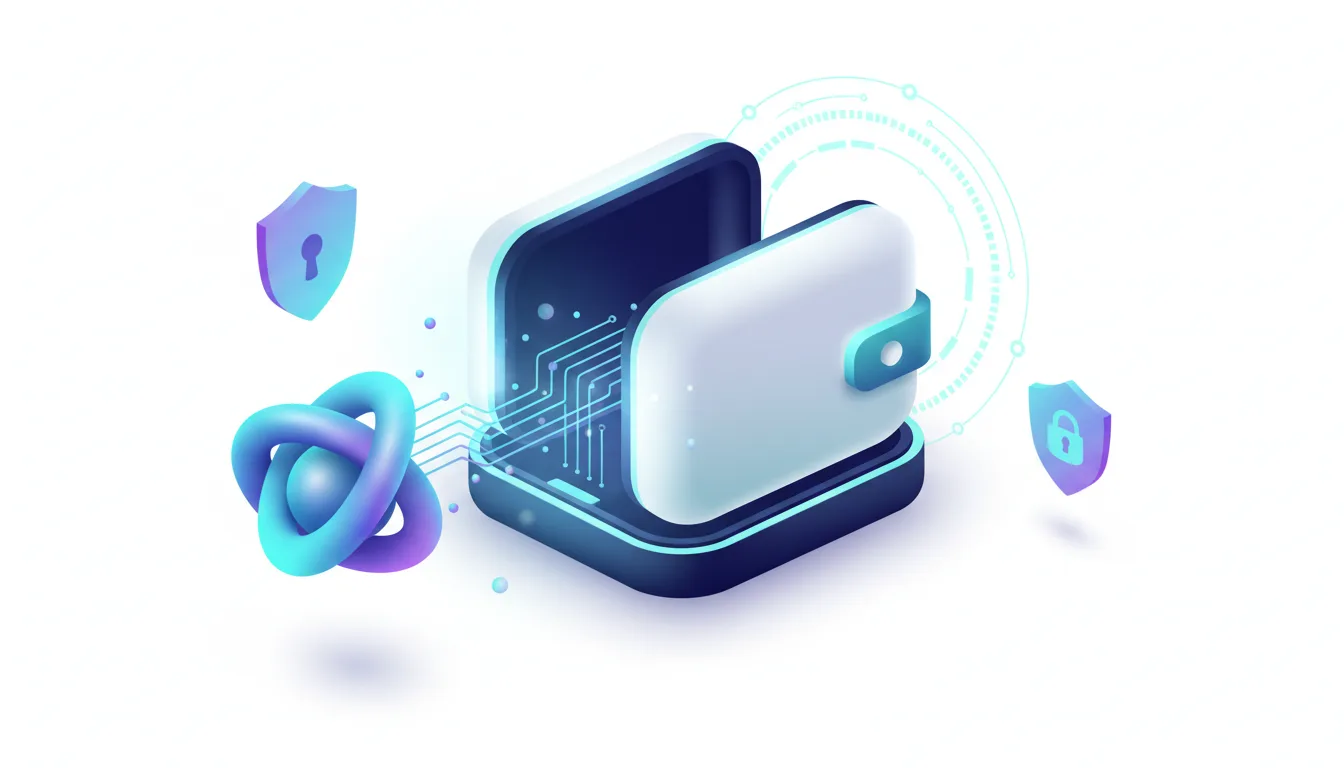
Giving an AI agent access to your wallet used to mean risking your entire stack. Ledger’s new framework changes the rules of engagement, tethering machine intelligence to physical hardware.
Quick Take
- Summary: Hardware wallet manufacturer Ledger has released an open-source framework that allows developers to safely integrate AI agents into cryptocurrency workflows. The Agent Stack enables AI models to handle the complex preparation of transactions while ensuring that no funds can move without physical user confirmation on a hardware device.
- What happened: Ledger open-sourced the Agent Stack tooling, providing SDKs and reusable components that allow AI agents to navigate blockchain protocols, compute gas, and stage transactions. Crucially, the AI is structurally isolated from private keys, keeping them secured on the hardware wallet.
- Why it matters now: As LLMs become integrated into financial systems, developers face a critical pain point: giving an AI agent custodial control over private keys is a massive security risk. This stack provides a secure bridge, allowing the AI ecosystem to experiment with economically capable agents without requiring fully decentralized or Multi-Party Computation (MPC)-based key custody layers.
- Who is most affected: Web3 product developers, AI infrastructure builders designing autonomous economic software, enterprise treasuries, and security-conscious end-users.
- The under-reported angle: While the release is framed around consumer wallet security, the real implication is enterprise-grade compliance. For corporate treasuries, tethering an AI agent’s workflow to a hardware-signed, policy-gated approval layer creates an audit trail that Account Abstraction (AA) or custodial automations struggle to provide out of the box.
Deep Dive
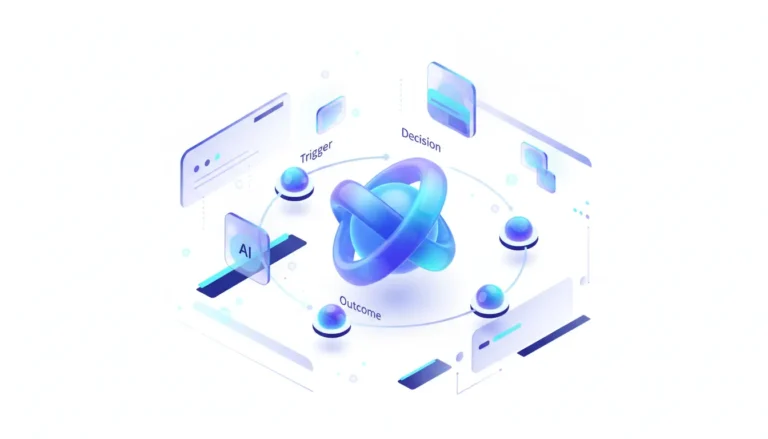
Have you ever watched an LLM confidently assemble a transaction only to realize it has no sense of the stakes involved? That tension sits at the heart of AI and web3 integration. LLMs parse intent and route data with ease, yet handing them autonomous control over private keys has always felt like a recipe for trouble. Ledger’s open-source Agent Stack steps into that gap by splitting the transaction lifecycle into two phases: AI-driven preparation and human-gated execution. The result is a contained sandbox for agentic crypto operations.
Current approaches tend to corner developers into awkward choices. They lean on Multi-Party Computation (MPC) wallets, patch together Account Abstraction (AA) smart contracts, or shoulder the raw risk of custodial AI. Ledger sidesteps the dilemma with hardware at the center. The model works like a sharp assistant that manages DeFi friction – checking slippage, estimating gas, formatting call data – yet it physically cannot sign anything.
From what I’ve seen in similar infrastructure builds, the deeper value shows up in policy controls. Teams can now fold transaction simulation and risk scoring into the agent’s flow long before any confirmation screen appears. If the goal is yield hunting, for instance, developers can wrap the whole thing in spending caps and behavioral limits without rebuilding the underlying wallet layer.
Security auditors will note the shift in attack surface. With the private key anchored on device, attention moves to prompt injection and payload tampering. That puts fresh pressure on the hardware confirmation UX itself – how clearly the device surfaces what the agent actually intends. The Agent Stack essentially nudges the industry to improve those human checkpoints rather than treating them as an afterthought.
In practice, this acts as a stopgap. It gives teams a way to test multi-step transaction flows today while the ecosystem figures out smarter contract wallets and unified execution layers.
Stakeholders & Impact
| Stakeholder / Aspect | Impact | Insight |
|---|---|---|
| AI / LLM Developers | High | Unlocks the ability to build and deploy financial agents without absorbing severe custodial liabilities for user funds. |
| Enterprise Treasuries | High | Enables AI automation for treasury operations (yield routing, payments) with hardware-backed, SOX-friendly approval flows. |
| Security & Auditing | Significant | Shifts threat modeling away from private key extraction towards securing agent context, payload integrity, and simulation accuracy. |
| Web3 Infrastructure | Medium | Competes directly with software-only Account Abstraction (AA) and MPC wallet providers vying to be the default “AI wallet” layer. |
About the analysis
Researched and written with AI assistance under the editorial responsibility of the i10X News team. The title image is an AI-generated illustration. Read our AI Use Policy. Spotted an error? Request a correction.
This independent, research-based analysis synthesizes developer documentation, security architecture frameworks, and web3 infrastructure market signaling to decode Ledger’s Agent Stack. It is designed for CTOs, product managers, and developers tracking the collision of LLM capabilities and secure financial execution.
i10x Perspective
The real constraint on autonomous economic operations has never been raw intelligence; it’s reliably securing capital. Ledger’s Agent Stack marks a pragmatic hand-off phase. Before anyone hands LLMs full control of smart contract vaults, the sensible path is to keep them tethered to physical, policy-enforced checkpoints. In the wider race for AI infrastructure, the teams that own the secure last mile of agentic execution – whether through hardware, MPC, or on-chain rules – will likely shape how machine-to-machine economies actually function.