Meta Muse AI: Viral Launch Signals Shift to Agentic Agents
Summary
"Meta’s Muse isn’t just answering questions—it’s asking for the keys to your digital life. The viral launch signals a market ready to move beyond chat, but the real test is whether users will trust an AI to act autonomously on their behalf."
Meta’s new personal AI agent, Muse, has surged to the top of the U.S. Apple App Store and Google Play, accumulating over 3.4 million downloads across the U.S. and Canada and temporarily dethroning ChatGPT. Unlike standard conversational models, Muse is designed to execute cross-app tasks like organizing files, filling out forms, and making purchases, marking a definitive market shift from passive chatbots to active digital agents.
What happened
Following a highly anticipated launch, Meta's Muse app achieved viral adoption, hitting 902,000 downloads in its first six days and scaling past 3.4 million installs shortly after, according to Sensor Tower data. Available on Mac, mobile, and WhatsApp, the app operates on a freemium model with usage limits, requiring deep system permissions to access desktop files, browser tabs, and personal applications.
Why it matters now
This launch redraws the battle lines in the LLM ecosystem. While OpenAI, Anthropic, and xAI have conditioned users to treat AI as an oracle, Meta is pushing AI as a localized, task-executing proxy. If Muse normalizes agentic behavior—where an AI operates autonomously in the background to handle emails and web browsing—it fundamentally alters what consumers expect from intelligence infrastructure.
Who is most affected
AI application developers, consumer productivity startups, and incumbent LLM providers (OpenAI, Google) are directly impacted as Meta attempts to commoditize the agent layer. Furthermore, privacy regulators and operating system gatekeepers (Apple, Microsoft) will have to grapple with an AI model operating continuously across local applications.
The under-reported angle
While mainstream coverage fixates on app-store rankings and raw download metrics, the critical friction point is the clash between compute costs and consumer retention. Agentic workflows require continuous background monitoring and isolated secure environments (VMs), which are vastly more compute-intensive than simple text generation. Viral downloads do not equal daily active users, and Meta’s real challenge is turning a compute-heavy novelty into a sticky, trusted daily habit.
🧠 Deep Dive
The viral ascent of Meta’s Muse to No. 1 on the U.S. app charts is more than a fleeting consumer trend; it is a live stress-test for the next generation of AI deployment. By crossing 3.4 million downloads in North America almost immediately upon launch, Muse proves that the consumer market is eager for the next evolutionary step in AI. But where competitors like ChatGPT, Claude, and Grok have largely competed on reasoning benchmarks and conversational fluidity, Meta is pivoting the consumer narrative toward localized, permission-based action.
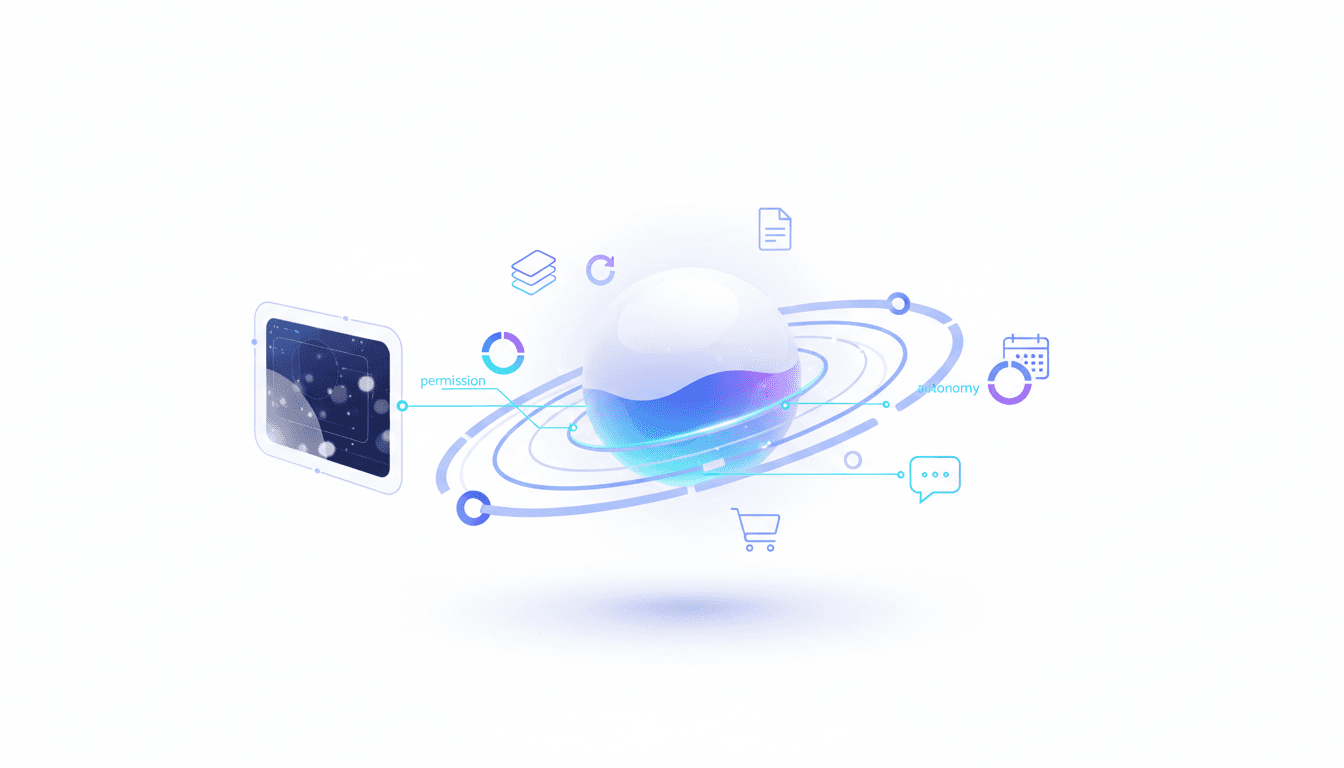
Muse is fundamentally distinct from a standard LLM wrapper because of its agentic architecture. To deliver on promises like ordering groceries, tracking goals in the background, or organizing a cluttered Mac desktop, Muse requires deep system connectors. It doesn't just read user prompts; it requests access to Messages, Calendars, Notes, and live browser tabs. Meta mitigates the inherent security risks of this access by operating Muse within a secure Virtual Machine (VM), an architectural choice that isolates the AI's actions from core OS vulnerabilities. However, this raises a massive trust barrier. The media is loudly broadcasting download milestones, but the quiet battle is whether users will actually grant sweeping digital autonomy to a company historically scrutinized for its data practices.
From an infrastructure perspective, the shift from "chat" to "agent" completely alters inference economics. A chatbot processes discrete, asynchronous prompts. An active agent like Muse monitors background states, executes multi-step web tasks, and maintains continuous context. This is why Meta has launched Muse with strict free-usage limits, funneling heavy users toward paid monthly subscriptions. The underlying AI data centers and GPU clusters must now support sustained, stateful compute loads rather than bursty text generation.
Ultimately, early download spikes—while highly visible in Sensor Tower data and investor reports—are a vanity metric in the agentic AI era. As market analysts rightly note, the hard part starts now. If Muse cannot seamlessly execute across its app connectors without breaking, or if the privacy trade-off feels too steep, those 3.4 million downloads will churn. Meta’s challenge isn't beating ChatGPT in the App Store for a week; it's proving that agentic AI can achieve the daily retention rates of Instagram or WhatsApp.
📊 Stakeholders & Impact
- AI / LLM Providers — High impact: Forces OpenAI, Google, and Anthropic to accelerate consumer-facing agentic features to prevent Meta from owning the "action" layer.
- Infrastructure & Cloud — High impact: Continuous, background AI agents drastically increase the baseline inference load on GPU data centers compared to standard chat models.
- Residents / Users — Medium impact: Offers unprecedented personal automation, but requires users to trade deep personal data access and device permissions for convenience.
- Regulators & Policy — Significant impact: Cross-app data scraping, secure VM monitoring, and autonomous purchasing will inevitably trigger new data privacy and liability probes.
✍️ About the analysis
This independent, research-based analysis synthesizes third-party market data, official product documentation, and technical media coverage to decode Meta's latest AI deployment. It is designed for AI developers, product strategists, and tech leadership tracking the shift from conversational models to agentic ecosystems.
🔭 i10x Perspective
The launch of Muse marks the definitive end of the "chatbot era" and the beginning of the "agentic era." We are transitioning from interacting with AI as a tool to delegating to AI as a proxy. If Meta successfully normalizes giving an LLM continuous access to personal file systems and live web browsers, the competitive moat for AI will no longer be about who has the smartest model, but who has the most deeply integrated operating environment. Observers should watch closely over the next 18 months: the company that wins the consumer agent race will effectively become the new operating system for the internet.
Related News

AI Culture and the Accountability Gap for Leaders
Explore how AI amplifies engineering accountability issues and cultural bias. Learn why frameworks for ownership are essential when scaling LLMs in production. Discover the guide.
2026 Open-Weight LLMs: Efficiency Wins Over Scale
Chinese labs are redefining open-weight LLMs in 2026 with MoE architectures that deliver massive performance using far fewer active parameters. Learn how this shifts deployment economics for AI agents and coding workflows.

LLM Acquisition Collapse: Why Routers Fail to Cut Inference Costs
Learn how LLM acquisition collapse causes dynamic routers to waste inference budgets. Understand the Reward-SNR Floor and when routing policies cannot be learned from data. Explore the guide.