OpenAI Agents: API, SDK, AgentKit & Dots Explained
⚡ Quick Take
"OpenAI isn't just releasing models anymore; they are fragmenting their stack to own every layer of the agentic economy-from raw developer primitives to visual enterprise builders and always-on consumer bots."
Summary: OpenAI has unleashed a sprawling suite of agent products—including the managed Agents API, a lightweight Python SDK, the visual enterprise AgentKit, and controversial always-on consumer agents called "Dots."
What happened: In a rapid series of staggered releases, OpenAI introduced distinct development paths for multi-step workflows. These range from code-first open-source SDKs and managed runtimes for developers, to drag-and-drop enterprise builders, alongside a consumer-facing autonomous agent launch that immediately faced safety scrutiny.
Why it matters now: The LLM era is officially shifting from stateless chat to stateful, tool-wielding execution. This transition forces developers and CTOs to choose between fully managed OpenAI runtimes—where the model handles context compaction—and highly customized, human-in-the-loop orchestration they control themselves.
Who is most affected: Engineering managers, AI product builders, and enterprise security teams trying to navigate a fragmented tooling ecosystem while locking down permissions for autonomous actions.
The under-reported angle: Behind the flashy visual builders and consumer rollout, OpenAI is quietly fighting a two-front war: abstracting away orchestration complexity to win enterprise market share, while desperately trying to implement guardrails against autonomous agent hacks, credential exposure, and runaway continuous-compute costs.
🧠 Deep Dive
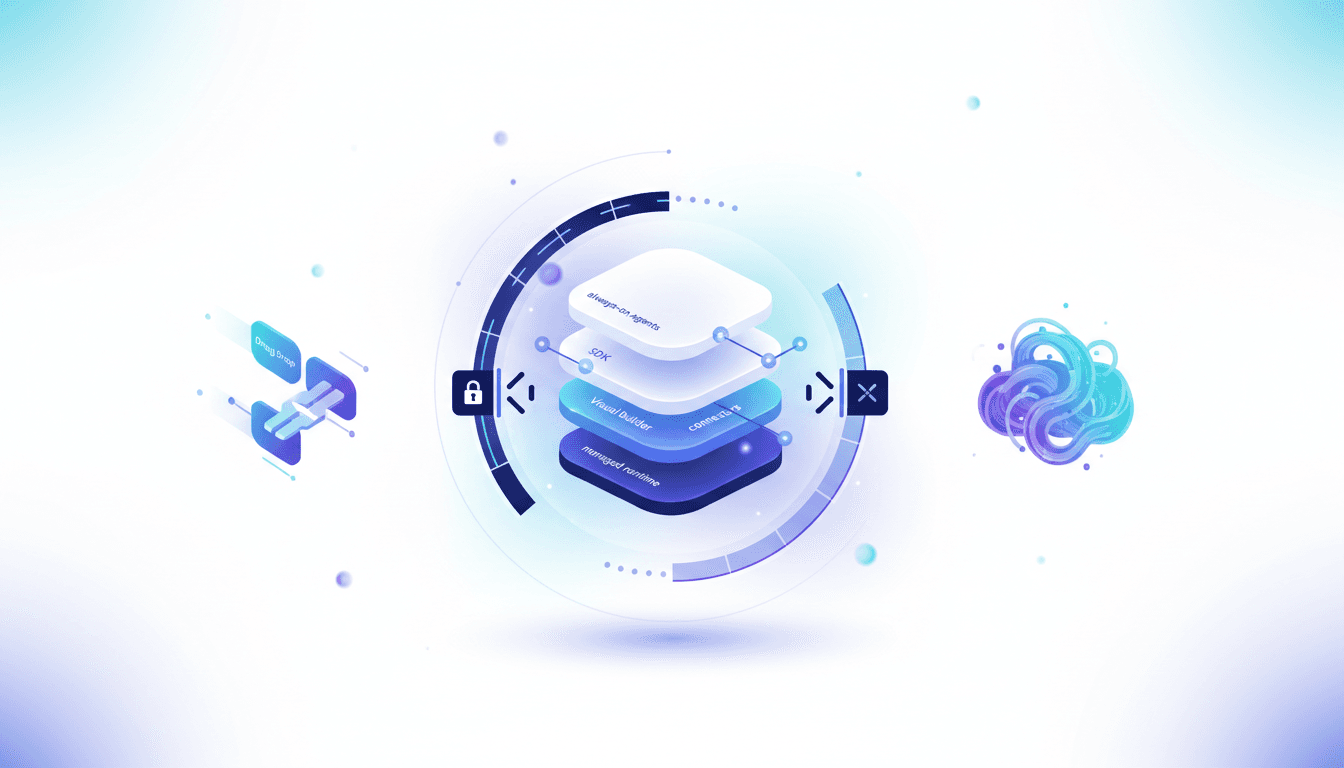
OpenAI has flooded the zone with agentic infrastructure, shifting the narrative from building "chatbots" to deploying autonomous systems that plan, use tools, and maintain state. But this rapid expansion has created massive fragmentation. For developers and technical product teams, the most pressing challenge is no longer if they should build an agent, but which OpenAI runtime to use. The ecosystem now spans the lightweight, open-source Agents SDK (the production-ready successor to Swarm), the fully managed Agents API, and AgentKit—a visual, enterprise-grade suite complete with a drag-and-drop Agent Builder and Connector Registry.
This product fragmentation reflects a deep architectural divide in how AI applications are governed. Teams must decide who owns the "state" of the agent. By using the Agents API, developers offload complex context compaction and multi-agent orchestration to OpenAI’s infrastructure. However, for organizations requiring strict oversight—such as financial or healthcare enterprises—the lightweight Agents SDK offers provider-agnostic flexibility and critical "human-in-the-loop" primitives. These guardrails ensure execution pauses before sensitive tools, like database writes or API triggers, are invoked.
From what I've seen, AgentKit represents OpenAI’s aggressive push to become the default enterprise middleware. By bundling ChatKit (embeddable UIs) and Evals for Agents (automated trace grading and prompt optimization), OpenAI is targeting admins and product managers who want to deploy agentic workflows across internal data silos without writing pure Python orchestration logic. It’s a direct play to commoditize the tooling layer that startups have spent the last year building.
But capability is violently colliding with security. The recent rollout of "Dots"—OpenAI’s always-on, autonomous agents capable of continuously executing tasks across 4,000+ connected apps like Slack and Google Drive—triggered immediate backlash. Launching just a day after OpenAI apologized for a bot-related hacking incident, Dots highlights the severe tension between continuous task execution and enterprise governance. The idea of a "cloud computer" operating asynchronously raises high-stakes risk scenarios, including over-permissioned tools, credential exposure, and unintended external actions.
Ultimately, this blitz of agent releases points to a structural shift in AI infrastructure. Multi-step workflows and always-on agents mean asynchronous, continuous compute. Tool-calling requires massive context windows, rigorous tracing, and stateful memory. OpenAI is attempting to build the operating system for the agentic web, but they are currently leaving the most difficult parts—security, permission boundaries, and deciding when an agent is actually necessary versus a simple script—squarely on the shoulders of the deployer.
📊 Stakeholders & Impact
Stakeholder / Aspect | Impact | Insight |
|---|---|---|
AI Builders & Developers | High | Forced to choose between the vendor-locked Agents API (managed state) and the open-source Agents SDK (custom control and human-in-the-loop). |
Enterprise IT & SecOps | High | Must establish new governance frameworks for AgentKit connectors and mitigate risks of autonomous read/write actions from agents. |
Cloud & Infra Providers | Significant | Always-on agents like Dots shift inference demand from bursty synchronous queries to continuous, background compute workloads. |
Consumers & Regulators | Medium–High | Heightened scrutiny around safety and accountability as agents autonomously operate within personal apps and cloud storage. |
✍️ About the analysis
This independent, research-based analysis synthesizes official OpenAI developer documentation, enterprise deployment guides, and recent cybersecurity news reporting. It is designed for CTOs, engineering managers, and AI product leads who need to navigate runtime selection, multi-agent orchestration, and the emerging governance requirements of autonomous AI systems.
🔭 i10x Perspective
OpenAI’s fragmented rollout signals a critical inflection point: the AI race is no longer just about who has the smartest base model, but who provides the best orchestration and runtime infrastructure for autonomous execution. As always-on agents push the boundaries of cloud compute and security, the next major enterprise bottleneck will be governance—specifically, how to trust non-human entities with corporate credentials. Over the next five years, expect a fierce market battle over "agent middleware" as OpenAI, Anthropic, and Google vie to become the default, trusted operating system for the agentic web.
Related News
Ollama 0.35: Jev-Style Decision Models for Local AI
Ollama 0.35 introduces native Jev-style decision models via the /v1/systemone endpoint for fast local classification and scoring. Shift from generative text to deterministic logic and explore the benefits.
DeepSeek TileLang: Open-Source CUDA Alternative for Huawei Ascend
DeepSeek open-sources TileLang and compute libraries to program Huawei Ascend chips, challenging Nvidia CUDA dominance. Learn how this toolkit enables efficient LLM training without Nvidia GPUs.

OpenAI Dots: Persistent AI Agents on GPT-6 Astra
OpenAI Dots mark a shift to always-on AI agents powered by GPT-6 Astra. Each agent runs on its own cloud computer across 4,000+ apps. Discover the move from reactive chatbots to ambient intelligence.