OpenAI Dots: Always-On AI Agents with GPT-6 Astra
⚡ Quick Take
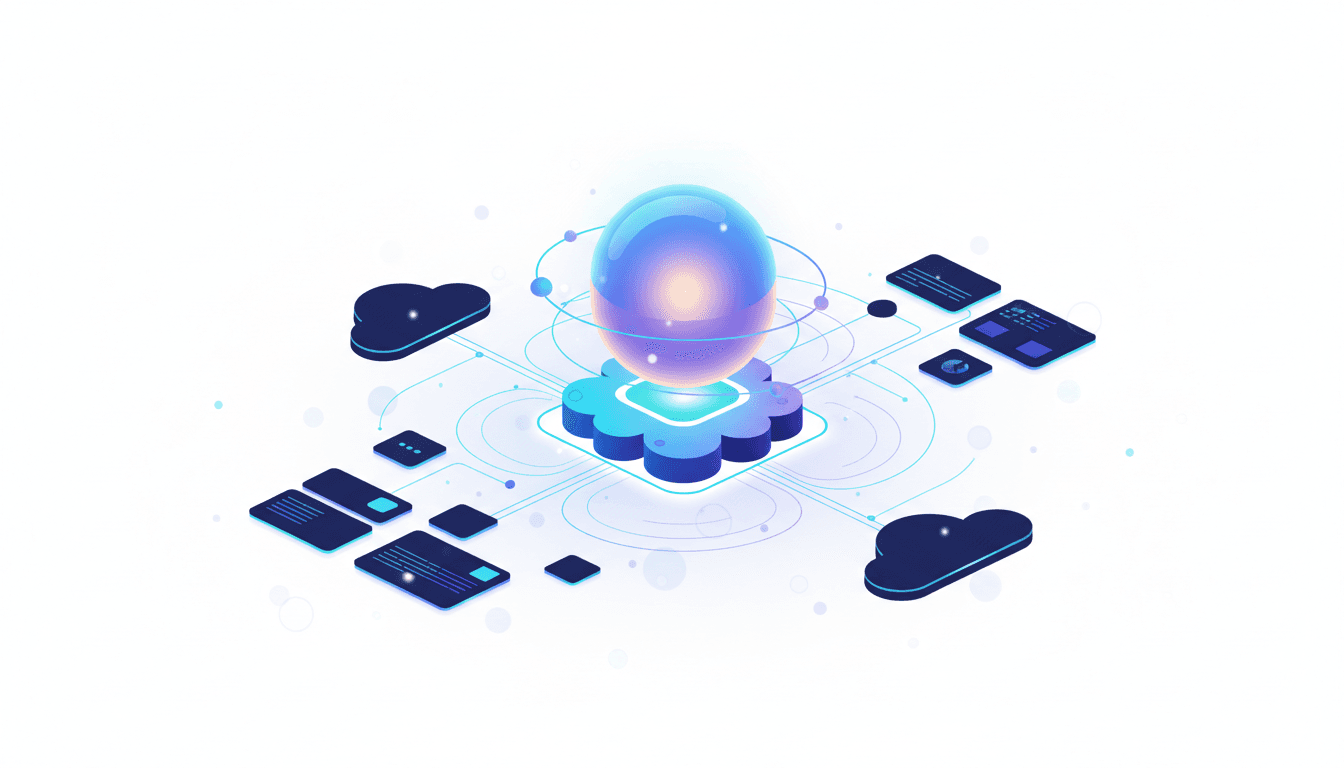
OpenAI has officially crossed the threshold from episodic chatbots to continuous digital labor. Powered by GPT-6 Astra, the new Dots are always-on AI agents equipped with their own cloud computers, designed to work 24/7 across thousands of enterprise apps.
Summary: OpenAI introduced "Dots," a new category of always-on AI agents that live inside ChatGPT but operate autonomously in the background across more than 4,000 integrated applications. Designed to handle ongoing responsibilities, these agents learn user preferences, escalate blockers, and execute workflows continuously.
What happened: Unveiled at DevDay 2026, Dots represent a massive leap in AI capability. Powered by GPT-6 Astra, each Dot is provisioned with its own cloud computer and browser, allowing it to navigate systems, monitor processes, and communicate via Slack, Microsoft Teams, and SMS on a user's behalf.
Why it matters now: This marks a structural shift in AI usage from prompt-and-response interfaces to asynchronous delegation. It fundamentally changes the economics of AI infrastructure, as models transition from serving bursty API requests to running continuous, 24/7 background inference tasks.
Who is most affected: Knowledge workers, enterprise IT administrators, and competing AI labs. Employees will shift from doing work to managing AI delegates, while IT must suddenly govern autonomous agents.
The under-reported angle: The true breakthrough isn't just the AI’s autonomy, but the infrastructure required to sustain it. Allocating dedicated "cloud computers" to individual AI agents represents a monumental shift in compute allocation, creating an entirely new vector for data center demand.
🧠 Deep Dive
Have you ever wondered why most AI still feels tethered to the moment you hit send? For years, the primary bottleneck in generative AI has been human attention: an LLM could only work as fast as a user could prompt it. With the launch of Dots, OpenAI is rewriting that contract entirely. Powered by the newly deployed GPT-6 Astra, Dots are not just conversational assistants; they are persistent digital entities. By giving each agent its own "cloud computer" and browser environment, OpenAI has enabled continuous progress. A Dot doesn't sleep when you close ChatGPT; it keeps monitoring Slack alerts, analyzing data, and running software tests in the background.
This release acts as a direct declaration of war on Meta's Muse in the escalating personal AI race. While early coverage from consumer outlets focuses on the novelty of a "cute name" and the 4,000+ app integrations, the strategic reality is much sharper. OpenAI is attempting to become the default operating system for the enterprise background. By embedding Dots into daily communication channels like Microsoft Teams and SMS, OpenAI is bypassing traditional SaaS dashboards and putting its models directly in the flow of work.
The transition from chatbots to autonomous agents naturally introduces a massive trust deficit, which OpenAI is addressing through strict "goals and boundaries." As noted by industry watchdogs, while a Dot can operate independently, it hits hard stops for sensitive actions—such as installing software, executing payments, or changing passwords—requiring explicit human approval. This changes the user experience from prompt engineering to agent management; the human steps in only when the model reaches an edge case or needs strategic direction.
From what I've seen in similar rollouts, the rapid rollout to ChatGPT Pro, Business Premium, and Enterprise users obscures a looming governance crisis. As AI agents begin manipulating thousands of third-party apps simultaneously, enterprise IT security frameworks will be severely tested. The market has spent two decades building access controls for human identities; it now has to rapidly adapt to a world where highly capable, GPT-6 Astra-powered agents are authorized to act 24/7 on behalf of the workforce.
Ultimately, Dots represent the maturation of the AI infrastructure ecosystem. The shift from episodic inference (generating a text response) to continuous inference (monitoring and executing a multi-day task on a cloud computer) will demand unprecedented GPU resources. OpenAI is betting that the value of true, always-on digital labor will justify the astronomical compute costs running beneath it.
📊 Stakeholders & Impact
Stakeholder / Aspect | Impact | Insight |
|---|---|---|
AI / Cloud Providers | High | Inference demand shifts from bursty queries to continuous, always-on compute via dedicated "cloud computers." |
Enterprise IT & Security | High | Must invent new governance frameworks to audit agent actions, set boundaries, and manage API permissions across 4,000+ apps. |
Knowledge Workers | Medium–High | Daily workflows transition from manual task execution to setting goals, monitoring progress, and approving agent escalations. |
Competitors (Meta, Google) | Significant | Accelerates the timeline for the "personal AI assistant" war, forcing rivals to match continuous infrastructure capabilities. |
✍️ About the analysis
This independent analysis synthesizes DevDay launch materials, competitive intelligence, and technical documentation to provide a strategic overview for CTOs, product managers, and enterprise AI evaluators. It tracks the shift from episodic LLM usage to persistent, agentic workflows and its implications for cloud infrastructure and workplace automation.
🔭 i10x Perspective
OpenAI Dots signal the dawn of the "agentic cloud" era, where AI models no longer just process data, but persistently inhabit digital environments. As GPT-6 Astra enables dedicated cloud computers for these agents, the true bottleneck shifts away from raw model intelligence toward enterprise governance and system integration. Over the next five years, the victors in the AI race won't just be the labs with the smartest models, but the infrastructure providers that can safely and economically scale millions of always-on digital workers.
Related News

OpenAI Dots: Persistent AI Agents on GPT-6 Astra
OpenAI Dots mark a shift to always-on AI agents powered by GPT-6 Astra. Each agent runs on its own cloud computer across 4,000+ apps. Discover the move from reactive chatbots to ambient intelligence.
Arthur Mensch: Mistral CEO Slams US AI Labs on Safety Rhetoric
Arthur Mensch argues existential AI safety debates mask operational negligence at US labs. Discover why enterprise monitoring and containment are now critical for agentic AI adoption. Explore the analysis.

Perplexity Portable Computer on AMD Ryzen AI Max PCs
Perplexity and AMD enable local 27B AI agent workflows on Ryzen AI Max hardware. Run private, recurring tasks without cloud costs. Explore the Agentic PC era.