OpenAI published an engineering deep dive on how it scaled Git for Codex. The November 2 post, Scaling Git at OpenAI by Aaron Friel, Taylor Blau and Ted Nyman, introduces Pando — an in-house Git backend built for agent-scale concurrent pushes and fetches. In production it cut median push latency by nearly 5× and now delivers nearly a petabyte of Git data per day. This is not the Pierre Computer acquisition covered separately as OpenAI acquires Pierre Computer. Pando is infrastructure.
Quick Take
- What: OpenAI built Pando, a new Git repository backend that still speaks the Git protocol and client.
- Results claimed: Nearly 5× lower median push latency (~80% reduction); ~1 PB of Git data per day; more than 57 TB of packs in a single hour with >99% cache hits.
- Design bets: Horizontally scalable writes (per-branch coordination), reusable packfiles for reads, causal consistency instead of repository-wide snapshots.
- Why it matters: Coding agents made monorepo SCM a product bottleneck; OpenAI treated Git as something to rebuild for machine-paced clients.
What happened
@OpenAIDevs pointed developers to the post: how OpenAI scaled Git for Codex by building Pando. The essay explains that by late last year the monorepo’s prior systems saw slow fetches and pushes and merge reliability sometimes below 90%. Pando began serving production traffic in April 2026 after about ten weeks from kick-off to production — designed largely by one engineer, implemented with teams of agents, and deployed by a handful of staff — while remaining compatible with Git so engineers and Codex agents did not change their workflows.
Background: agents broke the forge assumptions
Codex lets engineers run many changes in parallel. That means more branches, more pushes, more merges, and more fetches from dev environments, research jobs and CI — often several jobs fetching the same commit after one push. Human-paced Git forges assume long-lived working copies and modest concurrency. Agent-paced traffic does not. OpenAI evaluated classic distributed Git patterns (three-phase commit across full replicas; a shared write-ahead log in blob storage) and argued both hit contention or I/O walls under thousands of concurrent writers.
How Pando works (public description)
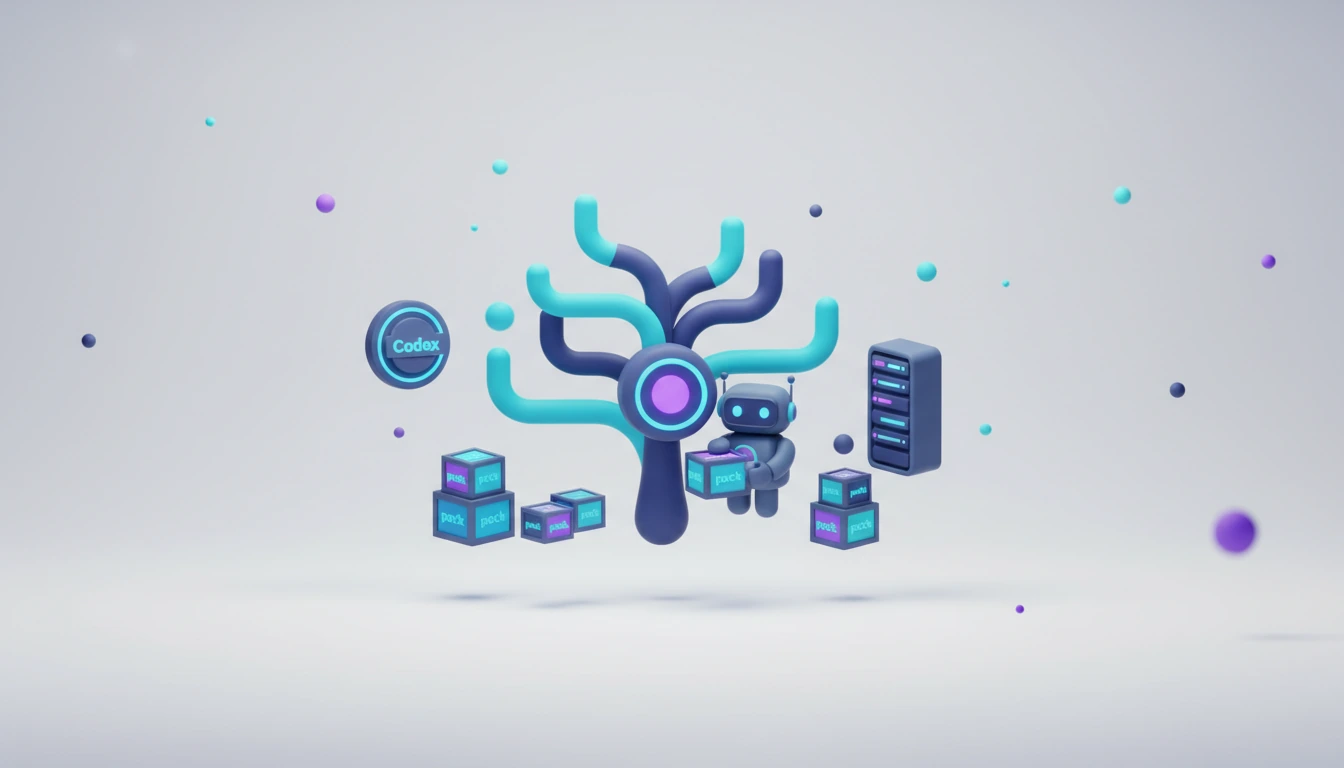
Pando stores each push’s packfile as an immutable blob and records per-branch ref versions in a metadata store. Unrelated branches update in parallel; readers fetching multiple branches may see them at different points in time (causal consistency). On fetch, Pando maps Git have/want sets to stored packfiles and returns them via the protocol’s packfile-uri extension (with upstream contributions), while an Express cache layer serves packs from regional disks — OpenAI cites >99% cache hit rates and line-rate saturation of 10 Gbps links on standard VMs. Background compaction merges L0 packs into higher-level covers (up to L4), similar to LSM trees, so clients are not forced to download tens of thousands of tiny packs to catch up. Pando was first deployed as a read/write-through proxy beside the old system, then cut over.
| Topic | Detail (from OpenAI engineering post) |
|---|---|
| Name | Pando (in-house Git backend) |
| Authors | Aaron Friel, Taylor Blau, Ted Nyman |
| Published | November 2, 2026 |
| Headline results | ~5× lower median push latency; ~1 PB Git data/day; 57 TB in a peak hour |
| Build time | Kick-off to production in ~10 weeks (built with Codex) |
| Consistency model | Causal consistency per ref; not repository-wide snapshots |
| Not to confuse with | Pierre Computer acquisition |
Pros and cons
For users
- Pro: Faster, more reliable Codex and internal engineering loops if push/fetch latency drops.
- Con: No user-facing toggle; benefits appear only as agent and CI speed.
For developers
- Pro: A rare, detailed public post on agent-shaped SCM; useful patterns (pack reuse, packfile-uri, per-ref concurrency) for anyone building coding agents on large monorepos. OpenAI is also contributing Git client improvements upstream.
- Con: Pando itself is not announced as a customer product. Copying the architecture without OpenAI’s traffic and blob/metadata scale is premature.
For companies
- Pro: Validates investing in developer infrastructure for agents — SCM, caches, sandboxes — alongside model spend.
- Con: Differentiated private Git backends raise switching costs. Independent agent vendors still depend on forge roadmaps or must build their own sidecars.
What X is saying
Developer Twitter treated the post as a systems story, not a product launch.
How we scaled Git for Codex: the story of building Pando, our Git backend for agent traffic. Packfile caching, windowed pack reuse, and what breaks when agents clone at machine speed.
— OpenAI Developers (@OpenAIDevs) November 3, 2026 · View on X
OpenAI just published how Codex forced them to rebuild Git infra. Agents aren’t humans. They clone constantly. Packfile caching and reuse windows are the quiet unsexy work that makes agents feel fast.
— Pramod Kodag (@pramod_kodag) November 5, 2026 · View on X
Everyone argues about which coding model is smarter. OpenAI is quietly rewriting Git for agent traffic. That’s the tell: agents are becoming a first-class SCM client.
— Lost (@Lost_co2) November 5, 2026 · View on X
What Grok says
We did not find a dedicated Grok thread dissecting Pando at the time of writing. The primary source remains OpenAI’s engineering post.
Critical analysis
Keep Pando and Pierre Computer in separate boxes. Pierre is an acquisition in the code-review / developer-tools surface; Pando is an internal Git backend essay. Second, the impressive PB/day and 5× latency figures are OpenAI’s production metrics for its monorepo — not a portable benchmark. Third, relaxing repository-wide consistency is a deliberate trade: fine for agents focused on one branch, surprising for tools that assume a global snapshot. Every coding-agent vendor will hit some version of this wall; the strategic question is whether public forges productize agent-grade clone/push APIs or whether each lab builds a Pando-class sidecar.
What’s still open
- Will any of Pando’s technology be offered to Codex or API customers, as the post’s “exploring ways to share” line hints?
- How far will upstream Git absorb OpenAI’s packfile-uri and client patches?
- Do GitHub, GitLab and Bitbucket plan agent-specific clone/cache products?
- How does Pando behave for multi-branch release tooling that wants a global snapshot?
About the analysis
Researched and written with AI assistance under the editorial responsibility of the i10X News team. The title image is an AI-generated illustration. Read our AI Use Policy. Spotted an error? Request a correction.
This independent, research-based i10x analysis is based on OpenAI’s November 2, 2026 engineering post “Scaling Git at OpenAI,” the @OpenAIDevs announcement, and developer discussion on X. It is distinct from OpenAI’s Pierre Computer acquisition. More on OpenAI.
i10x Perspective
Model quality still gets the headlines; push and fetch latency decide whether agents feel magical or stuck. Pando is a reminder that the coding-agent stack now includes SCM the way web apps once discovered CDNs. Labs that treat Git as someone else’s problem will tax every agent turn.