Perplexity is escalating the AI browser wars with its upgraded Comet Assistant, transforming the browser from a simple information portal into an autonomous “do engine.” By introducing agentic, multi-tab automation, Perplexity is moving beyond its “answer engine” roots to directly challenge how Google’s Gemini, Microsoft’s Copilot, and Arc Browser aim to redefine web interaction.
Quick Take
- Summary: Perplexity has released a significant upgrade to its Comet browser, equipping its AI assistant with agentic capabilities. This allows the AI to understand and execute complex, multi-step tasks across multiple browser tabs, moving beyond single-page context to full workflow automation. The browser is also now free, which lowers the barrier for entry and can attract users who might otherwise stick with incumbent options.
- What happened: The new Comet Assistant can now perform tab-aware multitasking, meaning it can retain context and coordinate actions across different websites. For example, a user could ask it to research multiple products, open their respective review pages, and synthesize a summary—a task that previously required significant manual switching and copy-pasting.
- Why it matters now: This marks a critical shift in the AI race from passive “answer engines” to active agentic assistants. Perplexity is no longer just competing with Google on search results; it is competing with Chrome/Gemini and Edge/Copilot for control of the entire user workflow. That pressure forces incumbents to accelerate their own agentic browser features or risk falling behind.
- Who is most affected: Knowledge workers, researchers, students, and anyone whose work involves heavy multi-tab web research are the primary beneficiaries. Strategically, Perplexity’s move targets browser platforms like Google Chrome, Microsoft Edge, and emerging players like Arc Browser, forcing them to demonstrate their agentic AI is more than a chatbot in a sidebar.
- The under-reported angle: While most coverage focuses on productivity features, the core challenge is building an AI that can reliably navigate the messy, unstructured web while maintaining user trust. Success hinges on performance on complex sites, graceful failure handling, and a transparent data privacy model—areas where the battle is just beginning.
Deep Dive
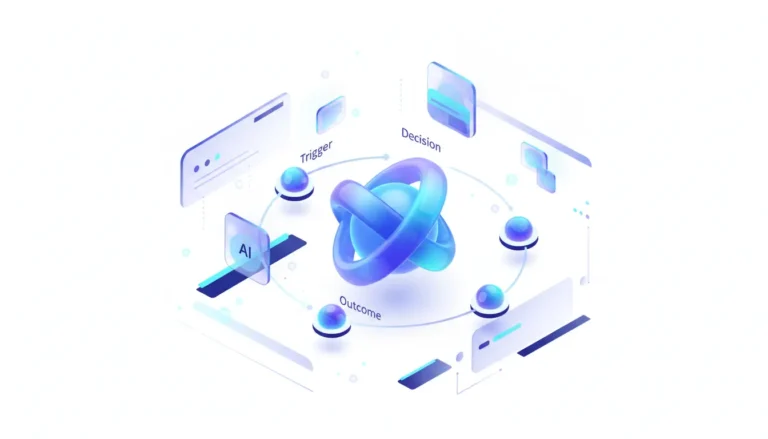
Ever wonder if your browser could handle the heavy lifting instead of just fetching pages? Perplexity’s upgrade to Comet is more than a feature refresh; it’s a strategic repositioning. Shifting from an “answer engine” that challenged traditional search to a “do engine” that automates user actions, Perplexity aims to build the primary interface for web-based work. The centerpiece is the Comet Assistant’s agentic capability: tab-aware multitasking. This isn’t just about understanding the content on a single page, but about orchestrating a sequence of actions across the entire browser session—turning chaos into a smooth operation.
The core problem Perplexity is tackling is the cognitive load and inefficiency of modern web research. Users constantly toggle between tabs, losing context and manually piecing together information. Comet’s solution targets complex queries like “Find three academic papers on LLM scaling laws, open their PDF links, and summarize their key findings.” This level of autonomous browsing moves the AI from conversational partner to delegated worker—a leap competitors are also racing to make.
This places Perplexity in direct confrontation with ecosystem giants. Google is integrating Gemini into Chrome, Microsoft is embedding Copilot into Edge, and entrants like Arc Browser are building AI-native experiences. While Perplexity’s PR emphasizes a seamless user experience, the technical reality is brutal: an agent must navigate inconsistent site structures, handle authentication, bypass modals, and interpret dynamic content, all while keeping users in control and able to intervene.
Ultimately, the battle for the agentic browser will be won on trust, not just features. An AI that acts across multiple sites, including private accounts, requires an ironclad privacy and security promise. Perplexity, without a legacy ad-based business model, has an opportunity to build a brand around transparency in data handling (on-device vs. cloud processing). Its ability to deliver reliable performance without becoming a privacy liability will determine whether Comet remains a niche power-user tool or becomes a genuine threat to the browser establishment.
Stakeholders & Impact
The race to build a true AI-native browser is heating up, and Perplexity’s agentic upgrade changes competitive dynamics—shifting comparisons from search quality to automation capability.
| Stakeholder / Aspect | Perplexity Comet | Google Chrome + Gemini | Microsoft Edge + Copilot |
|---|---|---|---|
| AI / LLM Providers | High | Agentic focus—moves beyond summarization to workflow automation and aims to serve as a lightweight “do engine.” | Deep ecosystem integration—Copilot leverages Microsoft 365 data to anchor enterprise workflows. |
| Infrastructure & Utilities | Medium | API-centric model relying on its own models and potential third-party integrations; less infrastructure-heavy than a full ecosystem. | Massive scale and cloud coupling—the integration with Azure requires globally distributed inference capacity tied to user actions. |
| Residents / Users | High—targets power users and researchers, with a free tier as a key adoption driver. | General users—aims for mass-market adoption by making AI assistance a default part of the world’s most popular browser. | Professionals and Windows users—provides a default, integrated experience for those inside the Microsoft ecosystem. |
| Regulators & Policy | Medium–High | Data privacy could become a differentiator and influence standards for agentic browsing. | Enterprise compliance pressures require ensuring agentic features meet global data sovereignty and corporate governance rules. |
About the analysis
Researched and written with AI assistance under the editorial responsibility of the i10X News team. The title image is an AI-generated illustration. Read our AI Use Policy. Spotted an error? Request a correction.
This is an independent analysis by i10x, based on official company announcements, trends in AI-native software development, and a competitive review of the browser market. It is written for product leaders, developers, and strategists tracking the convergence of AI, agents, and user interfaces.
i10x Perspective
Perplexity’s move confirms the browser is the new battleground for personal AI agents. The web browser is becoming the operating system for intelligence, and the winner will be the platform that provides the most capable and trustworthy agent. Small shifts can ripple out to redefine how we work.
This upgrade forces a central question on the market: will AI agents be powerful, independent tools like Comet, or deeply integrated, ecosystem-locking features like Gemini in Chrome? The unresolved tension for the next decade is the collision between agentic capability and user privacy. The more an AI can do for you, the more it has to know about you. Solving that paradox is now the central challenge in building the future of computing—and it’s one that keeps me thinking about the bigger picture.