Perplexity Portable Computer on AMD Ryzen AI Max PCs
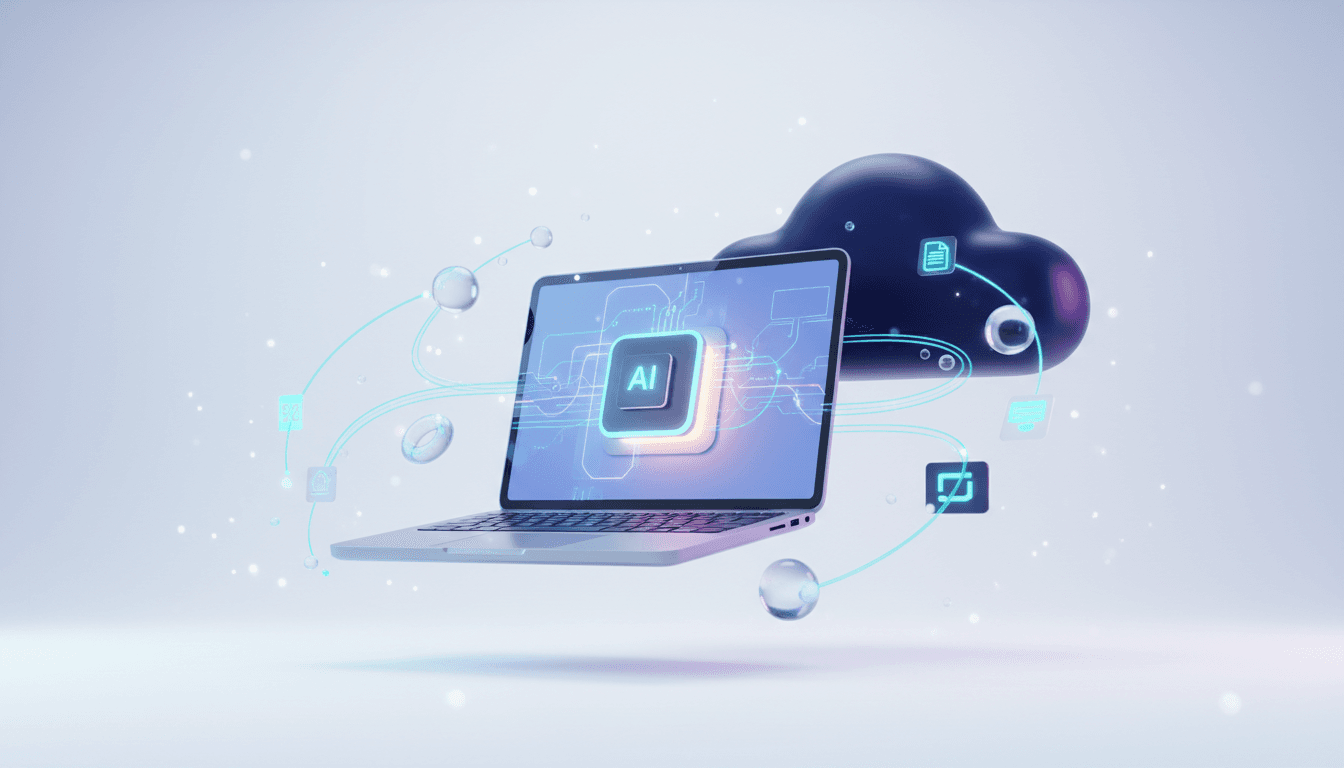
Perplexity Brings Portable Computer to AMD Ryzen AI Max — The Rise of the Agentic PC
⚡ Quick Take
Perplexity is partnering with AMD to bring its Portable Computer local agent runtime to Windows PCs powered by Ryzen AI Max processors. This rollout enables users to run complex, multi-step AI workflows directly on their devices.
Perplexity Pro and Max subscribers using Windows 10 or 11 on AMD Ryzen AI Max systems (including the Ryzen AI Halo developer platform) can now run 27-billion-parameter models natively. The system uses a local sandbox to execute tasks via the Perplexity Windows app without relying on cloud infrastructure.
This marks a critical evolution in AI infrastructure: the rise of the Agentic PC. By shifting inference from centralized data centers to edge hardware, AI platforms can drastically reduce server compute costs while offering users faster, localized automation.
Who is most affected: Power users, developers, and enterprise IT teams who want private, recurring AI workflows. It also highly impacts hardware vendors by setting a new baseline for what constitutes a true AI workstation.
The under-reported angle: The staggering hardware floor. Running a 27B model locally requires at least 24GB of GPU-accessible memory. This isn't just a software update; it is a catalyst for a massive hardware upgrade cycle, redefining the minimum specs required to participate in the local-first AI economy.
🧠 Deep Dive
Have you ever wondered why so many AI tools still feel tethered to distant servers? Perplexity is actively shifting the gravitational pull of AI compute away from the cloud and onto the edge. With the launch of Portable Computer on AMD Ryzen AI Max PCs, the search-turned-agent company is proving that multi-step, localized AI workflows are no longer a futuristic concept - they are currently deploying on Windows hardware. This move directly addresses a growing friction point in the AI ecosystem: the exorbitant cost of running autonomous, recurring agentic tasks in centralized data centers.
Under the hood, Portable Computer is a subscription-based local agent runtime that completely bypasses the cloud for routine tasks. It downloads and runs 27-billion-parameter models - specifically PPLX 27B and Qwen 27B - directly on AMD's silicon. Complete with its own orchestrator, scheduler, sandbox, and sensitive-content classifier, the system allows Perplexity to interact with connected apps and local files natively. For developers and enterprise architects, AMD is sweetening the deal by officially supporting this on its Ryzen AI Halo platform, creating a sandbox for on-device agent experimentation.
The most immediate user benefit is economic, fundamentally changing the token-economy paradigm. In cloud-based agentic workflows, complex recurring tasks burn through expensive "Computer credits" or hit strict usage caps. Because Portable Computer leverages the user’s own hardware for inference, these routine automated workflows consume zero credits. This allows users to schedule endless local data synthesis or file analysis tasks without hitting artificial paywall ceilings.
That said, Perplexity isn't abandoning the cloud; it is optimizing it through intelligent routing. The system employs a hybrid architecture: if a local task requires reasoning that exceeds the 27B model's capabilities, the local orchestrator seamlessly escalates the prompt to larger frontier models in the cloud. This dynamic routing solves the classic local-versus-cloud dilemma, keeping data private and latency low when possible, while reserving expensive cloud compute exclusively for high-complexity requests.
From what I've seen, AMD and Perplexity are establishing the blueprint for the "Agentic PC." Standard "AI PCs" marketed over the last year largely focused on lightweight background tasks like webcam blurring or basic text generation. By mandating Ryzen AI Max processors and a massive 24GB of GPU-accessible memory to run a 27B agent stack, this partnership redefines edge AI. It signals to the market that the next era of enterprise productivity won't just require a neural processing unit (NPU) - it will demand heavy-duty, agent-ready edge infrastructure.
📊 Stakeholders & Impact
Stakeholder / Aspect | Impact | Insight |
|---|---|---|
AI / LLM Providers | High | Validates a hybrid cloud/edge architecture. Offloading routine agent inference to user hardware drastically reduces data center operational costs. |
Hardware & Chip Vendors | High | AMD gains a massive marketing and practical advantage by positioning Ryzen AI Max and the Halo platform as the premier hardware for local agents. |
Enterprise & Dev Users | High | Unlocks the ability to run recurring workflows on sensitive local files without uploading proprietary data to a third-party cloud. |
Cloud Infrastructure (Hyperscalers) | Medium | If edge agents become the norm for daily workflows, it could slightly cool the exponential demand for centralized inference compute, shifting spending to edge silicon. |
✍️ About the analysis
This independent analysis synthesizes official announcements from Perplexity and AMD, developer documentation, and market reactions across the tech hardware ecosystem. It is designed for CTOs, hardware strategists, and AI developers tracking the transition from cloud-dependent LLMs to local-first agentic infrastructure.
🔭 i10x Perspective
The Perplexity-AMD partnership is a preview of the decentralized intelligence grid. As multi-step AI agents become the default way we interact with software, the hyperscaler tax - the sheer cost of server-side inference - will become unsustainable for AI companies to subsidize. By forcing the compute burden down to the local device, the battleground of the AI race is actively expanding. Over the next five years, watch for a fierce pivot in LLM development: the most valuable models won't necessarily be massive 1-trillion-parameter behemoths, but highly optimized 20B–30B parameter models explicitly designed to govern autonomous, local agents on consumer silicon.
Related News

OpenAI Dots: Persistent AI Agents on GPT-6 Astra
OpenAI Dots mark a shift to always-on AI agents powered by GPT-6 Astra. Each agent runs on its own cloud computer across 4,000+ apps. Discover the move from reactive chatbots to ambient intelligence.
OpenAI Dots: Always-On AI Agents with GPT-6 Astra
OpenAI Dots are always-on AI agents powered by GPT-6 Astra that operate autonomously across 4,000+ apps. Learn how this shifts AI usage to continuous digital labor and impacts enterprise workflows.
Arthur Mensch: Mistral CEO Slams US AI Labs on Safety Rhetoric
Arthur Mensch argues existential AI safety debates mask operational negligence at US labs. Discover why enterprise monitoring and containment are now critical for agentic AI adoption. Explore the analysis.