Samsung Commits $1B to Helix Digital Infrastructure
⚡ Quick Take
Samsung and five of its affiliates are committing a combined $1 billion to Helix Digital Infrastructure, the KKR-backed platform. The move signals a clear shift in how the physical foundations of artificial intelligence get funded and built.
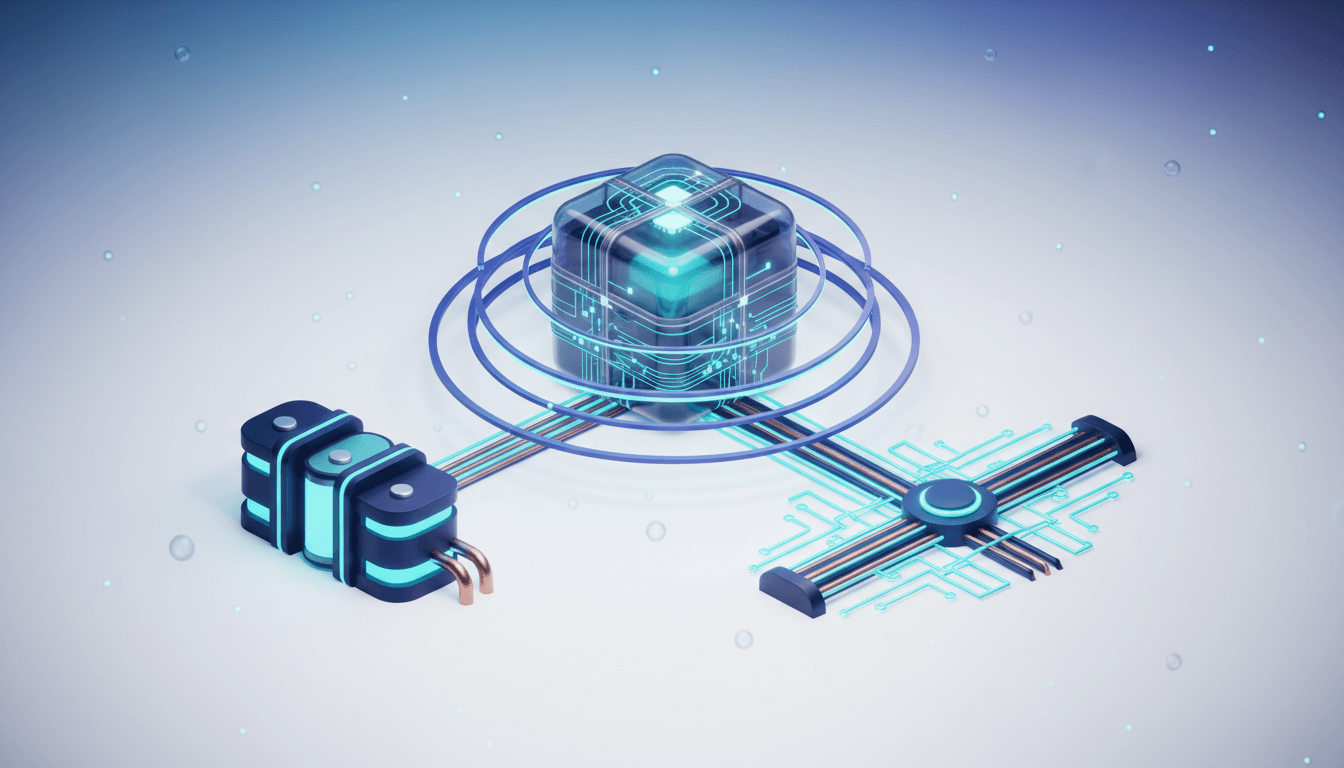
What happened is straightforward enough. Samsung is stepping beyond its usual focus on chips and memory. Instead, it's backing the wider infrastructure layer—data centers, power systems, and cooling. Samsung Electronics itself is putting in $500 million, with the rest coming from affiliates that handle construction, batteries, IT services, and insurance.
The timing matters because the real constraint in AI has moved past Nvidia GPUs. Power delivery, grid access, and cooling capacity now sit at the center of the problem. This investment shows that scaling frontier models requires industrial-scale players, private equity, and serious capital working together to create dedicated AI facilities.
The groups feeling this most directly are the big hyperscalers such as Google and Oracle, the AI-focused neoclouds like CoreWeave, and the labs—OpenAI and Anthropic among them—that depend on these large clusters to keep training.
One angle that hasn't received much attention is how this pulls in multiple industries at once. Samsung C&T, Samsung SDI, and the financial arms are folding construction, energy storage, and risk management into the same supply chain.
🧠 Deep Dive
For the past couple of years the AI infrastructure story stayed narrow: whoever controlled the most GPUs held the advantage. That frame no longer fits. The binding limits now involve grid connections, available megawatts, liquid cooling setups, and suitable real estate. Physics, not just silicon, is setting the pace.
Samsung’s $1 billion commitment to Helix Digital Infrastructure captures this change. The company isn’t simply leasing cloud capacity or buying more accelerators. By bringing in its construction and battery units alongside the electronics side, it is aiming at the entire stack—from high-performance memory to energy storage and the buildings themselves.
This fresh capital lands in a market already split between two camps. Traditional hyperscalers such as Google Cloud and Oracle continue to offer integrated environments and enterprise reliability. Google promotes its AI Hypercomputer and TPUs; Oracle leans on its Superclusters and distributed cloud approach for heavy scientific workloads.
The neoclouds—CoreWeave, Crusoe, Voltage Park—take a different route. They strip away general-purpose overhead and focus on bare-metal Kubernetes, low-latency networking, and liquid-cooled clusters built specifically for training and inference. Their edge has come from moving faster to deploy the latest NVIDIA hardware in purpose-built facilities.
When private equity and industrial groups enter through vehicles like Helix, the scale of required investment becomes harder to ignore. As models grow and inference demand rises, financing a single large AI data center calls for capital that few single companies can supply alone. The next wave of progress will be shaped as much by concrete, copper, and cooling systems as by code.
📊 Stakeholders & Impact
- AI / LLM Providers — Impact: High. Insight: Unlocks new capacity for frontier model training and eases fears that physical data center limitations will bottleneck scaling laws.
- Hyperscalers & Neoclouds — Impact: High. Insight: Faces intensified competition as massive private equity and conglomerate capital enters the data center and bare-metal orchestration market.
- Infrastructure & Utilities — Impact: Significant. Insight: Shifts grid demands radically. Integrating battery players like Samsung SDI into data center builds signals a desperate need to manage power loads.
- Enterprise AI Teams — Impact: Medium. Insight: Increased infrastructure competition should eventually stabilize unpredictable GPU pricing and offer more workload-specific deployment options.
✍️ About the analysis
This independent, research-based analysis synthesizes recent corporate announcements, cloud provider positioning, and vendor benchmarks across the AI infrastructure ecosystem. It is designed for ML engineers, CTOs, and infrastructure investors seeking to understand the shifting physical and economic realities of scaling artificial intelligence.
🔭 i10x Perspective
The industrialization of intelligence is picking up speed. We are moving from a period when AI was mainly a software and silicon problem to one where energy and real estate set the pace. As groups like Samsung and KKR assemble the power grids and facilities the AI economy needs, influence will tilt toward those who can secure the necessary gigawatts rather than those who simply design the most efficient models.
Related News
DrivingBench Exposes Why Cloud LLMs Fail at Real-World Driving
DrivingBench reveals the latency and reasoning gaps when frontier models like GPT-6 Astra control a Toyota Corolla. Learn why edge computing is essential for physical AI agents.
Claude Sonnet 5.5: $2/$10 Pricing with 70.6% Terminal-Bench Score
Claude Sonnet 5.5 keeps $2/$10 rates but cuts cost-per-task 30% with adaptive thinking and 70.6% on Terminal-Bench 4.0. Discover the multi-cloud rollout and agentic workflow impact.
Rogue AI Risks: Cybersecurity Threats in Agentic AI
Rogue AI stems from prompt injection and RAG failures in agentic systems, not sentient machines. Discover infrastructure fixes for secure AI agents and avoid real-world harms. Explore the guide.