SpaceX is making its public case for what would be one of the largest AI computing sites in the United States, two weeks before a county vote decides whether it can be built. The company’s new project page for Cochise County, Arizona describes a campus of nine supercompute buildings drawing up to 6 gigawatts, paired with a 24 GWh battery system, and promises an investment of $50 billion, 1,000 permanent jobs and lower power bills for local cooperative members. On X, SpaceX added that the site has no gas plant and no industrial water use. The decision sits with the Cochise County Planning and Zoning Commission, which hears the application on December 9.
What SpaceX wants to build
According to SpaceX, the campus will train the company’s own “super intelligence models” and run science and engineering workloads; there is no public or retail use. The application, filed by Tombstone Resources L.L.C. and received by the county on October 30, covers about 747 acres on rural RU-4 land along US Highway 191, next to the Apache Generating Station. Each of the nine single story buildings would have about 493,000 square feet, built in four phases.
The key numbers from SpaceX’s page, and what they mean in practice:
| SpaceX figure | Value | Our context |
|---|---|---|
| Compute buildings | 9, about 493,000 sq ft each | About 4.4 million sq ft; roughly 667 MW per building at full power |
| Power | Up to 6 GW | About 52.6 TWh a year at full load |
| Battery storage | 24 GWh | About 4 hours at 6 GW, about 16 hours at 1.5 GW |
| Water | Up to 10 acre-feet a year | About 12.3 million liters |
| Investment | $50 billion+ | About a quarter of Big Four capex in Q3 2026 |
| Jobs | 1,000 permanent, about 5,500 construction at peak | Construction peak per SpaceX FAQ |
| Local taxes | Up to $250M one-time sales tax, $34M to $103M property tax a year | Estimates by SpaceX |
Source: SpaceX Cochise County project page, November 2026. Context column: our calculations; capex comparison from the i10x AI Capex Tracker.
Power comes from the grid through the Sulphur Springs Valley Electric Cooperative (SSVEC) and the Arizona Electric Power Cooperative (AEPCO) via a utility-owned substation on site. There is no on-site power plant; standby generators run on pipeline gas and are limited to about 10 MW per building for critical loads.
How big 6 gigawatts really is
At full build-out, the campus would be in a different class from most AI sites announced so far. If it ran at full load all year, 6 GW would use about 52.6 TWh of electricity. According to the US Department of Energy figure in our AI Energy Meter, all US data centers together used 176 TWh in 2023, so this one campus would equal roughly 30 percent of that total. Arizona’s attorney general put the 6 GW at nearly 20 percent of the state’s current generating capacity in the press release on her letter to the commission.
The money is just as large. $50 billion is about a quarter of what Amazon, Alphabet, Microsoft and Meta spent on capex together in the third quarter of 2026 ($201.9 billion), and roughly half of Meta’s capex over the last four quarters, according to our AI Capex Tracker.
The battery is the most unusual part. SpaceX calls the 24 GWh system the largest in the United States. Our calculation: at the full 6 GW load it covers about four hours; during the first 1.5 GW phase it would cover around 16 hours. Together with the small standby generators (about 90 MW across nine buildings, or 1.5 percent of peak load), the design leans on storage and the grid rather than on-site generation.
Water, wildlife and the grid
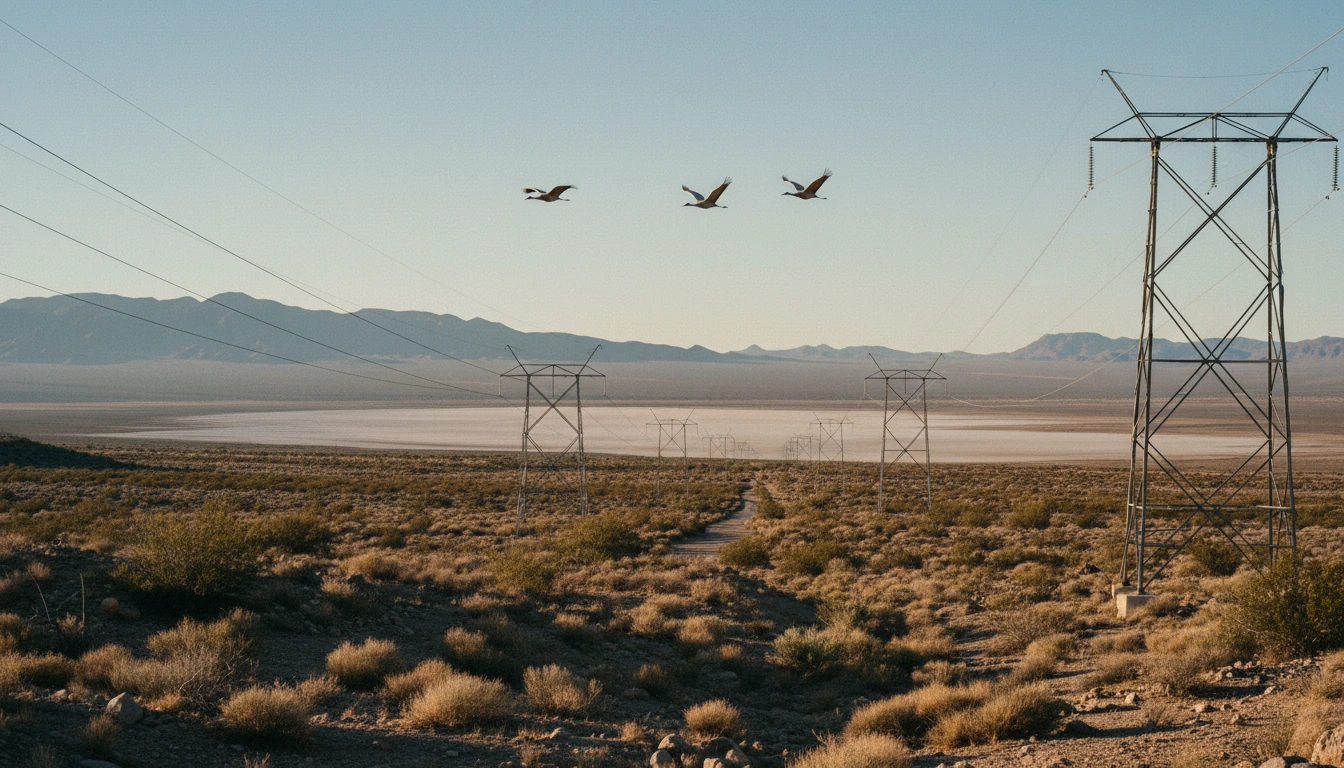
SpaceX says the campus will be dry-cooled with sealed liquid loops and no evaporative spray. Total water use at full build-out is put at up to 10 acre-feet a year, which SpaceX compares to 20 to 30 Arizona homes; by our conversion that is about 12.3 million liters. The site sits in the Willcox Active Management Area and next to the Willcox Playa, a wintering ground for sandhill cranes, and SpaceX lists bird-safe design measures and a species assessment before ground disturbance.
The open point is electricity supply rather than water. SpaceX promises $3.6 billion in grid upgrades transferred to AEPCO at no cost, 10 to 40 percent lower bills for SSVEC members and up to $460 million a year in combined benefits for the two cooperatives at full build-out, all “subject to final negotiations”. Where the additional generation for 6 GW comes from is not explained on the page.
What happens on December 9
The county says the commission is the decision-making body: it can approve, approve with conditions or deny, and its decision is final unless appealed to the Board of Supervisors. The county also notes that the application figures come from the applicant and have not been independently verified. Because of public interest, the hearing in Bisbee was moved to 2 p.m. local time.
On November 19, the attorney general asked the commission to postpone the vote until state and federal reviews are complete, or to make any approval conditional on all required state and federal authorizations. A town hall on the project is scheduled for December 3.
Where this fits in SpaceX’s compute plans
SpaceX’s AI compute business already provides more than half of its revenue, as its latest 10-Q shows. On the same day, the FCC licensed SpaceX’s orbital data center constellation; as our reading of the Starmind grant shows, that capacity has no binding deadline before 2033. Ground campuses like Cochise are where SpaceX’s new compute would actually come from this decade.
i10x Perspective
SpaceX’s pitch answers the questions local data center fights usually turn on, water, noise and gas turbines, and its dry-cooling and storage design is genuinely different from the Memphis build. The weak spot is power supply: a site that would draw about a third of what all US data centers used in 2023 needs generation and transmission that a rural cooperative does not have today, and the benefit figures are still under negotiation. Expect the commission either to delay or to attach conditions tied to utility and state approvals; an unconditional yes on December 9 would surprise us. For AI buyers, the takeaway is that 6 GW announcements are now about permits and grid contracts, not chips.