Quick Take
WANDR is a new open evaluation framework from Perplexity AI consisting of 500 specialized tasks designed to test how well AI agents execute wide discovery and deep evidence collection.
What happened: The search-centric AI company released WANDR to address a gap in AI evaluation, providing an open benchmark to measure an LLM agent’s ability to perform complex, multi-hop web research and ground findings in concrete citations.
Why it matters now: Standard RAG (Retrieval-Augmented Generation) setups and existing benchmarks like HotpotQA or WebArena do not capture the messy reality of end-to-end research. WANDR establishes a new operational standard that forces agents to demonstrate they can traverse unstructured data, plan search queries, and cite sources without hallucinating.
Who is most affected: AI researchers building autonomous web agents, enterprise RAG developers seeking reliable metric frameworks, and foundational model labs racing to build reasoning-heavy LLMs capable of functioning as analyst-grade research assistants.
The under-reported angle: By defining the rubric for what constitutes “good” research orchestration, Perplexity is standardizing the exact metric where its own architecture excels, effectively challenging Google and OpenAI on their home turf.
Deep Dive
Standard LLMs and retrieval pipelines are failing at comprehensive research. While today’s RAG architectures are proficient at extracting a single fact from a static dataset or summarizing an isolated document, they break down rapidly when tasked with thinking like an analyst. Existing benchmarks such as AgentBench or BEIR tend to measure isolated tasks or oversimplified retrieval, leaving a massive validation gap for developers trying to build autonomous agents capable of navigating the open, unstructured web.
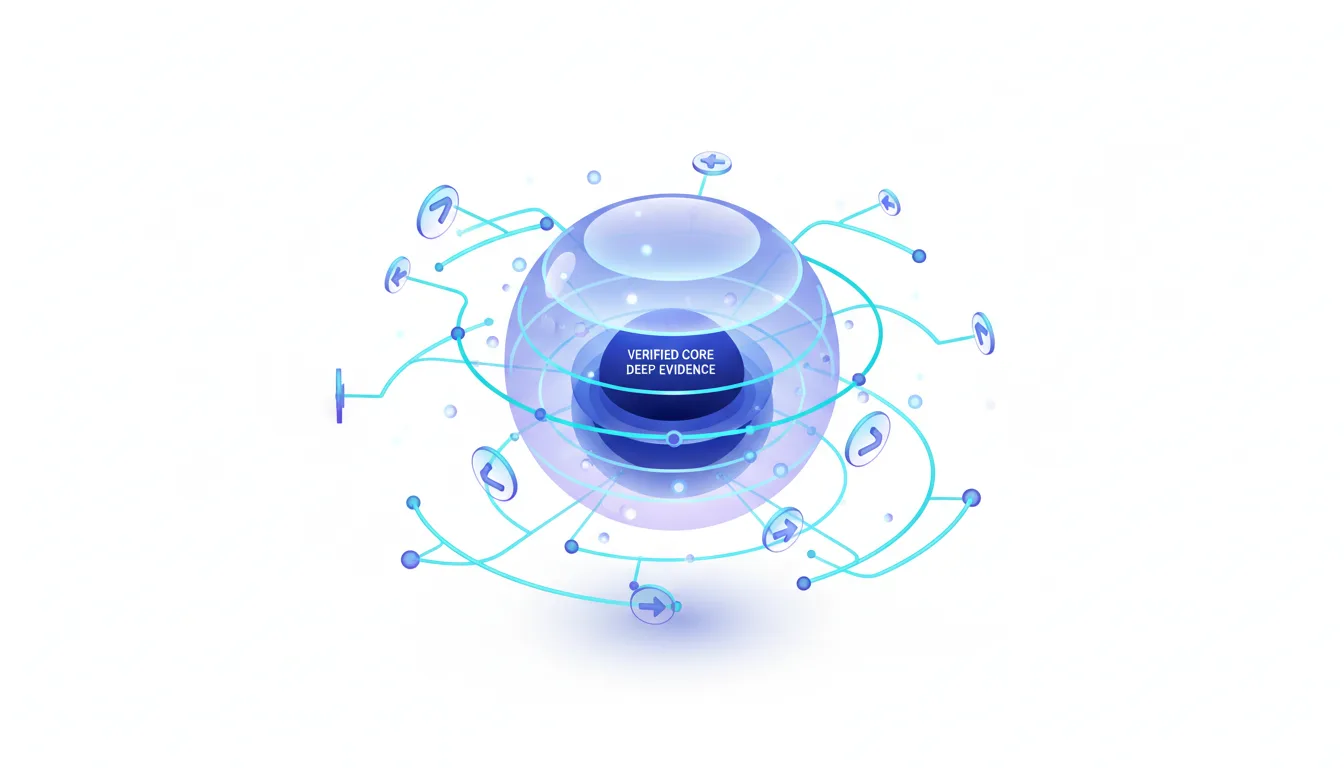
Enter WANDR. Released by Perplexity AI, the framework introduces 500 rigorous tasks split across two critical axes: wide discovery—scouring multiple domains to build a comprehensive topological map of a topic—and deep evidence collection—drilling systematically into specific sources to extract and cite granular data. By bifurcating the evaluation, WANDR forces LLMs to balance breadth and precision.
Initial industry coverage has treated WANDR merely as another dataset announcement, yet its technical implications reshape agent evaluation in ways that matter more than most admit. Up to now, engineering teams have lacked a unified evaluation protocol to grade an agent’s query planning, multi-hop reasoning, and grounding accuracy holistically. WANDR supplies this missing infrastructure. It pushes agents out of sanitized data sandboxes, testing if they can safely and accurately navigate web data without succumbing to source misattribution or coverage failure.
The benchmark actively highlights the core tension in modern web agents. Error analysis frequently reveals that models struggle with the trade-off between recall and synthesis: an agent might retrieve twenty domain-relevant sources but fail to synthesize their contradictions, or it might dogmatically latch onto a single, dense PDF, entirely missing the wider context. By introducing strict pass/fail criteria for citation integrity and evidence-quality rubrics, WANDR serves as a structural stress-test for planner-retriever-reader AI architectures.
Ultimately, WANDR sets the stage for a new era of operational governance in generative AI. If autonomous researchers are going to be deployed across science, finance, and policy, the benchmarks grading them cannot remain static Q&A tests. WANDR’s aggressive focus on verifiable, citation-backed outcomes signals a critical industry pivot: moving away from evaluating LLMs as creative text generators and toward grading them as auditable knowledge engines.
Stakeholders & Impact
| Stakeholder / Aspect | Impact | Insight |
|---|---|---|
| AI Model Labs (OpenAI, Google, Anthropic) | High | Forces foundational models to optimize for multi-hop reasoning and strict citation formats rather than just raw conversational fluency. |
| Enterprise RAG & Agent Developers | High | Provides a desperately needed open integration test to debug planner/retriever trade-offs and reduce hallucinated citations in production. |
| Compute & Infrastructure Providers | Medium | Agentic workflows scaling to WANDR’s complexity require high-frequency multi-hop inference, driving up continuous localized compute demand. |
| Knowledge Workers & Analysts | Medium | Higher-quality, benchmark-verified agents will accelerate autonomous research adoption in legal, journalistic, and financial sectors. |
About the analysis
Researched and written with AI assistance under the editorial responsibility of the i10X News team. The title image is an AI-generated illustration. Read our AI Use Policy. Spotted an error? Request a correction.
This independent, research-based analysis bridges publicly available benchmark metadata with broader trends in RAG architectures and web agent evaluation. It is tailored for CTOs, AI engineering managers, and researchers tracking the evolution from static LLMs to autonomous intelligence systems.
i10x Perspective
Benchmarks are governance by another name. By open-sourcing WANDR, Perplexity isn’t just contributing a helpful tool; they are commoditizing the evaluation layer of AI search to steer the global developer ecosystem toward their own specific architectural strengths. As LLMs transition from conversational interfaces to asynchronous, multi-hop research agents over the next five years, the organizations that dictate how “truth” and “thoroughness” are measured will implicitly control the market—dictating the data pipelines, citation standards, and API structures the rest of the industry must adopt.