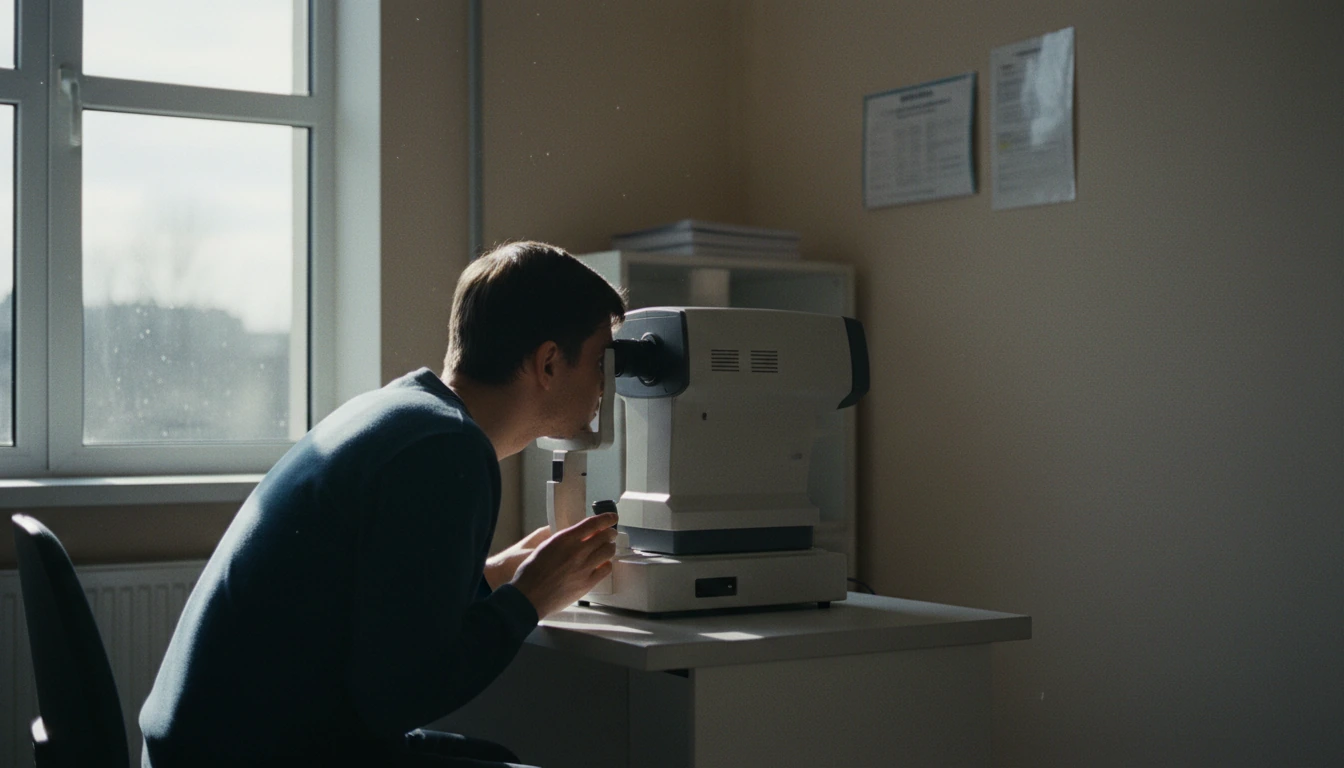
Seoul-based Mediwhale has received FDA 510(k) clearance for Dr. Noon CVD, software that turns an ordinary photo of the back of the eye into a 10-year estimate of a person’s risk of a first heart attack or stroke, the company said in its announcement on November 27. The tool needs only the retinal image plus age and sex, no blood draw and no CT scan, which is why it matters: the cameras it relies on already sit in many US primary care clinics for diabetic eye exams. Whether that convenience changes treatment depends on details the release leaves out.
How a photo of the eye becomes a heart risk score
According to the product’s exam page, a deep learning model looks for patterns in the retinal blood vessels that track coronary artery calcium, the plaque marker normally measured with a cardiac CT. That retinal signal is then combined with age and sex into a 10-year risk of atherosclerotic cardiovascular disease (ASCVD). Mediwhale is explicit that the software does not output a calcium score and does not replace a CT or a standard risk assessment.
The cleared use is narrow:
- Adults aged 45 to 79.
- No prior diagnosis of ASCVD, so this is primary prevention, not follow-up of known heart disease.
- The result supports a clinician’s judgement alongside other data. It is not a standalone diagnosis.
The tier that needs a second look
Dr. Noon CVD sorts patients into three groups: low (below 5 percent), moderate (5 to under 20 percent) and high (20 percent or more). The exam page cites the 2019 ACC/AHA primary prevention guideline for these cut-offs. That guideline actually uses four bands: low, borderline (5 to under 7.5 percent), intermediate (7.5 to under 20 percent) and high. The 7.5 percent line is where US guidance has long started the statin conversation.
Our reading: a “moderate” result can mean 6 percent or 18 percent, and the three-tier report alone does not say which side of 7.5 percent a patient is on. For a clinician that is the decision that matters most, so a moderate result should lead to a full standard risk calculation with blood pressure and cholesterol, not replace one. Low and high results are easier to act on.
How strong is the evidence?
The method goes back to a 2021 study in The Lancet Digital Health that predicted calcium scores from retinal photos, followed by a pivotal trial in a Korean cohort published in JAMIA. A 2026 narrative review of the Reti-CVD biomarker, published on PubMed Central, puts its discrimination at a Harrell C-index of about 0.75, with modest gains in reclassifying borderline patients. The reviewers also note that most evidence comes from one research group and one commercial algorithm, and that no randomised or outcome study yet shows that retina-guided care prevents heart attacks.
For US patients specifically, the exam page cites a validation in the MESA cohort of 4,624 people as “data on file”, meaning it is not yet peer reviewed. In Korea, the review says, the test entered practice on an out-of-pocket basis rather than through standard reimbursement.
Where it sits among FDA AI devices
Our FDA AI Medical Device Tracker counted 1,614 AI-enabled devices on the FDA list through June 29, 2026, with 1,230 of them reviewed by the radiology panel (this week’s Pro Medicus mammography clearance is a typical case), 154 by the cardiovascular panel and just 10 by the ophthalmic panel. A tool that reads the eye to estimate heart risk falls between those last two groups, which helps explain why so few exist. When we checked on November 27, the clearance did not yet appear in the FDA’s public 510(k) data, and Mediwhale’s release does not give a 510(k) number, so the predicate device and the exact indication wording cannot be read yet.
The closest rival is Toku’s CLAiR. In a study presented at ACC.26 in March, CLAiR flagged people at or above the 7.5 percent threshold with 91.1 percent sensitivity and 86.2 percent specificity among 874 US participants. It holds Breakthrough Device designation, but we found no FDA clearance announcement for it as of November 27. Mediwhale is therefore ahead on the regulatory step, while Toku has published a test aimed directly at the statin threshold.
What clinics and patients should check
- Ask whether the result comes with the underlying percentage or only the tier. A bare “moderate” is not enough to decide on statins.
- Check costs. Mediwhale has not announced a US price or billing code, and retinal photos are not covered by every vision plan.
- Keep the standard workup. Blood pressure, cholesterol and diabetes status still drive treatment; the retinal score is an add-on that may reach people who skip those checks.
i10x Perspective
The real opportunity here is reach, not precision. People with diabetes are told to have yearly eye exams, often with a retinal photo, and a heart risk flag at that visit could bring some of them into prevention earlier. But a three-band score that merges the borderline and intermediate groups is a screening tool, not a treatment guide. We expect the useful version of this product to be the one that reports the percentage and ties it to a referral pathway, and we would wait for US outcome data before treating a retinal score as equal to a calcium scan.