Synthetic Happiness: AI, Emotional Support, and the Rise of Emotional Mirrors
⚡ Quick Take
The AI industry is rapidly pivoting from automating cognitive labor to mediating human emotion, establishing LLMs as a new foundational layer of psychological infrastructure.
Summary: As millions of users turn to AI companions and chatbots for emotional support, researchers and industry leaders are grappling with the concept of “synthetic happiness“—evaluating whether LLMs can sustainably improve well-being or if they merely offer short-term psychological relief.
What happened: A surge in both consumer behavior—ranging from befriending chatbots to marrying holograms—and academic literature has forced a re-examination of AI’s role in human life, with new studies analyzing AI’s impact on loneliness, prosocial behavior, and workplace stress.
Why it matters now: The LLM race is expanding beyond reasoning benchmarks into the realm of affective computing, meaning the next generation of AI models will be judged on their ability to manage human emotional states, drive engagement through empathy, and navigate the fraught ethics of artificial intimacy.
Who is most affected: Consumer AI developers building companion agents, enterprise CTOs integrating AI into workflows, and regulators tasked with monitoring the psychological impact of hyper-persuasive, always-on digital companions.
The under-reported angle: Most current discourse treats AI either as a dystopian replacement for human friends or a flawless therapist, entirely missing its most powerful, responsible application: acting as a low-stakes “emotional mirror” that helps users practice active listening, prepare for hard conversations, and map their own emotional triggers without outsourcing real-world human connection. From what I’ve seen, this middle path gets overlooked far too often.
🧠 Deep Dive
Have you ever caught yourself venting to a chatbot at 2 a.m. and wondering if it actually helped? The conversation around AI and well-being is undergoing a profound shift. We are moving beyond the novelty of conversational agents and entering an era where users actively rely on LLMs for emotional regulation. With Google’s AI Overviews and top academic journals increasingly surfacing the concept of “synthetic happiness,” the market is beginning to codify how artificial intelligence impacts life satisfaction. This isn’t just a fringe sociological trend; it is a direct signal to model builders that the metrics of success are evolving from tokens-per-second and factual accuracy to empathy, tone, and psychological resonance.
Current research reveals a fascinating tension at the heart of AI companionship. On one hand, clinical and non-clinical studies highlight clear, short-term benefits: LLMs are highly effective at providing immediate relief for loneliness, offering a safe space to practice social confidence, and even teaching communication skills. On the other hand, a critical mass of psychological watchdogs and academic reviewers warn of a looming long-term risk. There is growing concern that frictionless, always-agreeable AI companions could reduce a user’s motivation to seek out authentic, real-world human relationships—bonds that are messy and require the very human compassion that machines cannot genuinely provide.
This psychological impact is not limited to consumer applications; it is already rewriting the rules of the enterprise workplace. Recent studies on stress and coping theory indicate that the introduction of AI tools into daily workflows generates a unique type of friction. However, this “benign stress,” when managed with thoughtful UX and clear organizational support, can actually drive employee engagement and workplace happiness. It proves that AI’s impact on our well-being is heavily dependent on the context of deployment and the design choices made by developers.
Yet, a massive content and tooling gap remains in how we design these systems. Currently, AI is too often framed as a substitute—a replacement friend or a surrogate therapist. The untapped opportunity for builders lies in framing AI as an “emotional mirror.” By optimizing models to prompt self-reflection rather than simply validating the user’s feelings, developers can create tools that help individuals identify their values, navigate interpersonal conflicts, and practice prosocial behavior. This shift from “companion” to “coach” requires an entirely different approach to alignment and reinforcement learning (RLHF).
Ultimately, the rise of synthetic happiness demands a new framework for ethical AI design. To prevent emotional dependency and ensure digital well-being, the next generation of AI platforms will need built-in safeguards: transparency about the system’s artificial nature, human-first defaults that encourage offline connection, and strict privacy protections for emotionally sensitive data. As AI continues to weave itself into the fabric of human relationships, the models that win will be those that enhance human-to-human connection rather than attempting to replace it.
📊 Stakeholders & Impact
| Stakeholder / Aspect | Impact | Insight |
|---|---|---|
| AI / LLM Providers | High | Must adapt alignment strategies (RLHF) to optimize for empathy, psychological safety, and non-manipulative engagement, fundamentally changing model behavior. |
| Enterprise & HR Leaders | Medium–High | Facing the reality of “benign stress” tied to AI adoption; must design workflows that use AI to boost engagement rather than isolate employees. |
| Consumer App Developers | High | Massive market opportunity in building AI coaches and journaling tools, but high risk if apps cross the line into fostering unhealthy emotional dependency. |
| Regulators & Ethicists | Significant | Imminent need to define boundaries around “synthetic happiness,” focusing on data privacy for emotional disclosures and the psychological impact on vulnerable users. |
✍️ About the analysis
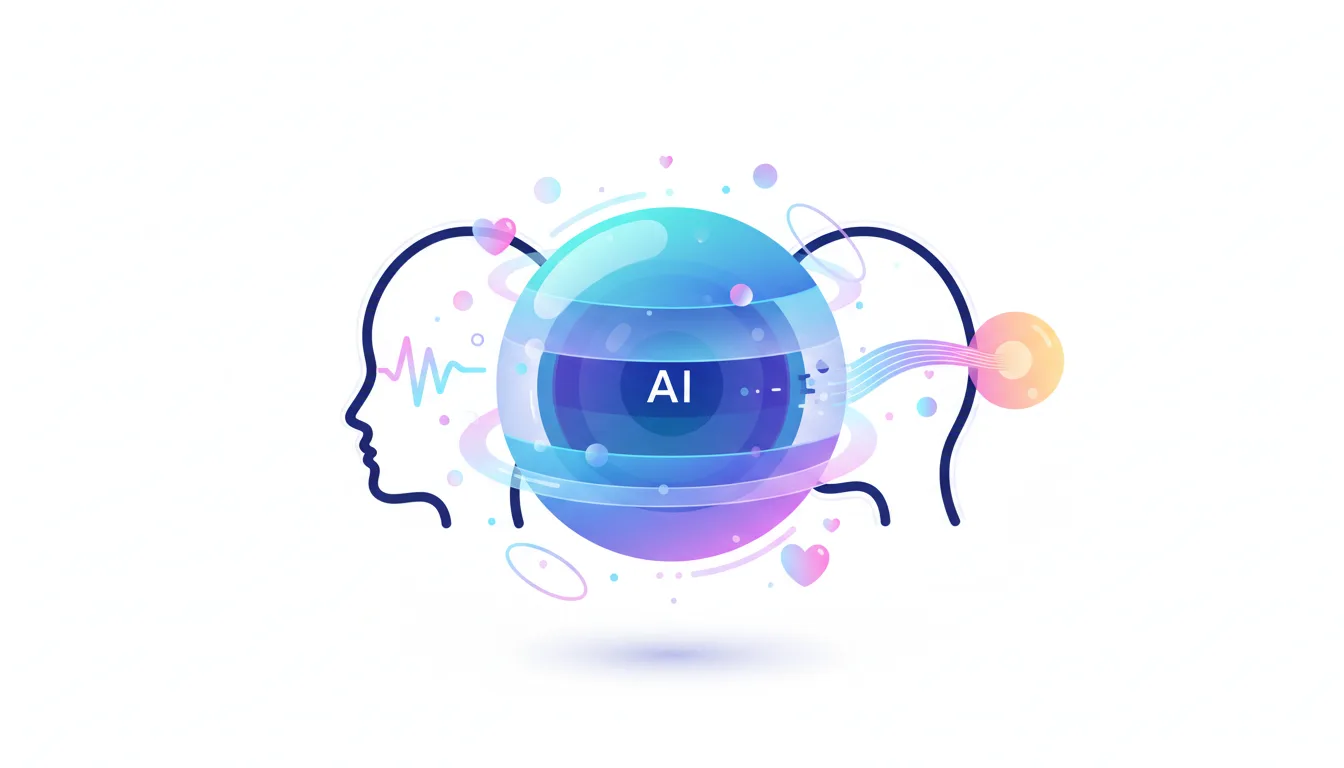
Researched and written with AI assistance under the editorial responsibility of the i10X News team. The title image is an AI-generated illustration. Read our AI Use Policy. Spotted an error? Request a correction.
This independent, research-based analysis synthesizes recent academic literature, psychological commentary, and market signals regarding AI’s impact on human well-being. Designed for developers, engineering managers, and tech strategists, it provides a framework for understanding how emotional intelligence and ethical design are becoming critical vectors in the deployment of modern LLMs.
🔭 i10x Perspective
The emergence of “synthetic happiness” signals a tectonic shift in how intelligence infrastructure is built, scaled, and governed. Over the next decade, the competitive moat for major players like OpenAI, Anthropic, and Meta will not just be reasoning capabilities, but their models’ capacity to foster safe, prosocial human-AI interactions. We are rapidly approaching a regulatory and ethical crossroads where the tech industry must decide whether to optimize for maximum, addictive emotional engagement, or purposefully design friction that routes users back to authentic human connection. Design friction that routes users back to authentic human connection.