As artificial intelligence bills exceed initial enterprise forecasts, major global banks are increasingly evaluating Chinese open-weight AI models like DeepSeek and Alibaba’s Qwen to aggressively cut corporate inference costs. This shift signals a critical maturation in commercial AI strategy: moving away from expensive, monolithic US frontier models toward multi-model architectures that prioritize data sovereignty, vendor diversification, and ultra-cheap unit economics for routine computational tasks.
Quick Take
- The pricing catalyst: Surging AI infrastructure costs are prompting financial institutions to restrict employee access to premium US AI subscriptions and cap per-seat software budgets.
- The structural alternative: Chinese models like DeepSeek V4-Flash and Zhipu’s GLM are offering comparable baseline intelligence at deep discounts, sometimes operating at 80% below the cost of top Western frontier rivals.
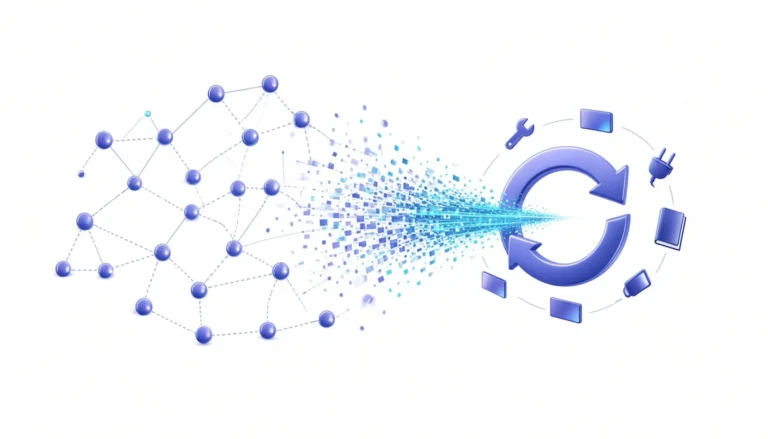
- The architectural pivot: Banks are adopting “model routing,” reserving high-cost models like Anthropic’s Claude for critical, high-risk workflows while offloading high-volume, low-risk queries to cheaper Chinese alternatives.
- The infrastructure play: Beyond token pricing, Chinese open-weight models allow risk-averse banks to run inference entirely on-premises, neutralizing data leakage fears and business continuity threats tied to external cloud APIs.
What happened
Financial institutions are actively restricting broad employee access to top-tier AI tools to rein in spiraling technology budgets. Reports across the financial sector indicate that lenders are capping user numbers and pivoting toward a more fragmented model ecosystem. Instead of relying solely on centralized, US-based proprietary systems, banks are experimenting with Chinese AI models to process bulk enterprise workloads more affordably.
Recent benchmarks have highlighted the extreme price discrepancy driving this trend. DeepSeek’s V4-Flash operates at approximately $0.03 per benchmark test – reportedly over 100 times cheaper than competing models like Anthropic’s Claude Fable 5. Meanwhile, models from Alibaba (Qwen), Zhipu AI (GLM), and Moonshot AI (Kimi) are increasingly being evaluated by institutions like J.P. Morgan Private Bank and Banco Santander to achieve cost-performance parity for routine internal operations.
Why it matters now
The banking sector’s pivot is a high-stakes stress test for the commercial viability of Western frontier AI models. Companies like OpenAI, Anthropic, and Google rely heavily on recurring enterprise subscriptions and high-volume API usage to subsidize the massive data center and energy costs required to train their next-generation systems. If highly regulated, deep-pocketed clients like global banks begin routing their daily workloads to commoditized, open-weight Chinese models, the core revenue assumptions underpinning the US AI sector could face severe margin compression.
Furthermore, this adoption curve accelerates a structural shift in AI infrastructure from “monolithic” deployments to “routed” intelligence. Enterprise developers are no longer building applications hardcoded to a single API; they are constructing intelligent orchestration layers that assess a prompt’s complexity in real-time and dispatch it to the most cost-effective model.
Finally, the movement underscores a growing enterprise demand for total data sovereignty. Financial institutions are hyper-sensitive to data leakage, regulatory audits, and vendor lock-in. Chinese open-weight models provide an infrastructure loophole: they can be downloaded, thoroughly audited for compliance, and run entirely on bank-owned servers or private clouds. This effectively neutralizes the business continuity risks associated with relying on centralized US APIs, shifting the investment from software subscriptions into local GPU hardware.
Who is most affected
This paradigm shift ripples across the entire intelligence supply chain, from corporate procurement desks to silicon providers. AI routing startups and MLOps platforms stand to gain massive traction as enterprises demand tooling to seamlessly orchestrate prompts across OpenAI, Anthropic, and DeepSeek environments. Conversely, US foundational model builders face intense pressure to justify their premium API pricing for anything other than cutting-edge reasoning tasks.
| Stakeholder | Impact | Why |
|---|---|---|
| US Frontier AI Labs | Margin compression | High-volume enterprise queries are being offloaded to cheaper competitors, threatening the API revenue needed to fund next-gen training. |
| Enterprise AI Orchestrators | Surging demand | Banks urgently need middleware to dynamically route prompts between expensive US models and cheap Chinese models based on task complexity. |
| Private Cloud & On-Prem Infra | Increased utilization | Adopting open-weight models requires bank-owned GPU clusters, driving localized hardware deployments rather than public cloud reliance. |
About the analysis
Researched and written with AI assistance under the editorial responsibility of the i10X News team. The title image is an AI-generated illustration. Read our AI Use Policy. Spotted an error? Request a correction.
This is an independent, research-based i10x analysis designed for AI strategists, enterprise CTOs, and infrastructure builders navigating the evolving economics of large language models. The insights synthesize reporting from financial media, benchmark analyses, and competitive model evaluations to map the future of enterprise AI routing.
i10x Perspective
The financial sector’s integration of Chinese AI models proves that baseline intelligence is rapidly commoditizing. While geopolitical tensions and compliance scrutiny around Chinese technology remain high, the sheer economic gravity of an 80% discount on inference costs is forcing even the most conservative institutions to adapt. We’ve seen this bifurcation signal the end of the “one model fits all” era: the future of AI infrastructure is a highly orchestrated hybrid, where premium reasoning is rented from the West, and routine intelligence is downloaded from the East.