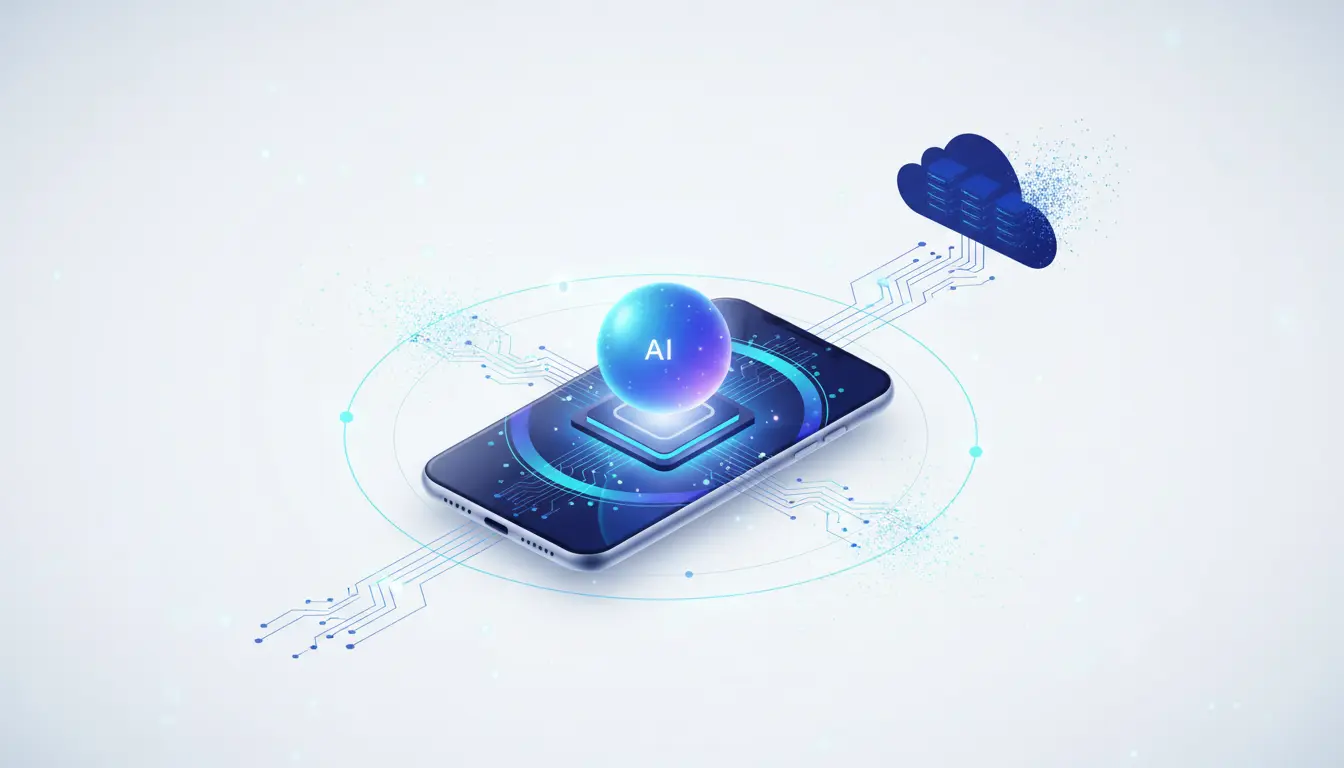
Google is quietly preparing to run Gemini Live without the cloud. Beta code has surfaced an offline mode for Android devices, uncovered in a recent app teardown. The change points to a broader shift in AI infrastructure, where compact on-device models take on conversational tasks instead of depending on large server farms.
Quick Take
- What happened: A teardown of the Google app beta (v17.71.17) revealed internal strings explicitly referencing the ability to use Gemini Live without an internet connection.
- Why it matters now: Shifting conversational AI from cloud servers to local devices fundamentally changes the economics of inference, reducing compute costs and latency for Google while matching the industry push toward edge AI.
- The technical bottleneck: It remains unconfirmed if compute-heavy multimodal features, such as camera or screen sharing, will function offline, highlighting the ongoing tension between local hardware limits and cloud power.
- Who is most affected: Premium Android users will gain uninterrupted access, while mobile chipmakers face increasing pressure to optimize hardware for continuous local AI processing.
What happened
Recent exploration of the Google app beta has turned up code strings pointing to an unreleased offline mode for Gemini Live. A teardown by Android Authority shows that version 17.71.17 contains clear directives in the account switcher menu, including the line “Use Gemini Live without an internet connection.”
Gemini Live currently needs a steady link to Google’s cloud for real-time voice conversations. The offline option has not been announced and is not yet available, yet its appearance in the beta confirms Google is building a local fallback for its main AI assistant.
Why it matters now
The finding marks a clear signal for AI infrastructure overall. Until now, Gemini Live’s conversational flow depended on heavy server-side work, which limits performance in weak-signal areas and drives up inference costs. Moving standard conversations offline shows that edge compute is becoming practical in the wider AI race.
The step also points to greater use of Gemini Nano, Google’s efficient Small Language Model built for on-device work. If the model can sustain fluid voice interactions without the cloud, it shows mobile hardware is reaching the basic requirements of generative AI. That raises the bar for rivals to improve their own local models and moves part of the competition from data-center scale to chip-level efficiency.
Who is most affected
An offline Gemini Live will affect Android power users first, along with mobile hardware makers that must refine their chips to run continuous local inference without draining batteries or overheating.
| Stakeholder | Impact | Why |
|---|---|---|
| Android Users | Uninterrupted AI access | Voice interactions will survive dead zones, commutes, and poor Wi-Fi networks. |
| Google (AI Infra) | Reduced server load | Offloading standard voice queries to the device significantly lowers expensive cloud inference costs. |
| Mobile Chipmakers | Increased performance pressure | Processors and NPUs must manage continuous local SLM inference efficiently. |
About the analysis
Researched and written with AI assistance under the editorial responsibility of the i10X News team. The title image is an AI-generated illustration. Read our AI Use Policy. Spotted an error? Request a correction.
This is an independent, research-based i10x analysis built for developers, CTOs, and AI strategists tracking the shift from cloud to edge computing.
i10x Perspective
The move to an offline Gemini Live is more than a convenience feature. It reflects a practical need as conversational AI spreads: sending every query through massive data centers is neither economical nor sustainable. Bringing AI to the device marks the next step in infrastructure design, where large server farms and compact on-device models must operate together.