The viral promise of a 24/7 “army of AI agents” running on xAI’s Grok Bot has hit the hard limits of real infrastructure. Influencer claims that positioned Grok Bot as the top autonomous agent drew in both enterprise teams and indie developers, who then burned through their weekly token allocations almost immediately. That sudden spike is now driving a broader shift toward tighter agent governance and practical token-cost controls.
Quick Take
- The catalyst: Influencer Alex Finn publicly crowned Grok Bot the “best AI agent right now,” triggering a surge of mainstream users eager to deploy autonomous, always-on digital workers.
- The friction: Users are immediately hitting steep weekly token and usage limits, exposing the hidden, exponential compute costs of running continuous multi-agent loops.
- The market pivot: Ecosystem operators are abandoning “set and forget” automation in favor of rigorous token governance, turning to routine audits and “approval gates” to stop runaway compute costs.
- The underlying shift: The conversation is moving rapidly from pure agent capabilities to “Agent FinOps”—balancing the high cost of autonomous cloud loops against cheaper, specialized alternatives for coding or routine execution.
What happened
A wave of posts on X, led by creator Alex Finn, framed xAI’s Grok Bot as the go-to system for a nonstop autonomous workforce. Unlike the usual Grok chatbot, Grok Bot is built to run cloud computers, handle files, browse the web, and stick to schedules without constant human input. The “army of agents” pitch pulled in operations leads, small-business owners, and technical founders hoping to automate routine back-office work, SEO tasks, and multi-agent setups.
The excitement ran into a hard limit right away: tight weekly usage caps. Continuous agent loops—where bots check their own output, spin up sub-agents, and scan logs—burn tokens far faster than simple chat. Overlapping bots, idle group chats, and stuck jobs quickly drained prepaid credits and hit usage ceilings.
In response, guides on stretching token budgets have popped up. While some shortcuts remain unproven, technical groups are focusing on practical controls. Teams are adding “Chief of Staff” agent patterns to manage permissions, reviewing idle routines, and inserting human approval steps before any high-stakes action that could exhaust the remaining pool.
Why it matters now
The Grok Bot token crunch is more than a single-product hiccup. It is a real-world test of the industry’s move from chat models to autonomous agents. OpenAI, Google, and Anthropic are all pushing agent layers, yet Grok Bot’s caps highlight a basic constraint: inference compute is limited, and multi-agent coordination is expensive.
When agents interact with other agents, token use grows exponentially. Developers are responding with hybrid setups instead of routing everything through one premium agent. Many keep Grok Bot for high-level orchestration while shifting heavy coding work to specialized tools like Claude Code or OpenAI Codex CLI to protect their API budgets.
This also brings “Agent FinOps” into everyday discussion. The early focus on what agents could do if left alone is giving way to questions of cost and oversight. When running an automated loop costs more than the task delivers, the whole approach stalls. The current usage friction is an early sign that the next phase of agent tooling will center on efficient routing and monitoring rather than raw capability alone.
Who is most affected
| Stakeholder | Impact | Why |
|---|---|---|
| AI Builders & Founders | Forced architectural shifts | Must choose between paying premium usage limits for Grok Bot’s ecosystem, deploying open-source alternatives like OpenBot, or building custom agent loops from scratch. |
| SMB & Operations Teams | Sudden cost-control burdens | Early adopters attempting to run back-office systems autonomously are realizing that unmonitored agents can rapidly deplete usage budgets through stalled or overlapping tasks. |
| AI Infrastructure Providers | Inference demand spikes | The shift from prompt-response AI to looping, multi-agent workflows creates massive, continuous strain on data center inference capacity. |
The Rise of Agent Governance
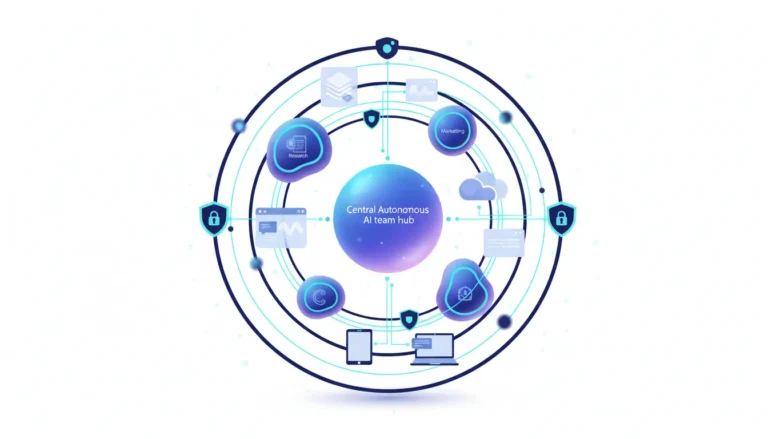
As teams work to stretch their token pools, practices are shifting from open-ended prompts to strict, role-based setups. Security and cost control are now intertwined. By limiting connected apps, adding approval gates for major actions, and removing unused bots, developers are building an enterprise-style governance layer around their AI tools.
The strongest setups so far avoid the unchecked “digital army” model. They favor single-purpose, specialized bots overseen by a “Chief Agent” that needs explicit human sign-off before launching tasks or burning more compute.
About the analysis
Researched and written with AI assistance under the editorial responsibility of the i10X News team. The title image is an AI-generated illustration. Read our AI Use Policy. Spotted an error? Request a correction.
This is an independent, research-based i10x analysis mapping the intersection of viral AI agent trends and underlying infrastructure constraints. It is tailored for AI founders, developers, and operators navigating the shift toward autonomous workflows.
- Alex Finn on X: “Grok Bot is the best AI agent right now…”
- Alex Finn original post
- Grok Bot vs Building Your Own AI Employee – AI Builder Club
- Grok Bot Usage Limits: 7 Ways to Cut Token Costs | 88 Labs AI
- How people use Grok Bot for Operations
- The Complete Grok Bot Guide | Maverick AI
- Grok SEO: The Answer Engine That Reads X – ContextBolt
i10x Perspective
The Grok Bot token bottleneck previews the core infrastructure fight of the next two years. We are moving from a setup where humans wait for AI to produce text to one where agents run in continuous loops and create steady, heavy inference demand. The platforms that win will be those that manage multi-agent workflows with the tightest control over compute costs. Agent governance is shifting from a safety add-on to a core requirement for keeping AI unit economics viable.