The United States and nine partner countries have signed a joint declaration to protect the technologies and infrastructure behind advanced AI. The San Francisco Declaration on the Secure Foundations of Enduring Prosperity was signed on 15 November 2026 at the Pax Silica Founders Retreat, convened by Under Secretary of State for Economic Affairs Jacob Helberg. Alongside the US, the signatories are Australia, India, Israel, Japan, South Korea, Qatar, Singapore, the United Arab Emirates and the United Kingdom. The declaration defines which “sensitive technologies” and “critical infrastructure” in AI supply chains need protecting, and proposes five working groups to act on it.
Quick Take
- What was signed: the San Francisco Declaration, by the US and nine Pax Silica participants, on 15 November 2026.
- Who signed: the United States, Australia, India, Israel, Japan, the Republic of Korea, Qatar, Singapore, the United Arab Emirates and the United Kingdom.
- What it covers: sensitive technologies (goods, software, materials, knowledge and means of production essential to AI supply chains) and critical infrastructure (ports, transport, communications, ICT, energy and the digital platforms that coordinate them).
- Five proposed working groups: pro-innovation policy frameworks, AI adoption in key sectors, supply chain cooperation across the stack, safe harbors and supply chain security hubs, and security and resilience.
- What it is not: a treaty or new export rule. It is a shared definition and a commitment to coordinate.
In plain English
Ten countries agreed on a common list of what needs guarding in the AI economy, from chips and the know-how to make them, to the ports, power grids and networks that move them, and promised to protect it together. The text does not name China, but it is written to keep these assets away from “hostile actors.” Think of it as the allies agreeing on the map before they agree on the rules. The real work will happen in the working groups that come next.
What happened
According to the State Department, the declaration “affirms that economic security is fundamental to national security, sets out the participants’ common understanding of the sensitive technologies and critical infrastructure that underpin Super Intelligence (SI) supply chains, and declares that safeguarding them is a shared endeavor.” A footnote in the text notes that for some participants, “super intelligence” refers to “artificial intelligence.”
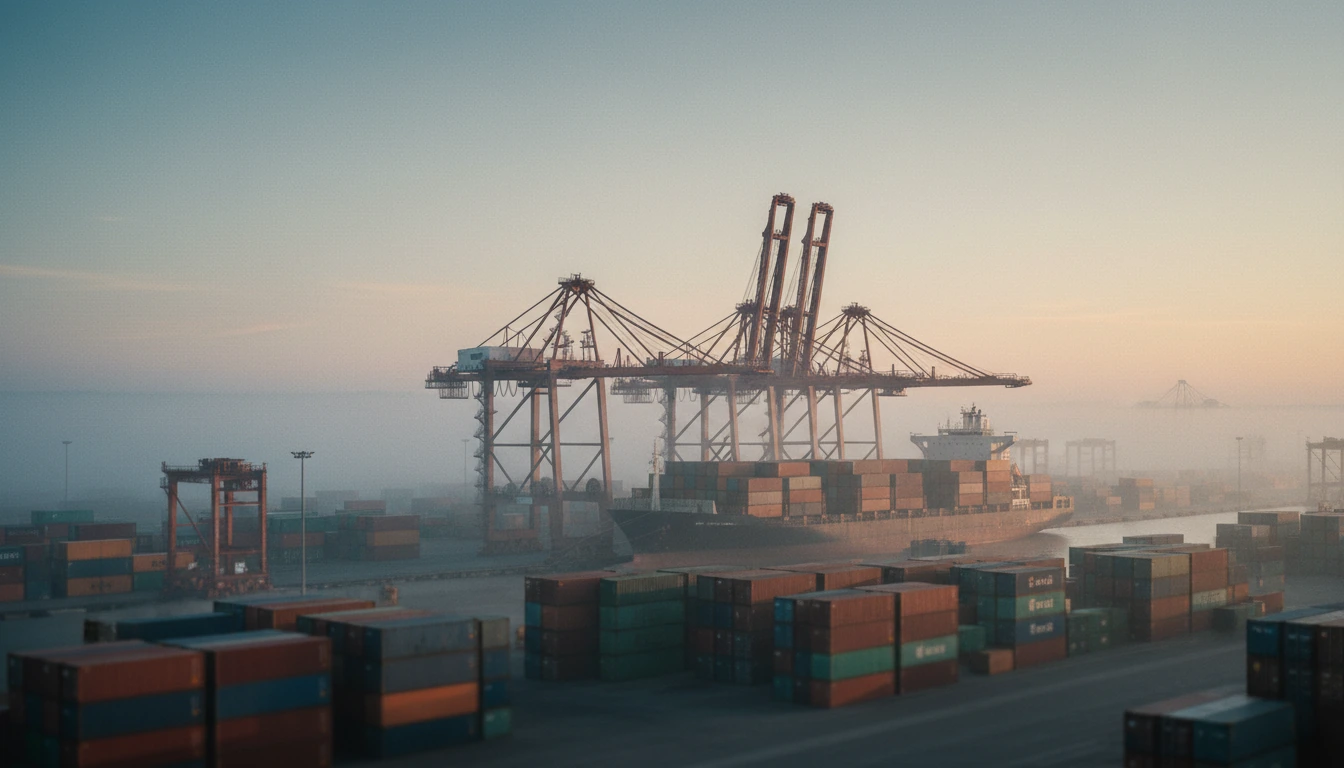
Sensitive technologies are defined as items “whose theft, illicit transfer, or acquisition by hostile actors would confer a meaningful military or intelligence advantage, or undue economic leverage over the participants.” Critical infrastructure covers the physical and digital systems underpinning AI supply chains, including “ports, terminals, transport, communications, and logistics networks,” the ICT and energy infrastructure they depend on, and the digital platforms that coordinate them.
The signatories also reaffirm cooperation on enforcing their policies “to protect sensitive technologies and critical infrastructure from undue access, influence, or control,” and on addressing “economic coercion, supply chain disruptions, and non-market policies and practices.”
Background: what Pax Silica is
Pax Silica is a State Department-led initiative launched by Helberg in December 2025 to build secure supply chains for AI and advanced technology, from critical minerals and energy to semiconductors and logistics. The State Department says the coalition is now “entering a new phase,” turning shared principles into “a working partnership with a common baseline and a path to act on it.”
The signing comes during a tense week for AI chip security. Reports that US lawmakers want tighter export controls follow the scandal around Nvidia’s former CEO, covered in how the Nvidia espionage scandal exposed AI infrastructure risks.
Why it matters
For chip and cloud companies, a shared definition of “sensitive technologies” across ten governments is the groundwork for aligned controls on who can buy, access or service AI hardware and know-how, including data centers abroad. Companies operating in Singapore, the UAE or India should expect more questions about end users and remote access.
For governments, the list of partners is notable: major chip producers (Japan, South Korea), fast-growing data center hubs (Singapore, the UAE, Qatar) and large AI markets (India, the UK). Coordinating them is the point. Earlier efforts such as Anthropic’s push to tighten US AI chip export controls focused on US rules alone.
For everyone else, the declaration is a sign that AI is now treated as national security infrastructure, like energy and ports. That tends to mean more screening of investments and partnerships, and slower but more politically protected buildouts.
What’s still open
- When the five working groups start, and what they will actually produce.
- Whether the declaration leads to binding commitments, such as matched export controls or investment screening.
- How countries with large trade ties to China, including some signatories, apply it in practice.
- Whether more Pax Silica participants sign later.
Sources
- US Department of State, Office of the Spokesman, “The San Francisco Declaration on the Secure Foundations of Enduring Prosperity,” 15 November 2026
- US Department of State, Pax Silica initiative pages
i10x Perspective
Declarations are easy to sign and hard to enforce, so the text matters less than what follows. Still, agreeing on definitions is the boring step that makes coordinated export and investment rules possible later. If the working groups deliver, companies building AI infrastructure across Asia and the Gulf will face one set of security expectations rather than ten. For the regional picture, see our AI Country Comparison and the Policy & Safety section.