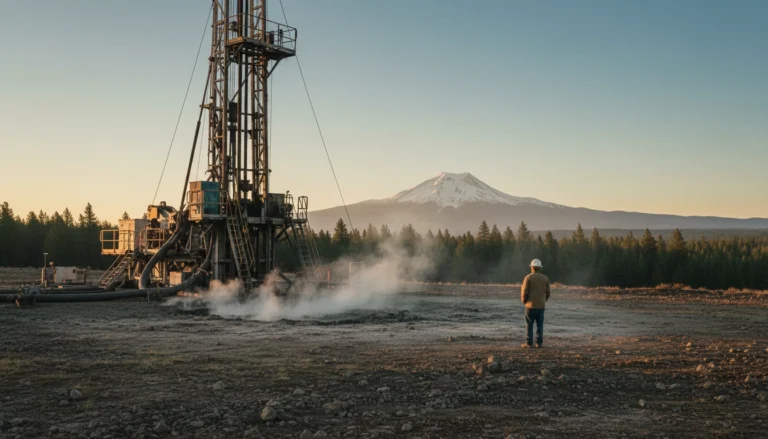
Bedrock Energy, a startup that uses machine learning and sensor data to automate geothermal drilling for buildings, has raised $24 million. Clean Energy Ventures and Clearvision Ventures led the round, with participation from GVP Climate, Susquehanna Sustainable Investments, Temasek Trust’s Catalytic Capital for Climate and Health, MUUS, Great Wave Ventures and the Autodesk Foundation, plus returning investors including Energy Impact Partners. Bedrock says its approach delivers on-site heating and cooling at up to 50 percent lower cost, while doubling drilling speeds and halving the number of boreholes compared with traditional drilling. The company plans to grow in Texas and the Mountain region and expand into the Northeast and Midwest.
Quick Take
- The deal: $24 million led by Clean Energy Ventures and Clearvision Ventures.
- The technology: “Edge physical AI” and downhole sensor fusion across more than 35 sensor streams to automate drilling and adjust to changing rock layers in real time, according to the company.
- The claims: Up to 50 percent lower cost for behind-the-meter thermal energy, twice the drilling speed and half the boreholes compared with traditional methods.
- Expansion: Deployments in five states so far, with multiple new states planned for 2027.
- The grid angle: Bedrock and its investors pitch geothermal as a way to free up grid capacity, a pressing issue as AI data centers drive up electricity demand.
In plain English
A few hundred feet underground, the temperature stays about the same all year, so buildings can use the ground to heat in winter and cool in summer. The hard part is drilling the holes, which is slow and expensive. Bedrock uses sensors and AI to steer its drill rigs and adjust to the rock as it goes, which it says makes drilling faster and cheaper. Less electricity for heating and cooling also leaves more room on a strained power grid.
What happened
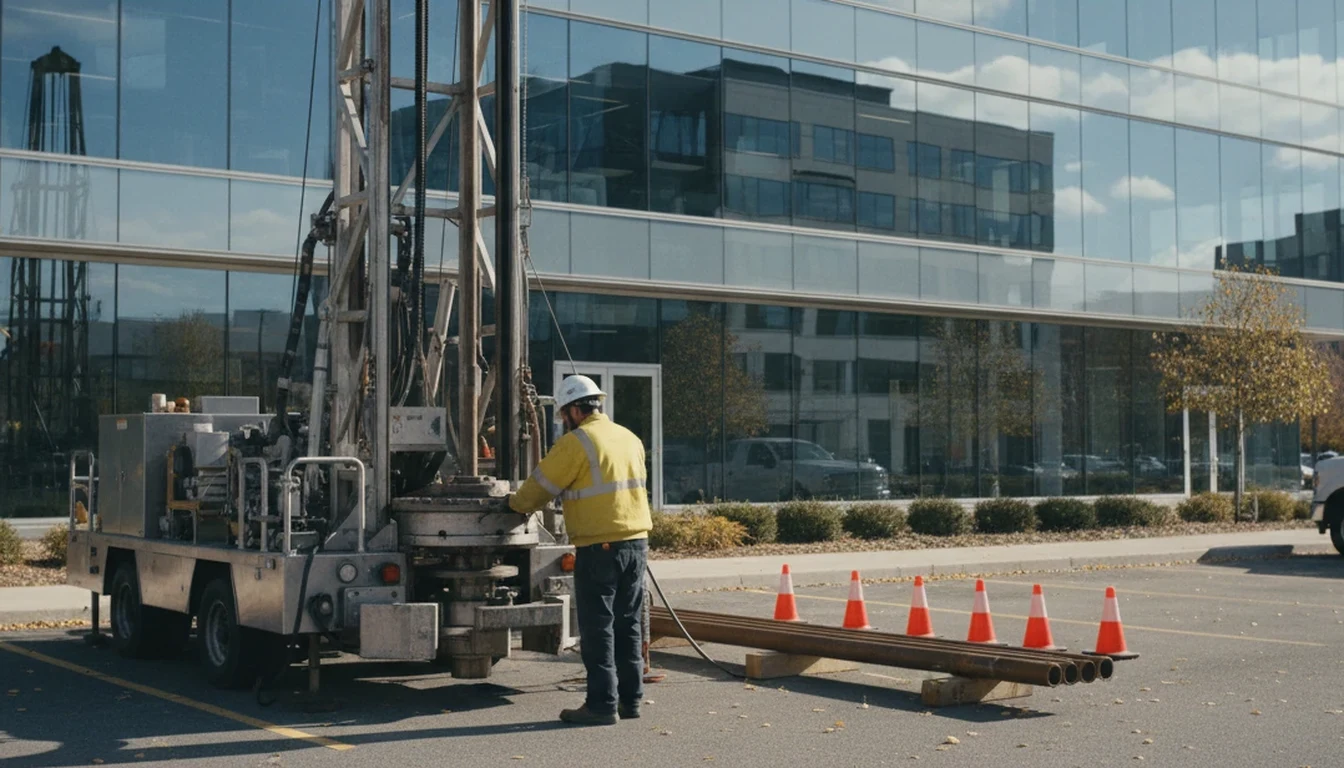
Clean Energy Ventures announced the round on November 16. “Geothermal is the fastest and most affordable form of speed-to-power-capacity in areas where the grid needs the most relief, and it decarbonizes buildings at the same time,” said Joselyn Lai, Bedrock’s co-founder and CEO. “Building setbacks and parking lots represent gigawatts of thermal energy that can offset billions in grid upgrades and create billions in property value.”
Co-founder and CTO Dr. Silviu Livescu described the technical approach: “Bedrock combines edge physical AI and downhole sensor fusion across 35+ sensor streams to automate drilling, adjust parameters to lithology shifts in real time, and unlock predictable on-site clean energy.”
According to the announcement, Bedrock received three additional patents for its AI-enabled geothermal design and drilling technology in the past six months. It also offers a “Digital Thermal Response Test,” which it says saves developers nearly $100,000 during early feasibility and design by avoiding costly single test bores.
Background: AI, power demand and buildings
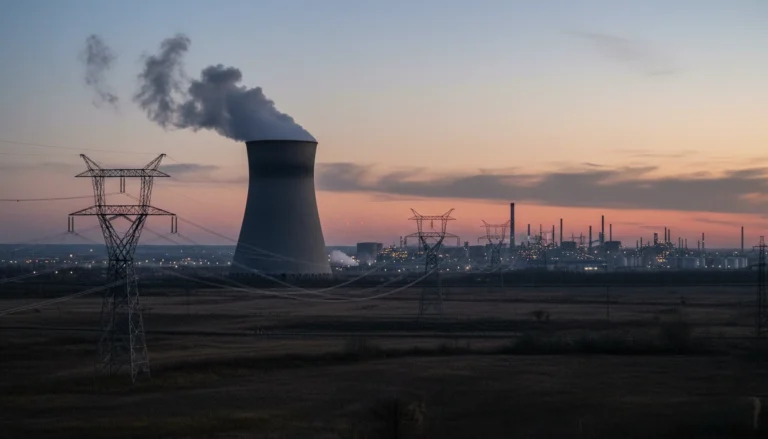
The AI boom has made electricity the scarcest input for data centers, and grid connections now take years in many US regions. We have covered how data center emissions are rising in Texas and New Mexico with the AI buildout. Heating and cooling are among the largest energy uses in buildings, so technologies that move that load off the grid can free capacity for other users, including data centers. Bedrock draws on drilling techniques from oil and gas, combined with real-time subsurface observability, which it says lets it drill where geothermal was previously thought too uncertain or uneconomical. Our AI Energy Meter tracks how much power AI is using.
Why it matters
Most climate coverage of AI focuses on how much energy AI consumes. Bedrock is an example of the other side: AI used to make clean energy cheaper to deploy. Ground-source heat pumps are a proven technology, but drilling costs have kept them niche. If machine-learning-guided rigs really double drilling speed and halve borehole counts, on-site geothermal becomes competitive for far more commercial buildings. The grid argument gives the pitch extra urgency in regions where new demand, much of it from data centers, is outrunning transmission upgrades. “Bedrock is poised to unlock geothermal heating and cooling as a large-scale infrastructure asset class with long-lived, predictable cash flows,” said Thomas Englis, Partner at Clearvision Ventures. More climate tech coverage is in our Climate & Energy section.
What’s still open
- Independent data on drilling speed and cost savings across different geologies, beyond company figures.
- How many rigs Bedrock operates and how quickly it can add capacity in new states.
- Whether data center developers become paying customers, not only commercial real estate owners.
- How the new round values the company, which was not disclosed.
About the analysis
Researched and written with AI assistance under the editorial responsibility of the i10X News team. The title image is an AI-generated image. Read our AI Use Policy. Spotted an error? Request a correction.
This independent i10x analysis is based on the funding announcement published by lead investor Clean Energy Ventures, including statements from Bedrock Energy’s founders and investors. Performance figures are company claims and were not independently verified.
Sources (plain text, no links):
- Clean Energy Ventures: “Bedrock Energy Secures $24M to Deliver On-site Geothermal for Enterprise Real Estate” (November 16, 2026)
i10x Perspective
AI’s energy problem will not be solved only by building more power plants. Cutting demand elsewhere on the grid is just as valuable, and heating and cooling buildings is one of the biggest loads. Bedrock is a small but telling example of physical AI applied to energy infrastructure. If the economics hold, the parking lot next to an office could quietly become part of the solution to the data center power crunch.