The 403 largest data centers in the United States used between 68 and 99 terawatt-hours of electricity in one year and were associated with about 25.7 million metric tons of carbon dioxide, according to a new study led by the Harvard T.H. Chan School of Public Health and the Harvard Data Science Initiative. Published November 16 in Nature Sustainability, it is one of the first facility-level estimates of hyperscale data center energy use and emissions since the rise of AI. Roughly 54% of their electricity came from fossil fuels.
Quick Take
- The study: “Assessing the Carbon Emissions and Energy Consumption of US Hyperscale Data Centers”, Nature Sustainability, November 16, 2026.
- Scope: 403 hyperscale data centers identified by satellite imagery, May 2024 to April 2025.
- Electricity: 68 to 99 TWh, about 1.8% of total US electricity consumption. The upper estimate approaches the annual use of states like Indiana, Michigan or Tennessee.
- Emissions: About 25.7 million metric tons of CO2, two to three times an earlier estimate for 2018.
- Power mix: About 54% fossil fuels, mainly natural gas (38%) and coal (15%). Virginia, Oregon, Ohio and Iowa accounted for more than half of the electricity use.
In plain English
Hyperscale data centers are the giant facilities that run cloud services and train and serve AI models. Researchers found them on satellite images, estimated how much power each one uses and then looked at which power plants supply its regional grid. The result: these facilities together use as much electricity as a mid-sized US state, and more than half of it comes from gas and coal.
What happened
The researchers estimated annual electricity consumption for each facility under a range of operating scenarios and used Environmental Protection Agency data to attribute emissions based on each regional grid’s mix of power plants. About a quarter of the electricity was in grid regions dirtier than average, and many facilities were concentrated where coal generation is heavy.
“Data centers are growing incredibly fast, driven largely by AI, and decisions about where to build them and how to power them are being made right now,” said lead author Gianluca Guidi, a postdoctoral fellow in biostatistics.
“What we’re seeing is already striking, but it’s only a snapshot of a rapidly expanding industry,” Guidi added, noting that the footprint could already be substantially larger in 2026.
Background
The study cannot separate general cloud workloads from AI-specific ones, and it does not cover every US data center. It also does not measure health effects, which corresponding author Francesca Dominici called an important next step. Regional reporting points the same way, as in our story on rising data center emissions in Texas and New Mexico. Our AI Energy Meter tracks AI’s power demand.
Why it matters
Tech companies often report clean energy purchases on an annual, market-based basis. This study instead looks at the actual grid each facility draws from, which gives a different picture. For utilities, regulators and communities deciding where new AI campuses go, facility-level data like this is exactly what has been missing.
What’s still open
- How much of the measured load is AI training and inference versus traditional cloud.
- How much emissions have grown since April 2025.
- How company clean energy contracts change the picture compared to the grid-based method.
About the analysis
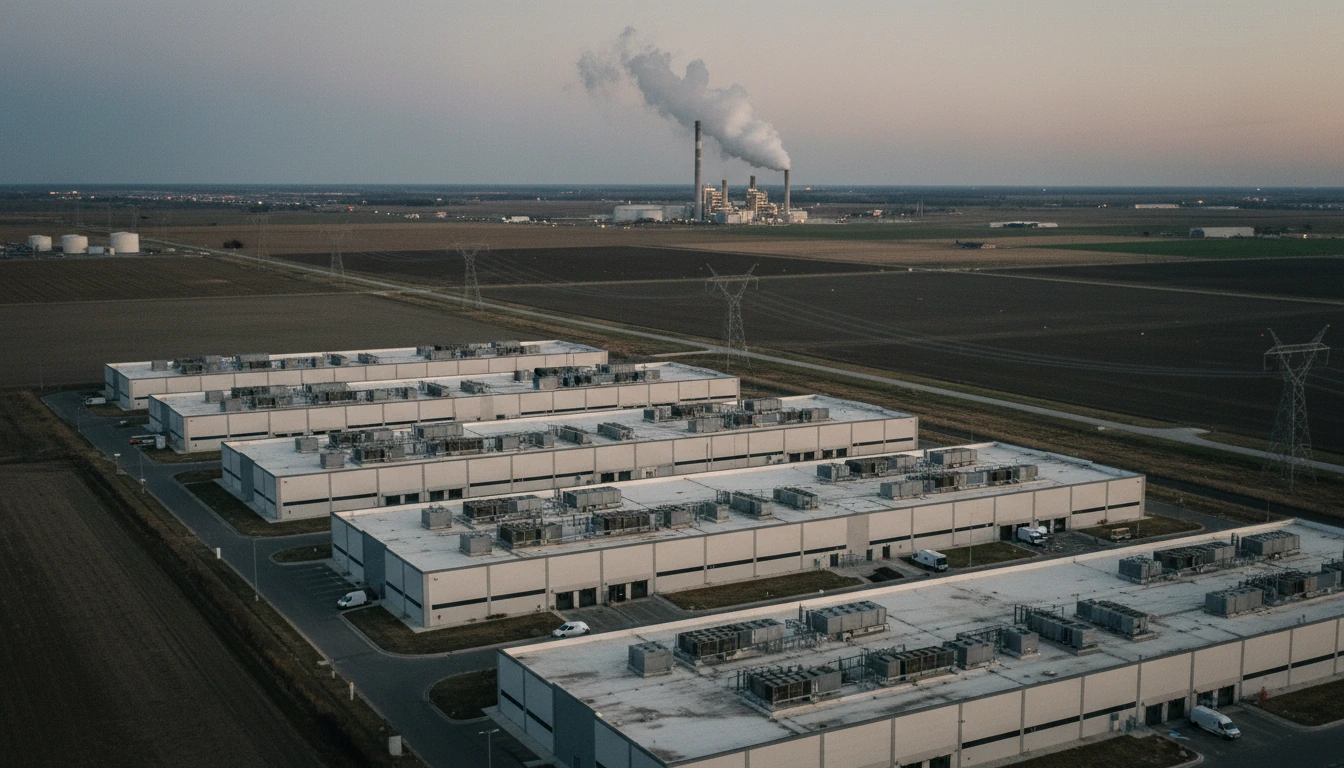
Researched and written with AI assistance under the editorial responsibility of the i10X News team. The title image is an AI-generated image. Read our AI Use Policy. Spotted an error? Request a correction.
This independent i10x analysis is based on the Harvard T.H. Chan School of Public Health press release and the study in Nature Sustainability. All figures are the researchers’ estimates.
Sources (plain text, no links):
- Harvard T.H. Chan School of Public Health: “Hyperscale data centers’ energy consumption, carbon emissions newly estimated by researchers” (November 16, 2026)
- Guidi, Dominici et al.: “Assessing the Carbon Emissions and Energy Consumption of US Hyperscale Data Centers”, Nature Sustainability (November 16, 2026)
i10x Perspective
The AI industry’s climate story is usually told through power purchase agreements. This study is a reminder that the grid does not care about contracts: where a data center is built decides what it burns. More on our Climate & Energy page.