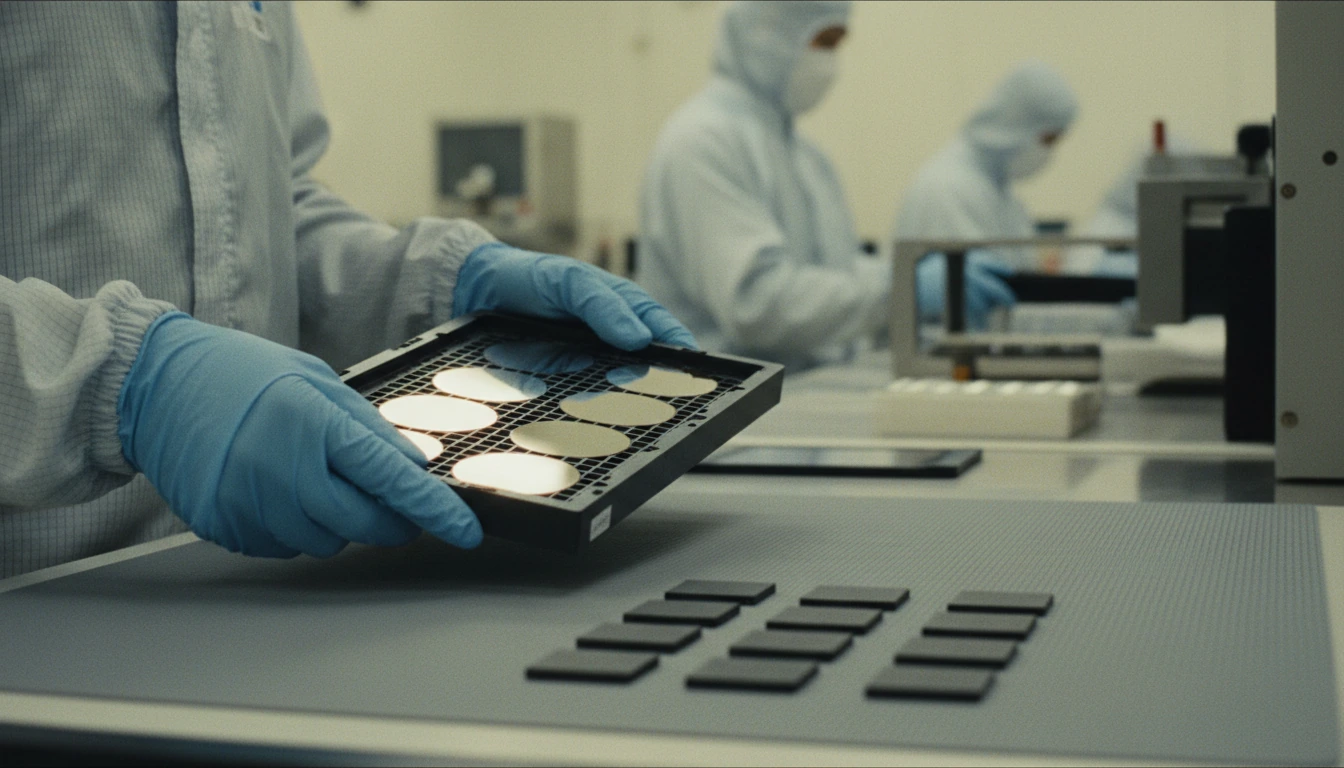
Microsoft will use Intel’s advanced chip packaging for its own Azure silicon. Under an expanded long-term agreement announced on 18 November 2026, Microsoft becomes the first company to announce use of Intel Foundry’s EMIB (Embedded Multi-die Interconnect Bridge) packaging for Azure first-party chips, and it locks in multi-year supply of Intel Xeon server processors, including the next-generation chips codenamed Diamond Rapids.
Quick Take
- Packaging deal: Microsoft will use Intel Foundry’s EMIB advanced packaging for chips it designs for Azure.
- CPU supply: the agreement confirms multi-year Intel Xeon capacity, including Diamond Rapids instances.
- Memory: joint work on Xeon with Compute Express Link (CXL); Microsoft cites up to 2.3x greater performance and memory flexibility for demanding workloads on Azure M-series v4 VMs.
- Databases and security: up to 2.5x faster SQL backups on the first Intel QuickAssist-enabled VMs in the cloud, plus confidential computing with Intel TDX.
- Not disclosed: which Azure chip will use EMIB, the manufacturing node, the timeline and the financial terms.
In plain English
Modern AI chips are often built from several smaller pieces, called chiplets, that sit side by side in one package. Packaging is the step that connects those pieces so they work as one chip. Microsoft designs its own chips for Azure and has now picked Intel to handle that packaging step for at least some of them. Separately, it is guaranteeing itself a steady supply of Intel server CPUs for years.
What happened
Microsoft and Intel described the deal as an expansion of their “decades-long collaboration under a long-term agreement to advance select areas of Azure infrastructure for growing cloud and AI demand.” Beyond packaging and CPUs, the companies will collaborate across the Azure roadmap and Intel-based Azure hardware systems.
“Our longstanding collaboration with Intel brings together advanced packaging, custom compute, memory and security capabilities to support Azure compute and continued innovation across Azure,” said Saurabh Dighe, CVP, Azure System & Architecture at Microsoft.
“Through use of our advanced packaging capabilities with EMIB to scale future generations of Azure infrastructure, Intel and Microsoft can combine the flexibility of heterogeneous integration with the manufacturing scale required for the AI era,” said Naga Chandrasekaran, Chief Technology and Operations Officer and General Manager of Intel Foundry.
Background
Microsoft has been building more of its own silicon, including Maia AI accelerators and Cobalt CPUs; Azure Cobalt 200 virtual machines recently reached general availability. TechPowerUp reported that Microsoft will use the EMIB-T variant and that future Maia and Cobalt generations will be packaged at Intel Foundry. The joint press release does not name either chip family, and Tech Times noted that it omits the chip, node and date.
Advanced packaging capacity has become a bottleneck for AI hardware. A second packaging source gives Microsoft more room to scale its custom chips.
Why it matters
For Azure customers, the near-term gains are concrete: faster memory-heavy VMs with CXL, faster SQL backups and stronger protection for confidential VMs that move between hosts.
For the chip industry, it is a notable customer win for Intel Foundry’s packaging business, which Intel offers to outside chip designers.
For AI infrastructure, it shows hyperscalers spreading risk across suppliers as demand for custom AI silicon grows.
What’s still open
- Which Azure chips will use EMIB, and when they ship.
- Whether Microsoft also moves any wafer production to Intel’s own process nodes.
- The value and volume of the agreement.
Sources
- Microsoft and Intel, “Microsoft and Intel deepen collaboration to deliver differentiated Azure infrastructure,” joint press release, 18 November 2026
- TechPowerUp, report on Microsoft’s use of EMIB, 18 November 2026
- Tech Times, analysis of the Microsoft and Intel release, 18 November 2026
i10x Perspective
Packaging rarely makes headlines, but it decides how many AI chips can actually be built. Microsoft adding Intel as a packaging partner is a quiet hedge against supply bottlenecks, and a meaningful vote of confidence in Intel Foundry. More from Microsoft and our Infrastructure section.