Intel has signed the first outside customer for its most advanced chipmaking technology. Speaking at the TomorrowX Summit in Austin, Texas, on 18 November 2026, CEO Lip-Bu Tan said: “And then 18A, I’m involved in production and we just signed the first customer.” Intel did not name the client or disclose financial terms.
Quick Take
- The news: Intel Foundry has its first external customer for the 18A family of manufacturing processes.
- Which node: Intel CTO Pushkar Ranade said on X that the customer signed up for 18A-P, an upgraded version of 18A that entered risk production in June, according to CNBC.
- Unnamed: Intel did not identify the customer. The Oregonian reported that Intel has indicated it usually would not name individual clients.
- Same day: Tan also named Microsoft as the first publicly announced customer for Intel’s EMIB advanced packaging.
In plain English
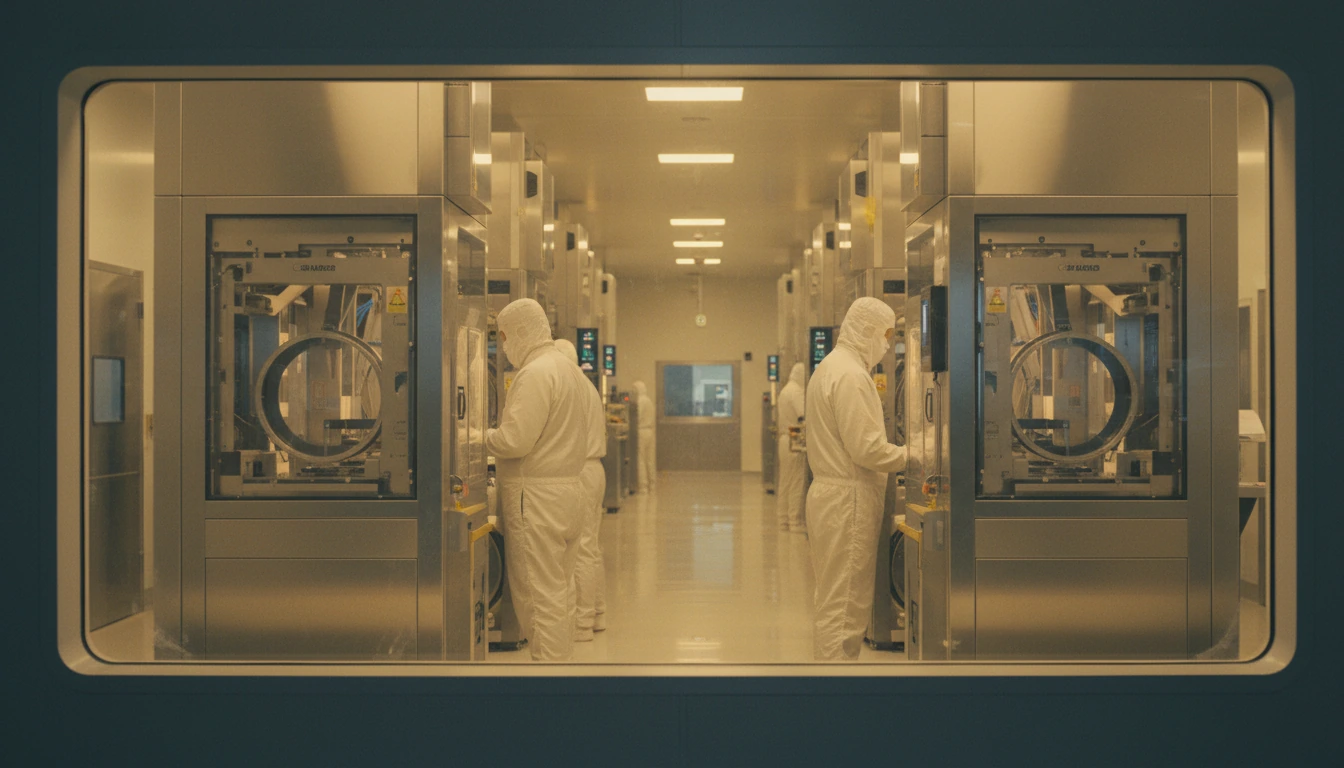
Intel has spent years trying to make chips for other companies, the way TSMC does for Apple, Nvidia and most of the AI industry. Until now its newest factory process only made Intel’s own products. Signing a first paying outsider shows that at least one chip designer trusts the process enough to build on it.
What happened
Tan made the remark during a discussion at the TomorrowX investment conference. “Resilient supply on the foundry is very important,” he said, before adding that Intel “just signed the first customer” for 18A, according to CNBC and remarks provided by the company to The Oregonian.
Ranade later clarified on X that the customer will use 18A-P. Intel introduced its first chips on 18A at the start of 2026 and followed with 18A-P, which entered risk production in June.
The announcement came on the same day Intel and Microsoft said Microsoft will use Intel’s EMIB packaging for Azure custom silicon.
Background
- Five-year effort: 18A is central to Intel’s plan to become a contract manufacturer and compete with Taiwan Semiconductor Manufacturing Co., CNBC noted.
- Speculation: CNBC recalled reports in May that Apple and Intel were close to a foundry deal. Creative Strategies analyst Ben Bajarin told CNBC the customer could be Nvidia, Apple or a hyperscaler designing its own processors, and said “Amazon, Microsoft and Google are struggling to get capacity for their CPU ambitions at TSMC.”
- Pressure: CNBC reported that Intel’s stock has lost more than half its value since the end of September after a weak revenue forecast.
Why it matters
For AI infrastructure, almost all leading AI accelerators and custom cloud chips are made by TSMC. A working second source for leading-edge manufacturing would ease one of the tightest bottlenecks in the AI supply chain.
For chip designers, an external 18A-P customer suggests the process is mature enough for third-party designs, which could make it easier for others to commit.
For Intel, combined with the Microsoft packaging deal, it is the first concrete sign that the foundry strategy can win outside business at the leading edge.
What’s still open
- Who the customer is, what it will build on 18A-P and in what volume.
- When chips from the deal will reach production.
- Whether other designers follow before Intel’s next node.
Sources
- Lip-Bu Tan, remarks at the TomorrowX Summit, Austin, 18 November 2026 (as reported by CNBC and The Oregonian)
- Pushkar Ranade on X, 18 November 2026 (as reported by CNBC)
- CNBC, “Intel signs first external customer for advanced 18A chips,” 18 November 2026
- The Oregonian/OregonLive, 18 November 2026
i10x Perspective
One unnamed customer is not a turnaround, but it is the signal the AI industry has been waiting for: a credible alternative to TSMC at the leading edge. If the client turns out to be a hyperscaler or an AI chip designer, 18A-P becomes part of the AI compute story. More in our Infrastructure section, including how OpenAI’s models helped optimize AMD GPU designs.