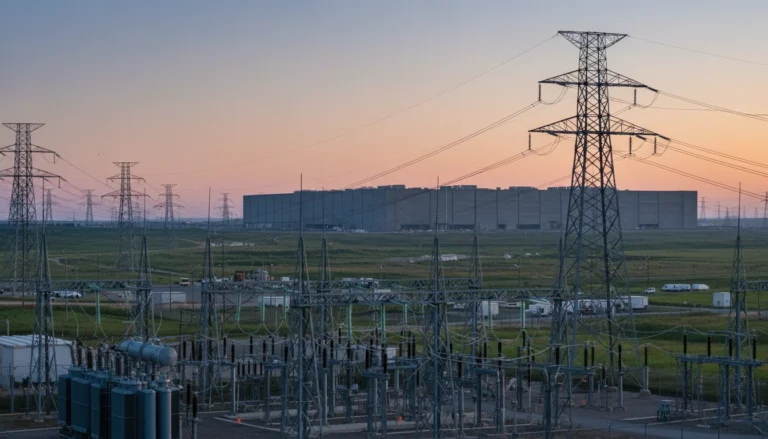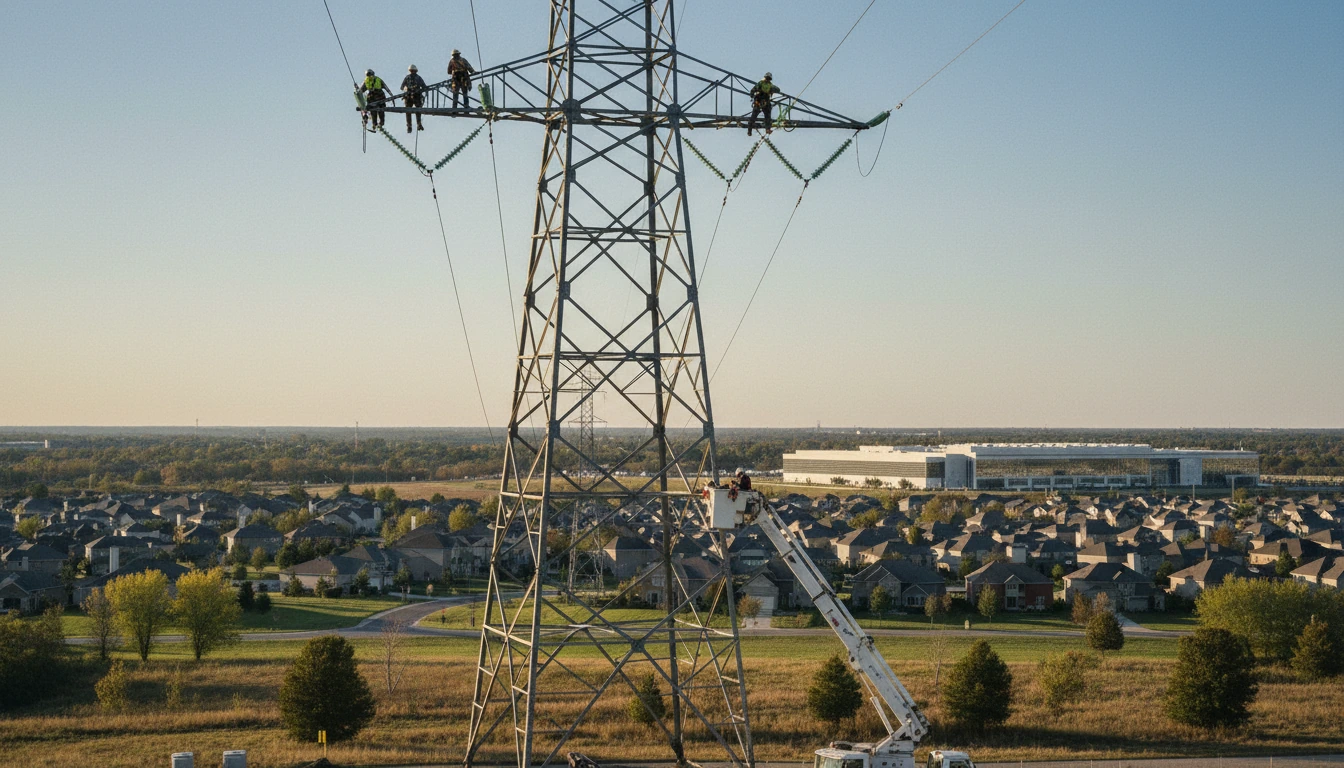
Google and Ohio Power Company, a unit of American Electric Power, have filed a joint proposal with the Public Utilities Commission of Ohio (PUCO) under which Google would pay the full $10.8 million extra cost of fitting advanced, higher-capacity conductors on a power line project the utility already had planned in Columbus. In return, 24 MW of capacity Google has already contracted for would arrive about two years early, and the corridor would later be able to carry more than 700 MW of additional capacity.
Quick Take
- The deal: A voluntary, corporate-funded upgrade of 15.5 miles of aging transmission lines in Columbus with advanced conductors, filed with PUCO on November 19.
- Who pays: Google covers the entire $10.8 million incremental cost.
- What Google gets: 24 MW it has already contracted, delivered about two years earlier than planned.
- What the grid gets: More than 700 MW of additional corridor capacity once the planned 765-kilovolt buildout in Central Ohio is complete, plus lower line losses.
- Timeline: Expected in service by late 2028, pending approval from PUCO and the Ohio Power Siting Board.
In plain English
Data centers need huge amounts of electricity, and the slowest part is often not the power plant but the wires that carry the power. Instead of waiting for brand new lines, Google is offering to pay for better wires on a line the utility was going to rebuild anyway. Modern conductors can move much more electricity through the same towers, so Google gets its power sooner and the line ends up with far more room for other customers too.
What happened
According to the joint announcement, the proposal introduces “a new model for large energy users, like data centers, to pay the extra cost of using advanced, higher capacity conductors on a power line project the utility already has planned.” The upgrade replaces 50-year-old wires in Columbus. The companies say the project will cut energy lost on the lines and slightly reduce the transmission costs other customers pay.
“This transmission participation agreement with Ohio Power Company represents a new way for data centers to help expand transmission capacity years faster, while lowering costs for local consumers and improving grid reliability,” said Amanda Peterson Corio, Google’s Global Head of Energy and Power. Ohio Power president and COO Marc Reitter said combining Google-funded technology with planned grid investments unlocks “more future corridor capacity for Central Ohio.”
Google is also providing $1 million for three workforce and supply chain programs: Ohio lineman training and apprenticeships, a hands-on installation curriculum for advanced conductors developed with hardware vendors and training partners, and manufacturing apprenticeships to ease grid hardware bottlenecks.
Background
The AI buildout has made grid access one of the hardest constraints on new data centers. Hyperscalers have been signing deals for new generation, from superhot geothermal to nuclear, but transmission upgrades often take years. Reconductoring, swapping old wires for advanced ones on existing towers, is one of the fastest ways to add capacity without new rights of way. Google says it has invested over $20 billion in Ohio since 2019.
Why it matters
The filing turns a technical fix into a commercial template: the data center pays the premium, gets its power earlier, and the wider grid keeps the extra headroom. If PUCO approves it, other utilities and large energy users have a concrete model for sharing the cost of grid upgrades, which could ease some of the tension over who pays for AI driven electricity demand.
What’s still open
- Whether PUCO and the Ohio Power Siting Board approve the proposal and on what conditions.
- How the more than 700 MW of future corridor capacity will be allocated among other customers.
- Whether Google or other companies will replicate the model in other states.
About the analysis
This independent i10x analysis is based on the joint announcement by Google and Ohio Power Company. Quotes are taken from that announcement.
Sources (plain text, no links):
- Google and Ohio Power Company: “Google and Ohio Power Company Announce New Initiative to Unlock New Capacity with Advanced Transmission Technology” (November 19, 2026)
i10x Perspective
The AI power race is shifting from megawatts of generation to miles of wire. Track the biggest deals in our Big Tech Energy Deals module and more on the Climate & Energy page.