Quick Take
Mistral, Cohere, and open-source giants like LlamaIndex are driving a fundamental architecture shift from basic RAG to Agentic Search, turning LLMs from passive summarizers into autonomous researchers.
Retrieval-Augmented Generation (RAG) is hitting a wall with complex, multi-hop queries. A new wave of “Agentic Search” layers is emerging, acting as autonomous reasoning loops that plan, navigate, and verify information across massive documents before generating a final answer. From what I’ve seen, this isn’t just an incremental tweak—it’s a real pivot in how these systems handle depth.
What happened is straightforward enough: AI vendors, highlighted by Mistral’s newly announced agentic retrieval API and LlamaIndex’s framework upgrades, are replacing single-shot vector searches with iterative, multi-step document navigation systems.
Why it matters now comes down to this—basic RAG hallucinates too much on dense enterprise data. Agentic retrieval drastically improves accuracy and evidence attribution, but it fundamentally alters the latency and inference cost equation, forcing developers to balance intelligence against compute budgets.
Who is most affected includes AI/ML engineers, enterprise knowledge management teams, and AI infrastructure providers who must handle the surge in token generation from iterative querying.
The under-reported angle is the hidden token tax. While accuracy goes up, looping agents multiply inference calls. Managing the ROI of these systems through budget-aware routing and strict observability runbooks is the real bottleneck for production deployment—plenty of reasons to tread carefully here.
Deep Dive
Have you ever watched a standard RAG setup crumble when faced with something sprawling, like a 100-page financial PDF or a tangled internal wiki? Single-shot vector searches often pull irrelevant chunks, leaving the model to hallucinate or simply fail for lack of proper context in multi-hop reasoning.
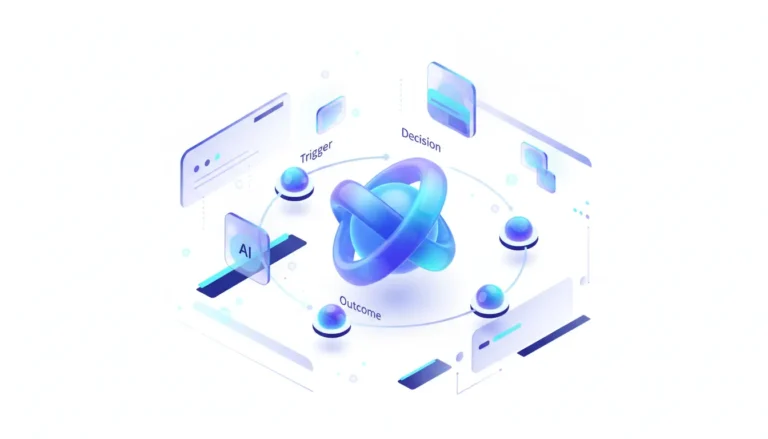
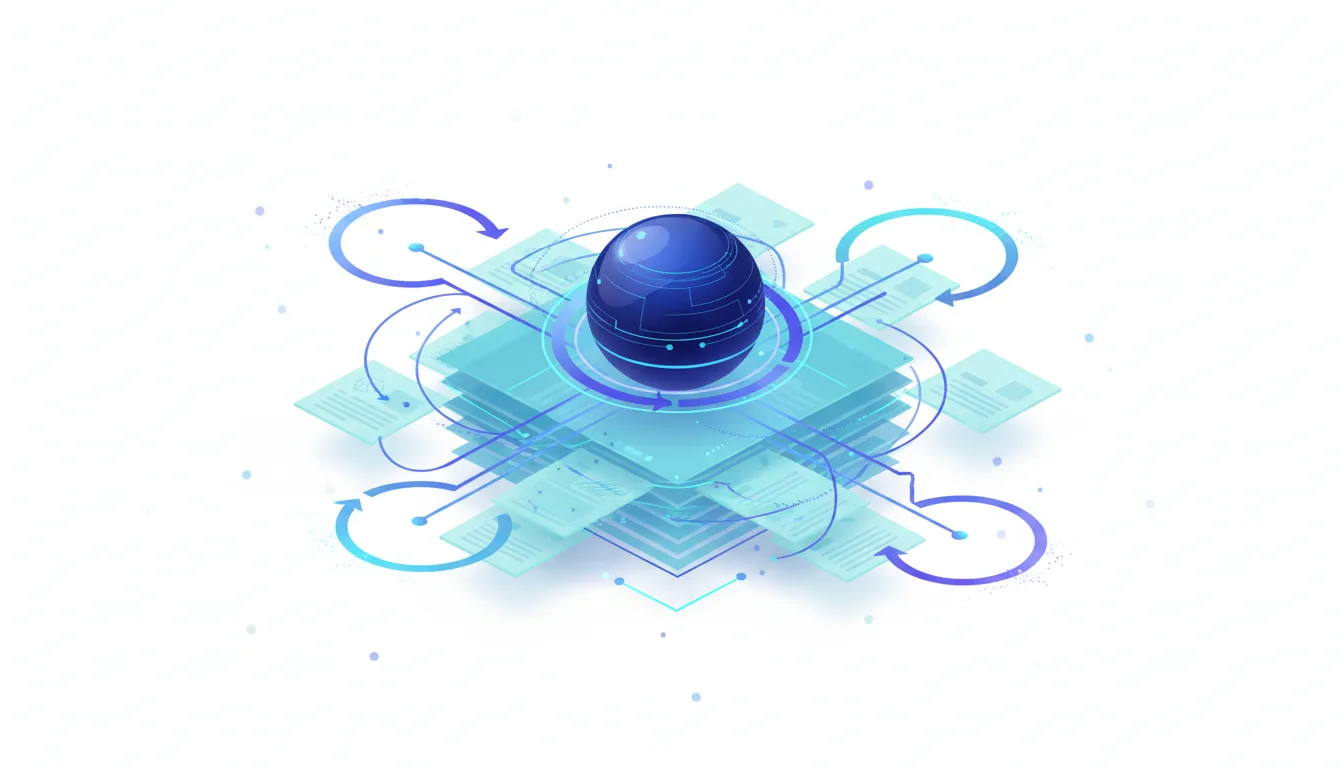
Enter “Agentic Search.” Frameworks like LlamaIndex and LangChain, alongside model providers like Mistral and Cohere, are pivoting the ecosystem toward “Agentic RAG.” Instead of retrieving once and generating, the LLM acts as an autonomous researcher. It breaks down a prompt through query decomposition, searches, reads a specific section, realizes it needs more context, and executes a secondary search before compiling an answer.
Mistral’s newly announced agentic retrieval layer and recent Arxiv research highlight a core feature of this shift: structural verification. By forcing models to cite specific evidence snippets, cross-check their own logic via self-consistency loops, and trace their references, providers are attempting to solve the enterprise trust deficit. The output is no longer a best-guess generation, but a grounded, auditable summary.
That said, the infrastructure reality is complex, revealing a massive gap between framework documentation and production deployment. Autonomous reading loops aren’t free. Every “hop” in an agentic search is a distinct API call. If an agent loops five times to answer a query, inference costs quintuple and latency spikes. The market is currently lacking transparent TCO (Total Cost of Ownership) models for this. Developers are being forced to build budget-aware architectures—routing simple queries to cheaper, faster models, while reserving heavy reasoning loops for complex tasks.
Furthermore, as Cohere’s enterprise focus points out, letting an agent autonomously traverse corporate graphs introduces high-stakes governance risks. Giving an LLM the tooling to dig through secure databases means traditional access controls must now apply at the agent level. The next phase of the AI infra race won’t just be about building these agents, but providing the observability, guardrails, and compliance blueprints required to keep them from breaking the bank or leaking sensitive data.
Stakeholders & Impact
| Stakeholder / Aspect | Impact | Insight |
|---|---|---|
| AI / LLM Providers | High | Forces optimization of models for rapid tool-use, planning, and multi-turn context processing. |
| Enterprise AI Teams | High | Transitioning to complex orchestration requires new observability tools to trace agent loops and manage costs. |
| Inference Infra (Clouds/Chips) | Medium–High | Agentic workflows multiply API calls and token generation per user query, driving demand for ultra-low-latency inference. |
| IT Security & Governance | Significant | Autonomous data traversal requires granular access controls, PII filters, and strict audit trails to prevent data leaks. |
About the analysis
Researched and written with AI assistance under the editorial responsibility of the i10X News team. The title image is an AI-generated illustration. Read our AI Use Policy. Spotted an error? Request a correction.
This independent analysis synthesizes architectural shifts documented by Mistral, Cohere, LlamaIndex, LangChain, and recent peer-reviewed Arxiv research. It is designed for CTOs, AI/ML engineers, and enterprise architects evaluating the ROI, latency tradeoffs, and operational demands of next-generation retrieval systems.
i10x Perspective
Agentic Search marks the end of “dumb” RAG and the beginning of compound AI systems where reasoning happens during retrieval, rather than just after it. This shifts the competitive battlefield from raw model parameter size to framework integration, tool-use reliability, and inference latency optimization. Over the next few years, expect a fierce architectural war between open-source orchestration layers (like LlamaIndex) and model providers (like Mistral and OpenAI) offering agentic retrieval as a baked-in, black-box API—forcing enterprises to choose between deep infrastructural control and plug-and-play convenience.